

24-Feb-26: When it comes to blending style, practicality, and family warmth, Odette Annable proves that thoughtful parenting extends beyond routines and into the spaces her children call their own. The actress recently offered fans a glimpse into her daughters’ age-gap friendly playroom — a space carefully designed to nurture creativity, independence, and togetherness despite the difference in their ages.
For families navigating sibling age gaps, designing a shared space can feel overwhelming. Too many toys for one child may seem too advanced for another. Meanwhile, safety and organization remain constant concerns. Odette’s approach shows that with a bit of planning and heart, a playroom can truly grow with your children.
:max_bytes(150000):strip_icc():focal(852x331:854x333):format(webp)/Odette-Annable-big-girl-room-120424-tout-c9358c14d1ae420ca5cf052b8bb92fb4.jpg)
Image Credit : Katie Jameson
Designing a Playroom That Grows With Them
Creating a shared playroom for children several years apart requires flexibility. Odette’s playroom reflects this balance beautifully. Instead of designing separate zones that isolate her daughters, she opted for a cohesive room with layered functionality.
The key elements include:
- Multi-purpose furniture that adapts over time
- Open shelving for easy access to toys
- Neutral base tones paired with colorful accents
- Dedicated reading and quiet corners
- Safe, soft flooring for younger play
By choosing timeless furniture pieces instead of age-specific decor, the room can transition naturally as her daughters grow older. It’s a smart reminder that children’s spaces don’t need to be redesigned every year — they simply need adaptable foundations.
:max_bytes(150000):strip_icc():focal(1112x1195:1114x1197):format(webp)/Odette-Annable-big-girl-room-120424-2-bbe7a789992549c48aef8eb9267638e1.jpg)
Image Credit : Katie Jameson
Organized Yet Inviting
One standout feature of Odette Annable’s playroom is its organization system. Rather than hiding everything behind closed cabinets, she embraces visible organization. Clear bins, labeled baskets, and low shelves empower her daughters to tidy up independently.
For the younger child, toy bins are placed at reachable heights. For the older sibling, more complex games and craft supplies are stored slightly higher, encouraging responsibility while maintaining safety.
This thoughtful layout does more than keep the room tidy — it fosters independence. Children learn to manage their belongings, share space respectfully, and understand boundaries within shared areas.
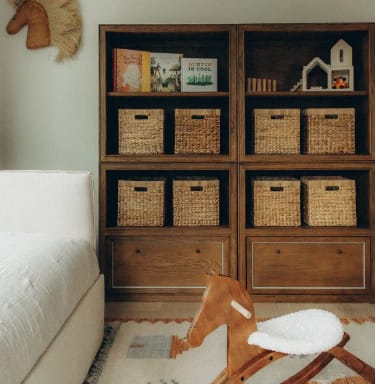
Image Credit: Whit McGuire
A Reading Nook for All Ages
Every well-designed playroom benefits from a quiet zone, and Odette included a cozy reading nook that works for both daughters.
Soft cushions, layered rugs, and low book displays make the space inviting. Books are arranged facing outward, allowing younger children to identify covers easily, while older children can browse chapter books and activity guides.
A shared reading corner also creates bonding opportunities. Older siblings often enjoy “reading” to younger ones, even if they’re simply narrating stories from pictures. That interaction strengthens sibling relationships and encourages early literacy.
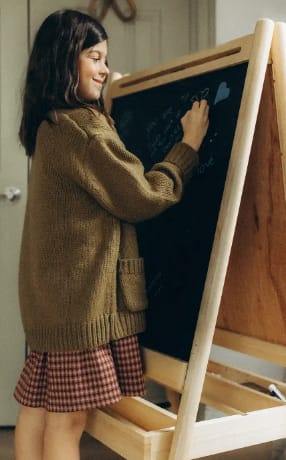
Image Credit: Whit McGuire
Creative Corners That Inspire
Another highlight is the creative station — a dedicated area for arts and crafts. The space includes:
- A washable table surface
- Child-sized chairs
- Storage for markers, crayons, and paints
- A rotating display board for artwork
By rotating art supplies based on age appropriateness, Odette ensures both daughters feel included. Simpler tools are easily accessible for the younger child, while more detailed craft kits are available for the older one with supervision.
This flexible creative zone allows the room to serve as both a preschool playground and an elementary-level activity hub.
Safety First Without Sacrificing Style
An age-gap playroom must prioritize safety, and Odette’s space reflects that beautifully. Rounded furniture edges, anchored shelves, and soft flooring reduce risks for her younger daughter while maintaining aesthetic appeal.
Neutral tones like beige, soft gray, and warm white provide a calming foundation. Pops of color come from toys, books, and artwork rather than permanent fixtures. This approach keeps the space visually clean and easy to update.
Parents often struggle between style and child-friendly functionality. Odette’s design proves the two can coexist effortlessly.
Encouraging Shared Play
One of the biggest challenges in households with siblings of different ages is ensuring both children feel equally engaged. Odette intentionally includes toys and activities that encourage cooperative play:
- Building blocks suitable for multiple skill levels
- Pretend-play kitchens and doll stations
- Puzzle tables with varying difficulty options
- Board games that can be modified for younger players
Shared play fosters patience and empathy. The older child learns to guide and include, while the younger child develops confidence by participating.
Rather than dividing the room by age, Odette’s approach promotes togetherness.
Storage That Evolves Over Time
Smart storage solutions are essential for a space that serves two age groups. Instead of fixed cubbies with rigid labels, Odette uses flexible bins and modular units.
As her daughters grow, toy categories will shift — from rattles and stacking toys to craft supplies and school projects. Adjustable shelving makes it easy to reorganize without replacing furniture.
This long-term planning not only saves money but also reduces waste, aligning with a more sustainable parenting mindset.
A Reflection of Family Values
More than just a room, the playroom reflects Odette Annable’s parenting philosophy: nurture imagination, encourage connection, and create safe spaces for growth.
The room isn’t overly themed or filled with flashy electronics. Instead, it emphasizes hands-on activities, books, and open-ended toys. That choice speaks volumes about valuing creativity over clutter.
Family photos and subtle decorative touches personalize the room without overwhelming it. The balance between warmth and minimalism keeps the environment calm — something every parent can appreciate.
Tips for Creating Your Own Age-Gap Friendly Playroom
Inspired by Odette’s thoughtful design? Here are practical tips you can apply at home:
1. Start with Neutral Foundations
Choose furniture and wall colors that won’t feel outdated in a few years.
2. Layer Storage by Height
Place younger children’s toys at lower levels and older children’s materials higher up.
3. Create Zones, Not Divides
Instead of separating by age, separate by activity — reading, building, crafting, pretend play.
4. Rotate Toys
Avoid overcrowding by rotating toys monthly. This keeps the room fresh and manageable.
5. Prioritize Safety Anchoring
Secure heavy furniture and use soft surfaces where possible.
6. Encourage Ownership
Let each child pick small decor elements to feel represented.
Why Age-Gap Playrooms Matter
When siblings share a thoughtfully designed space, they build stronger bonds. They learn compromise, patience, and teamwork. A playroom isn’t just a toy storage area — it’s a training ground for life skills.
Odette Annable’s peek inside her daughters’ playroom serves as both inspiration and reassurance. With planning and intention, families can create beautiful, functional spaces that evolve alongside their children.
In a world filled with over-the-top celebrity home tours, this glimpse feels refreshingly grounded. It’s not about luxury — it’s about love, adaptability, and thoughtful parenting.
FAQs
1. Who is Odette Annable?
Odette Annable is an American actress known for her roles in television and film, and she is a proud mother of two daughters.
2. What makes a playroom age-gap friendly?
An age-gap friendly playroom includes adaptable furniture, layered storage, shared activity zones, and safety features suitable for different developmental stages.
3. How can parents design a shared playroom for kids of different ages?
Parents can focus on neutral foundations, create activity-based zones, rotate toys, and ensure safe storage at varying heights.
4. Why is shared play important for siblings?
Shared play strengthens sibling bonds, builds empathy, and helps children learn cooperation and patience.
5. How often should a playroom be reorganized?
It’s helpful to reassess and rotate toys every few months to keep the space functional and clutter-free as children grow.
What are the biggest stories trending online today? Read the latest here