US seizes oil tanker amid rising tensions with Venezuela

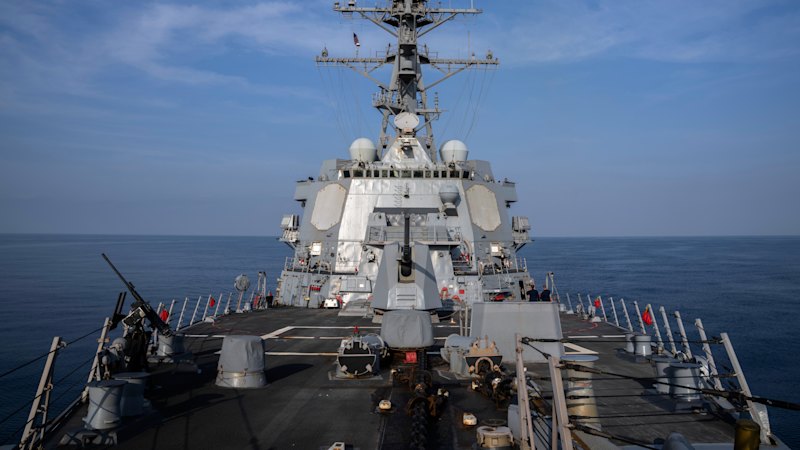
The operation was carried out by the US Coast Guard and supported by the US Navy, according to a US official who was not authorised to comment publicly and spoke on the condition of anonymity. The official added that the seizure was conducted under US law enforcement authority.
Venezuela has the world’s largest proven oil reserves and produces about 1 million barrels a day. Locked out of global oil markets by US sanctions, the state-owned oil company sells most of its output at a steep discount to refiners in China.
The seizure of the tanker could signal efforts to apply further pressure on Maduro by making it harder for Venezuela to export oil, which is essential to its economy.
The country’s oil exports usually involve a complex network of shadowy intermediaries, as sanctions have scared away more established traders. Many are shell companies, registered in jurisdictions known for secrecy. The buyers deploy “ghost tankers” that hide their location and hand off their valuable cargoes in the middle of the ocean before they reach their final destination.
A day earlier, the US military flew a pair of fighter jets over the Gulf of Venezuela in what appeared to be the closest that warplanes had come to the South American country’s airspace since the start of the administration’s pressure campaign.

Venezuelan President Nicolás Maduro speaks to supporters at an event commemorating the Battle of Santa Isabel on Wednesday.Credit: AP
Washington has built up the largest military presence in the region in decades and launched a series of deadly strikes on alleged drug-smuggling boats in the Caribbean Sea and eastern Pacific Ocean.
Trump has said land attacks are coming soon, but has not offered any details on location.
Among the concessions the US has made to Maduro during past negotiations was approval for oil giant Chevron to resume pumping and exporting Venezuelan oil. The corporation’s activities in the South American country provided a financial lifeline to Maduro’s government.
Loading
During a November phone call between the two leaders, Trump reportedly offered Maduro and his family safe passage out of Caracas if he relinquished power immediately.
But Washington was unwilling to agree to Maduro’s demands, which included legal amnesty and the removal of US sanctions for him and over 100 Venezuelan officials.
Oil futures rose following news of the seizure. After trading in negative territory, Brent crude futures rose US27¢, or 0.4 per cent, to settle at $US62.21 ($93.70) a barrel, while US West Texas Intermediate crude futures gained US21¢, also 0.4 per cent, to close at $US58.46 per barrel.
AP, Reuters