The Deepening Footsteps: Uncovering The Advanced Milestones Of The India–Sri Lanka Ramayana Trail

While the fundamental narrative of the Ramayana connects the landmasses of India and Sri Lanka via the architectural marvel of Ram Setu (Adam’s Bridge), an advanced, detail-oriented exploration of the trail reveals a highly sophisticated web of geography.
From ancient aviation hubs and specialized medical topographies to sites of intense karmic penance, the connection between India and Sri Lanka is etched deeply into the island’s soil.
The Physics of the Search: Ramboda and the Aviation Hubs
Before the great war commenced, the bridge of land and spirit relied on the vanguard of the Vanara army: Lord Hanuman.
Ramboda Hill (Shri Bhakta Hanuman Temple)
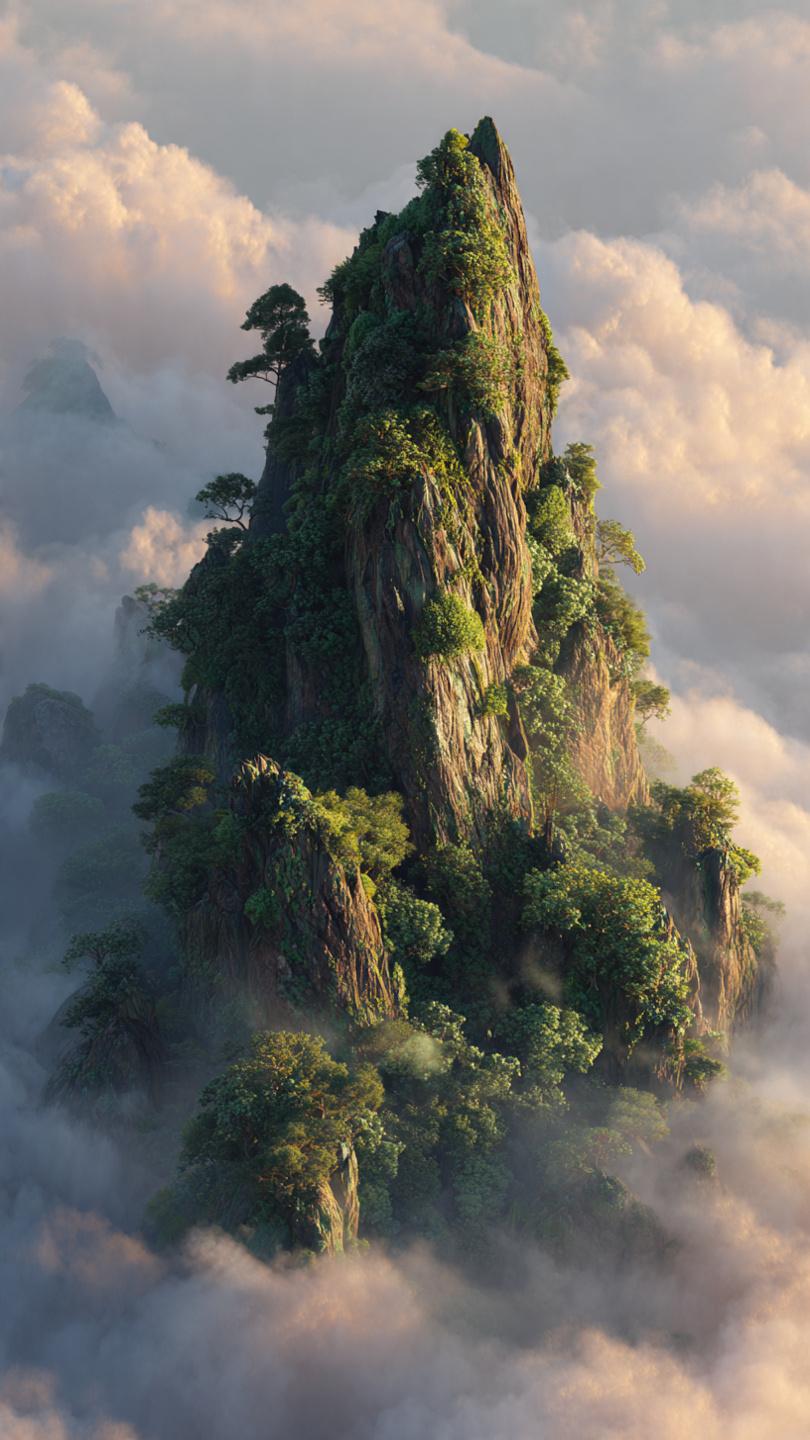
Located in the central highlands, the jagged heights of Ramboda are geologically and spiritually identified as the theater where Hanuman first landed in Lanka to initiate his intelligence-gathering mission.
Today, a 16-foot granite statue erected by the Chinmaya Mission marks this rugged hill. Devotees and researchers note that the vantage point from Ramboda provided a panoramic sweep of the ancient paths leading down to the valleys where Sita was hidden.
The Airports of Ravana (Vimanathas)
A fascinating layer of the Sri Lankan Ramayana trail is its intersection with ancient aviation lore. Local tradition identifies several flat-topped plateau structures across the island as Thotupola Kanda (literally, “Port Mountain”).
Thotupola Kanda (Horton Plains): A flat, high-altitude grassland believed to have served as a primary landing strip for Ravana’s Pushpaka Vimana.
Ussangoda: Located on the southern coast, this plateau features distinctly scorched, reddish-black soil surrounded by normal brown earth. Local folklore attributes this geological anomaly to the fires ignited by Hanuman when he torched Ravana’s southern airfield as a demonstration of asymmetric power.
The Internal Relocation: From Seetha Kotuwa to Ashok Vatika
Popular retellings often assume Goddess Sita spent her entire captivity in a single garden. The micro-geography of the Sri Lankan trail, however, logs a strict strategic relocation executed by Ravana to hide her from incoming scouts.
[Seetha Kotuwa]              ───►  [Ashok Vatika]
(Queen Mandodari's Palace)         (Hakgala Botanical Garden)
Initial fortress captivity         Isolated mountain grove
Seetha Kotuwa (Hasalaka)
Translated as “Sita’s Fort,” this archaeological site near Mahiyanganaya was originally the palace enclosure of Ravana’s queen, Mandodari. Sita was initially housed here in a luxurious but heavily guarded complex surrounded by waterfalls.
Ashok Vatika (Hakgala Botanical Garden)
As Indian scouts began closing in on the capital, Sita was moved deep into the high-altitude cloud forests of Nuwara Eliya. This pleasure garden—now the Hakgala Botanical Garden—is characterized by its microclimate and dense clusters of ancient Ashoka trees.
Adjacent to it sits the Seetha Amman Temple, where massive depressions in the riverbed rock formations are revered as the heavy footprints left by Hanuman when he compressed his weight to leap down from the canopy to deliver Rama’s signet ring.
The Botanical Anomalies: Sanjeevani Drops
One of the most scientifically curious elements linking India’s Himalayan ecosystem to tropical Sri Lanka is the presence of fragmented alpine flora on isolated Sri Lankan hillsides.
When Hanuman was dispatched to fetch the Sanjeevani herb from the Himalayas to revive a mortally wounded Lakshmana, he brought back an entire mountain crest. Pieces of this crest are said to have dropped across five distinct locations in Sri Lanka:
| Fragment Mountain | Location | Notable Characteristic |
| Rumassala | Galle (Southern Coast) | A sudden coastal hill rich in medicinal herbs entirely distinct from the surrounding maritime vegetation. |
| Ritigala | Anuradhapura-Habarana Road | A strict nature reserve rising from the dry plains, harboring an isolated “cloud forest” pocket of damp, high-altitude flora. |
| Dolukanda | Hiripitiya | A massive flat-topped rock platform containing specific pocket-ecosystems of rare Ayurvedic herbs. |
The Post-War Karmic Cleansing: Brahmahatya Dosha
In the ethics of ancient Indian warfare, killing a king who was also an ordained, highly educated Brahmin scholar carried a severe spiritual penalty known as Brahmahatya Dosha (the sin of Brahmincide).
Even though Rama fought a righteous war (Dharma Yuddha), the karmic consequence of slaying Ravana required a systematic cleansing across Sri Lanka before he could return to India.
1.Halting the Pushpaka Vimana:Munneswaram Kovil.
Flying north toward Ayodhya, Rama felt a heavy, malevolent black shadow—the manifestation of the Dosha—following his aircraft. He grounded the vessel at Munneswaram (Chilaw), a pre-existing sanctuary of Lord Shiva, where the dark energy temporarily subsided. Rama prayed to Shiva here for a remedy to dissolve the curse.
2.Consecration of the First Lingam
Acting on Shiva’s divine instruction, Rama carved and consecrated a Shiva Lingam just 6 km north of Chilaw using native materials. This became known as Ramalingam. It stands as one of only two major Lingams in the world named directly after Rama (the second being across the strait in Rameswaram, India).
3.The Five-Lingam Circuit
To fully anchor the post-war peace and purify the land, Rama established a protective circuit of five structural Ishvarams (Shiva temples) across the coastal perimeter of Sri Lanka, cementing an eternal, pan-Subcontinental Shaivite geography that endures to this day.
The Sovereignty Handover: Kelaniya Raja Maha Viharaya
The climax of the India-Lanka connection does not end with destruction, but with diplomacy and the restoration of local governance. Before marching his forces back across the ocean, Lord Rama instructed his brother Lakshmana to formally crown Vibhishana (Ravana’s younger, righteous brother) as the King of Lanka.
The coronation took place at Kelaniya, situated just outside modern Colombo. Today, the Kelaniya Raja Maha Viharaya—primarily a grand Buddhist sanctuary, retains a highly revered Hindu shrine dedicated entirely to King Vibhishana.
This transition marks the exact historical moment the relationship between India and Sri Lanka evolved from an active theater of war into a bilateral bond of mutual respect, sovereignty, and shared cosmic order.
Sanatani Ganga Foundation is all set to embark on a journey of Ramayana Trail to explore the connection between India and Sri Lanka soon. To know more information about the initiative, contact us.
ALSO READ: A Sacred Thread: How the Ramayana Trail Binds India, Nepal, and Sri Lanka


