Nazca Peru Plane Crash Video and Fatal Nazca Lines Crash Kills 13

LIMA, Peru — Peru has launched a sweeping investigation into one of the country’s deadliest tourism aviation disasters in recent years after a sightseeing aircraft carrying European visitors crashed shortly after takeoff near the world-famous Nazca Lines. The tragedy claimed the lives of all 13 people on board, including 11 foreign tourists and two Peruvian crew members, prompting authorities to suspend the airline’s operations while investigators search for answers.
The aircraft, operated by local sightseeing carrier Aerodiana, was conducting a scenic flight over the Nazca Lines when it encountered an emergency only minutes after departing. Officials confirmed that the crew reported mechanical difficulties before communication with air traffic controllers was lost. Moments later, the aircraft crashed into the desert landscape near Nazca, leaving no survivors.
The fatal accident has renewed concerns about the safety of tourist flights operating over Peru’s iconic archaeological attractions, where thousands of international visitors travel each year to experience one of the world’s most extraordinary aerial sights.
Airline Ordered to Halt Flights and Video
Peru’s Ministry of Transportation and Communications announced that Aerodiana has been ordered to suspend all flight operations until investigators determine whether the airline fully complied with national aviation regulations and operational safety standards.
Nazca Peru Plane Crash Video
Authorities emphasized that the suspension is a preventive measure designed to ensure public safety while investigators examine every aspect of the accident, including aircraft maintenance records, pilot procedures, operational practices, and regulatory compliance.
Government officials stated that flights will not resume unless investigators are satisfied that all safety requirements have been met.
The airline has not publicly challenged the decision and has pledged complete cooperation throughout the investigation.
Distress Call Reported Before Crash
According to preliminary information released by Peruvian authorities, the aircraft’s pilots informed the Nazca control tower that they were experiencing mechanical problems shortly before the accident.
Officials said the emergency transmission became one of the final communications received from the aircraft before radio contact abruptly ended.
Investigators are now carefully reviewing the distress call, radar information, flight trajectory data, and physical evidence recovered from the wreckage.
Although mechanical issues were reported by the crew, authorities cautioned that it remains too early to conclude whether those problems directly caused the crash.
Experts from Peru’s Aviation Accident Investigation Commission are expected to analyze engine components, flight systems, structural damage, and maintenance history to determine exactly what happened during the aircraft’s final minutes.
Tourists from Three European Countries Among Victims
The victims included visitors from Italy, Germany, and Spain who had traveled to Peru to experience one of South America’s most famous tourist attractions.
Officials confirmed that seven of those killed were Italian citizens, while two victims came from Germany and another two from Spain. The remaining fatalities were the aircraft’s two Peruvian crew members.
The accident has triggered responses from multiple European governments, whose diplomatic representatives quickly coordinated with Peruvian authorities following confirmation of the tragedy.
Italian and German consular officials traveled to the crash site as recovery operations continued.
Peruvian officials expressed condolences to the victims’ families and pledged transparency throughout the investigation.
International Support for Victims’ Families
Italy’s Foreign Ministry announced that its embassy in Lima immediately established communication with local authorities following the accident.
Officials confirmed that relatives of the Italian victims were notified as soon as identities were verified.
Italian Prime Minister Giorgia Meloni also extended condolences, expressing sympathy for the families facing what she described as an immense loss.
Spanish and German diplomatic officials likewise worked alongside Peruvian agencies to assist relatives and coordinate necessary consular support.
Authorities expect additional assistance measures for affected families as investigations continue.
Flight Was Intended to Showcase Ancient Desert Artwork
The aircraft had departed from Pisco Airport for a sightseeing route over the Nazca Lines, one of Peru’s most recognizable tourist destinations.
The enormous geoglyphs, carved into the desert centuries ago, depict birds, monkeys, spiders, whales, geometric figures, and numerous other designs stretching across the arid landscape.
Because many of these enormous figures can only be fully appreciated from above, sightseeing flights have become one of the most popular ways for visitors to experience the UNESCO World Heritage Site.
The crashed aircraft, a Cessna 208B Grand Caravan, is commonly used worldwide for regional transportation and sightseeing operations because of its ability to carry small groups of passengers over scenic locations.
Officials said the accident occurred approximately two kilometers from the Nazca airfield after the aircraft departed from Pisco earlier in the afternoon.
Investigation Focuses on Multiple Factors
Although the crew reported mechanical problems, aviation investigators are examining a wide range of possible contributing factors.
Among the areas under review are:
Aircraft maintenance history
Pilot decision-making
Engine performance
Weather conditions
Air traffic communications
Operational procedures
Compliance with aviation regulations
Officials stressed that aviation accidents are often caused by multiple interacting factors rather than a single failure.
The investigation may take months before a final report is published.
Experts will also inspect recovered aircraft components to determine whether evidence supports the initial reports of mechanical failure.
Questions Raised About Tourist Flight Safety
The crash has renewed debate over the safety of sightseeing flights serving Peru’s tourism industry.
Although scenic aviation remains popular, accidents involving small aircraft have periodically raised concerns regarding maintenance oversight, operational standards, and emergency preparedness.
Government officials indicated that they are reviewing whether additional inspections or regulatory changes may be necessary following the latest tragedy.
Authorities have also discussed whether operations at Pisco Airport should face temporary restrictions while investigators complete their work.
Officials emphasized that no final decision regarding airport operations has yet been made.
Airline Expresses Condolences
Before the government ordered its suspension, Aerodiana released a public statement expressing sympathy for everyone affected.
The company extended condolences to the families of those killed and promised full cooperation with investigators.
Aerodiana stated that throughout nearly two decades of operations it has consistently prioritized passenger and crew safety.
Company representatives acknowledged the devastating impact of the accident and said they stand ready to provide whatever assistance authorities and victims’ families may require during the investigation.
Recovery Efforts Continue
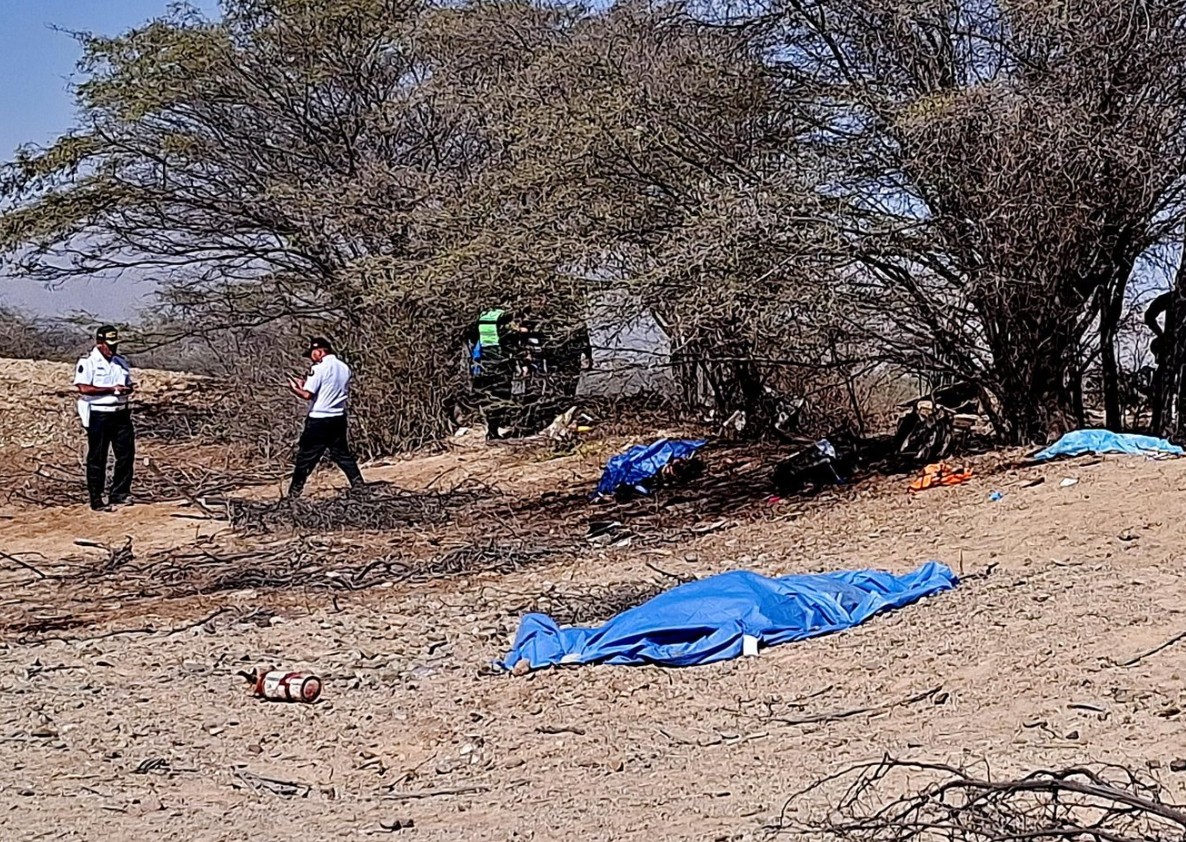
Emergency responders, police officers, firefighters, and aviation specialists worked throughout the day to secure the accident site.
Investigators documented wreckage locations, recovered aircraft components, and began collecting evidence that may help reconstruct the aircraft’s final moments.
The remote desert terrain surrounding Nazca presented logistical challenges, but recovery teams successfully reached the crash area and secured the site for forensic examination.
Officials expect laboratory analysis of recovered parts to play a key role in identifying the sequence of events leading to the accident.
A Troubling History Near the Nazca Lines
Saturday’s tragedy is not the first fatal sightseeing accident involving aircraft operating around the Nazca Lines.
In 2022, another sightseeing plane crashed near the archaeological site, killing five tourists and two Peruvian crew members.
Earlier, in 2010, another aviation disaster claimed the lives of four British tourists along with two Peruvian crew members when a light aircraft crashed during a similar sightseeing operation.
Those previous accidents prompted calls for stricter oversight of tourist aviation services, although sightseeing flights have continued to attract thousands of travelers annually.
The latest disaster is likely to intensify demands for more rigorous inspections, stronger maintenance requirements, and enhanced operational safety measures for companies offering aerial tourism experiences.
Nation Awaits Investigation Results
As Peru mourns another devastating aviation accident, investigators face mounting pressure to determine exactly why the aircraft crashed only minutes into what should have been a routine sightseeing flight.
Authorities have urged the public not to speculate while technical experts analyze evidence gathered from the wreckage and review every aspect of the flight.
For the families of the victims, answers cannot erase the profound loss, but investigators hope that a thorough examination will establish the cause of the tragedy and help prevent similar disasters in the future.
Until that process is complete, Aerodiana’s operations will remain suspended, marking another difficult chapter for Peru’s tourism industry and renewing international attention on aviation safety over one of the country’s most treasured cultural landmarks.
Hot News –


