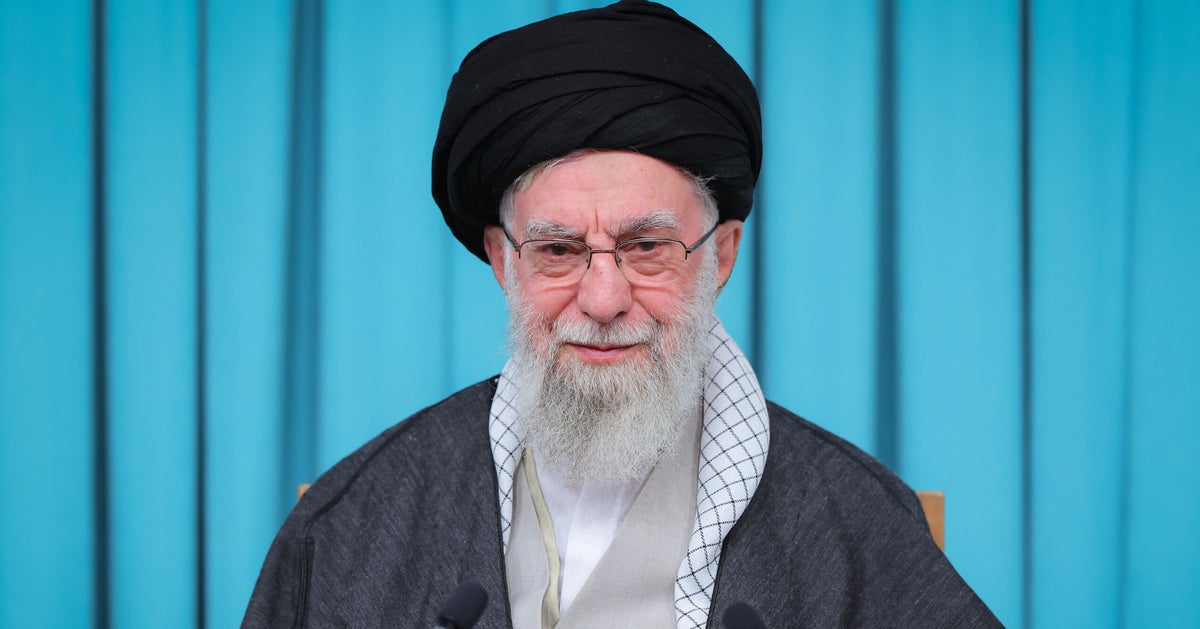

WASHINGTON/DUBAI, March 1 (Reuters) – Israel and the U.S. timed their attack on Iran on Saturday to coincide with a meeting the country’s supreme leader, Ali Khamenei, was holding with top aides, according to two U.S. sources and a U.S. official familiar with the matter.
Israel said Khamenei was killed along with top lieutenants including Ali Shamkhani, the powerful former National Security Council secretary, and Mohammad Pakpour, Islamic Revolutionary Guard Corps (IRGC) commander.
Two Iranian sources told Reuters that Khamenei met on Saturday with Shamkhani and Supreme National Security Council Secretary Ali Larijani at a secure location shortly before the strikes started.
A senior Israeli official told Reuters that Khamenei’s body had been found.
U.S. President Donald Trump said in a post on his Truth Social platform that Iran’s top leader was killed after intelligence pinpointed his movements.
“He was unable to avoid our Intelligence and Highly Sophisticated Tracking Systems and, working closely with Israel, there was not a thing he, or the other leaders that have been killed along with him, could do,” Trump said.
The U.S. and Israeli military strikes across Iran have pushed the Middle East into a new and unpredictable conflict, with Iran launching retaliatory attacks against Israel and nearby Gulf Arab countries.

The two U.S. sources and the U.S. official, speaking on condition of anonymity, said that confirmation of Khamenei’s meeting with top advisers put the Israeli-U.S. air and naval operation into motion.
The U.S. official said the attack needed to strike Khamenei first to maintain the element of surprise, suggesting there was concern the Iranian leader would escape into hiding if he had the opportunity.
One U.S. source said that Khamenei had originally been expected to hold the meeting on Saturday evening in Tehran. But Israeli intelligence detected a meeting on Saturday morning, and the strikes were moved forward, the sources said.
The location of the meeting was not immediately clear.
But Khamenei’s high-security compound in Tehran was struck at the beginning of the operation, and satellite imagery reviewed by Reuters confirmed that it had been destroyed.
The impact of Khamenei’s death remained to be seen.
But in a pre-attack assessment, the U.S. Central Intelligence Agency concluded that he could be replaced by IRGC hardliners, according to two sources briefed on the intelligence.
(Reporting by Jonathan Landay, Phil Stewart, Gram Slattery in Washington and Parisa Hafezi in Dubai. Additional reporting by Humeyra Pamuk in Washington, Erin Banci in New York and Mayaan Lubell in Jerusalem; Editing by Don Durfee and Cynthia Osterman)