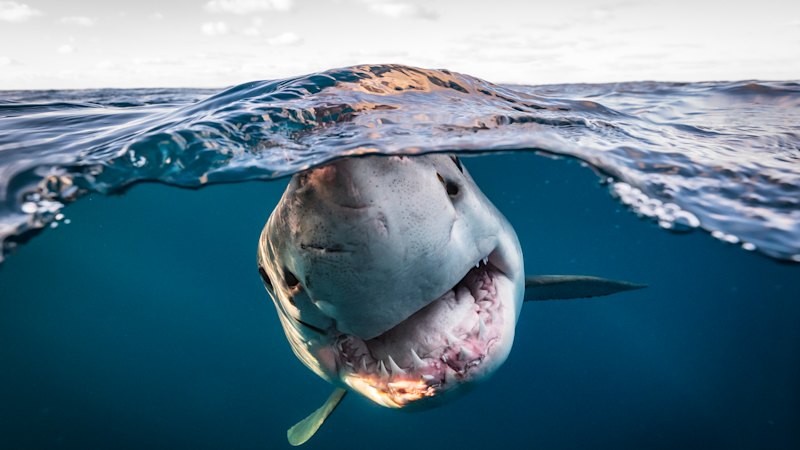
What the state’s growing system of shark sensors is telling us

One surprising thing the tags have revealed is that sharks can form habits, Niella said, such as individual bull sharks returning to Sydney Harbour every year. “It’s almost like they have a watch that tells them ‘oh it’s summer time, it’s time to go to Sydney and catch up with our mates’,” Niella said.
Loading
And while white sharks generally prefer cooler water, one adventurous tagged individual ventured all the way to north Queensland. This masthead reported on Thursday that white sharks would become more prevalent in Victoria and Tasmania by 2060 under a high-emissions scenario.
In 2021, Niella co-authored a paper looking at both acoustic tracking and satellite tracking of more than 100 tiger sharks in both NSW and Queensland which predicted that by 2030, tiger sharks would be using waters as far south as Tasmania because of climate change. This year, he said, the acoustic receivers in Tasmania were pinged by a tagged tiger shark for the first time – five years ahead of schedule.
Shark prevention measures
As well as SMART drumlines and acoustic tags and receivers, the program includes drone surveillance and mesh nets at 51 of the most popular NSW beaches during summer.
The mesh nets are controversial because of the high by-catch, including critically endangered grey nurse sharks, dolphins, whales and turtles. The NSW government was planning to trial the removal of mesh nets at three Sydney beaches this summer, but changed its mind after the death of surfer Mercury Psillakis at Dee Why in September.
Maria Psillakis, Mercury’s widow, has called for more drone surveillance off the coast of Sydney.
Loading
Professor Charlie Huveneers, who heads the Southern Shark Ecology Group at Flinders University, said it was difficult to statistically prove or disprove the effectiveness of the mesh nets because the number of shark deaths was so low and variable from year to year.
“The question is not so much, ‘does it work?’ but ‘are there other measures that might not be having such an ecological impact that can work just as well if not better in terms of reducing shark bite?’,” Huveneers said.
Huveneers has also been involved in research into personal shark protection, including electronic shark deterrents and bite-resistant wetsuit material.
The Ocean Guardian Freedom+ Surf – electrode stickers placed underneath a surfboard – reduced the likelihood of an interaction with a white shark by 56 per cent in the Flinders research, but still failed to stop sharks in 40 per cent of the trials. Other devices were less effective, the study found.
In another study published this year, Huveneers and his co-authors tested four bite-resistant wetsuit materials – Aqua Armour, Shark Stop, ActionTX-S and Brewster material – reduced haemorrhaging and major vascular injury. While the material would not prevent a crush injury, it was potentially lifesaving because most shark bite deaths were from blood loss, Huveneers said.

A surfer with an Ocean Guardian personal shark deterrent device.Credit: Ocean Guardian
Niella said it was best not to swim after rain because nutrient run-off in the water attracted fish and in turn, sharks, and also because it made humans harder to see clearly.
“All of that turbidity makes the visibility in the water much lower, and if the sharks are there looking for food, and they can’t really distinguish between a person and a fish, they might be more likely to bite someone,” Niella said.
Huveneers said it was too simplistic to say that shark bites and fatalities were going up because of more humans in the water, or to dismiss fears of sharks by saying that the risk was small, especially given there was such a broad range of non-lethal shark mitigation measures these days.
“An example that people always use is that you’re statistically more likely to die from a coconut falling on your head than from a shark bite,” Huveneers said.
“While that might be true for somebody living in the tropics, somebody in South Australia who has never been to the tropics and goes surfing every single day is obviously more likely to be bitten by a shark than dying from a coconut.”