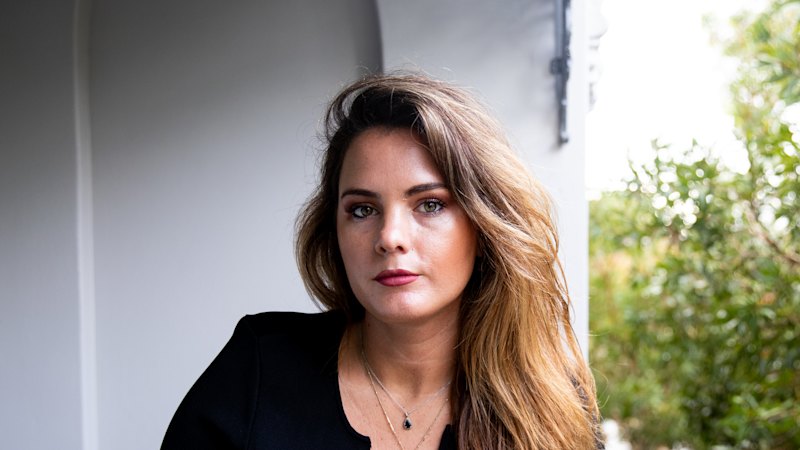


The founder of a key Liberal women’s network has resigned from the organisation and quit the party altogether, two days after federal MPs toppled Sussan Ley as their first female leader.
The announcement from Charlotte Mortlock, who founded Hilma’s Network four years ago to boost female representation in the Liberals, also comes a week after the party’s NSW branch dumped a planned vote on gender quotas. Mortlock had worked on the proposal with five other Liberal women.
“Due to recent events I have decided there are other ways I can support women and Australia,” the former Coalition staffer and Sky journalist said in a statement on Sunday morning.
“I have decided the time has come for me to step down as executive director of Hilma’s Network and I have also relinquished my Liberal Party membership.”
The resignation of one of the Liberals’ most vocal grassroots advocates for women’s representation is a sign of the fallout that awaits the party in some sections of its membership after Ley, the first federal female leader, was turfed out of the job within nine months.
Ley’s tenure was marred by disunity. An image of high-profile right faction MPs arriving at a home in Melbourne to discuss Ley’s leadership before the funeral for former Liberal MP Katie Allen was a sign that the opposition leader was being undermined within her own ranks.
The six men included leadership aspirants Andrew Hastie and Angus Taylor, as well as senators Jonno Duniam and James Paterson, who were members of Ley’s leadership team.
It came to a head last week when Taylor challenged for the Liberal leadership, and on Friday won the ballot convincingly, 34 to 17, after several MPs who supported Ley in last year’s leadership ballot switched their vote.
Most of those Liberal MPs insist their decision was about Ley’s performance, given the Coalition was sinking in the polls to new lows each month. However, Ley’s supporters argue she was never given a fair go by colleagues, and some think gender played a part in that.
The Liberals have struggled to win women’s votes in the last two elections, and the gender imbalance in its ranks of MPs has barely changed in a decade.
The party has a target of 50 per cent female representation, but only a third of its MPS are women. There are six women in the lower house – which will drop to five when Ley leaves parliament – and 22 men. In the upper house, there are 11 Liberal women and 12 Liberal men.
Mortlock said state and federal gender quotas should be a “bare minimum” to improve both representation and policy offerings for women after last May’s election defeat made the problem worse.
Quotas mandate that a certain proportion of seats be held by women, and have helped women become a majority of Labor’s caucus. However, the Liberal Party’s aversion to identity politics and belief in individual merit has made quotas a contentious issue for the party.
In Ley’s first major speech as leader in June, she said she was open to gender quotas but not wedded to them, adding that “what is not fine is not having enough women”.
Taylor quickly rejected the prospect of quotas, claiming Labor had “subverted democracy” with its processes. He argued that mentoring and recruitment support were better options.
The federal review of the Liberal Party’s 2025 election loss has not yet been published, but this masthead reported last November that the document will not recommend a rigid quota system.
Mortlock at the time said the decision was one for the state divisions, not the federal leadership.
But that too hit a roadblock, when the NSW Liberals this month dumped a vote on a proposal to introduce quotas from their agenda for next month’s state council meeting.
Six Liberal women in NSW, including Mortlock, had drafted a plan to boost female representation at the federal level by introducing a 40 per cent gender target for women MPs, and ensuring half the candidates in preselection contests were women.
Forty per cent of seats in NSW would also be reserved for women candidates, and hold women-only preselection, to stop female candidates being shoehorned into unwinnable seats, according to reports of the plan in The Australian.
It was dumped from the state council’s March meeting agenda over concerns it could provoke a drawn-out debate on gender representation before next year’s state election, that masthead also reported.
In her statement on Sunday, Mortlock said she was proud of everything the network had achieved, and the women candidates it had supported, since she formed the grassroots group after Scott Morrison’s 2022 federal election loss.
“From inception, we quickly grew to multiple states hosting events that challenged the party to evolve,” she said. “I wish Hilma’s and the Liberal Party success in the future.”
The network’s board of directors said in a statement: “We extend our deepest appreciation to Charlotte for having the passion and vision to create Hilma’s network and thank her for her commitment, energy and bravery to support women in politics.”
Hilma’s Victorian representative, Erin Watson, will take over as chief executive. The statement said Watson would help bolster Victorian Liberal leader Jess Wilson’s campaign ahead of the state election.
“Our mission remains unchanged, and we are committed as ever to attracting and promoting the next wave of Liberal women,” the statement said.
Cut through the noise of federal politics with news, views and expert analysis. Subscribers can sign up to our weekly Inside Politics newsletter.
 Natassia Chrysanthos is Federal Political Correspondent. She has previously reported on immigration, health, social issues and the NDIS from Parliament House in Canberra.Connect via X or email.