
Stan Choe
Updated ,first published
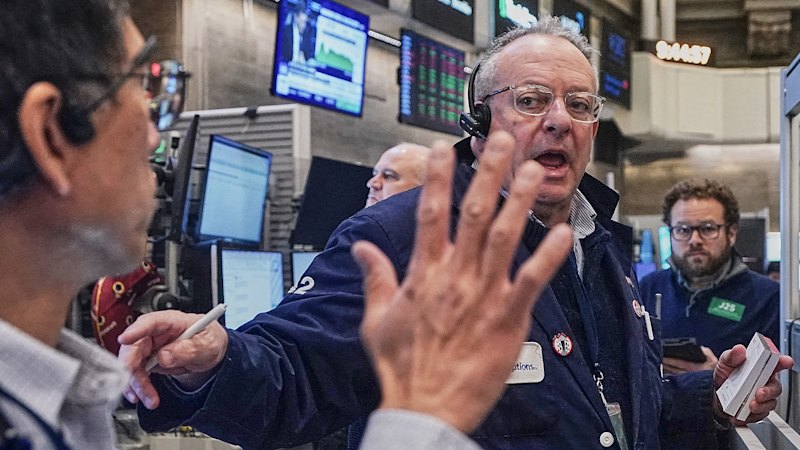
US stocks fell, while oil prices rose with worries about a potential conflict between the United States and Iran.
The S&P 500 slipped 0.3 per cent for its first loss in four days. The Dow Jones dropped 267 points, or 0.5 per cent, and the Nasdaq composite slipped 0.3 per cent.
The Australian sharemarket is set to fall, with futures pointing to a drop of 44 points, or 0.5 per cent, at the open. The ASX added 0.9 per cent on Thursday. The Australian dollar was trading at US70.59¢ at 8.22am AEDT. Reporting season continues with QBE Insurance and Guzman y Gomez among companies due up.
On Wall Street, Booking Holdings dropped 6.1 per cent for one of the market’s sharper losses, even though the company behind the Booking.com, Priceline and OpenTable brands reported a profit for the latest quarter that edged past analysts’ expectations.
Its stock has been under pressure because of worries that competitors powered by artificial-intelligence technology could upend its industry and take away customers. Booking’s stock has lost roughly a quarter of its value so far this year already.
Such worries have been rolling through Wall Street, hitting industries as far flung as software and legal services and trucking logistics. Investors have been punishing stocks of companies seen as under threat by AI so suddenly and aggressively that analysts have likened it to a “shoot first-ask questions later” mentality.
The doubts are hurting not just companies seen as potential victims of AI but also the private-credit companies that have lent them money. Blue Owl Capital fell 5.9 per cent to bring its loss for the year so far to 22.5 per cent, for example. Apollo Global Management dropped 5.2 per cent, and Ares Management sank 3.1 per cent.
Carvana sank 7.9 per cent even though the retailer reported a stronger profit for the latest quarter than analysts expected. Investors may have been paying more attention to how much profit the auto retailer made per vehicle sold, which was lower than expected.
Walmart, meanwhile, pushed and pulled on the market after jumping to an early gain of 2.7 per cent and then flipping to a loss. The retail giant delivered stronger results for the latest quarter than analysts expected, but it gave a profit forecast for the upcoming year that fell short of estimates. It finished the day with a loss of 1.4 per cent.
Helping to limit the market’s losses was Deere, which jumped 11.6 per cent after the machinery maker reported a higher profit than analysts expected. CEO John May said it’s seeing a continued recovery in demand from construction and smaller agricultural customers, though its global, large agricultural customers are still feeling pressure.
Some of the bigger gains in the S&P 500 came from stocks of oil companies, which climbed with the price of crude. A barrel of benchmark US crude rose 1.9 per cent to $US66.43, while Brent added 1.9 per cent to $US71.66 per barrel.
Oil prices rose with worries about a possible military confrontation between the United States and Iran. President Donald Trump has been raising the pressure on Iran, which is home to some of the world’s largest oil reserves, because of its disputed nuclear program. If a conflict were to break out, it could constrict the global flow of oil.
Occidental Petroleum jumped 9.4 per cent after it also reported a stronger profit for the latest quarter than analysts expected.
All told, the S&P 500 fell 19.42 points to 6,861.89. The Dow Jones Industrial Average dropped 267.50 to 49,395.16, and the Nasdaq composite lost 70.91 to 22,682.73.
In the bond market, Treasury yields held relatively steady after a report said the number of US workers applying for unemployment benefits eased last week. That could be a signal that the pace of layoffs is slowing.
A solid job market, in turn, could keep the Federal Reserve on hold for longer before it resumes its cuts to interest rates. Fed officials said at their last meeting that they want to see inflation fall further before they would support cutting rates further this year.
If oil prices keep rising, that would push upward on inflation.
The yield on the 10-year Treasury slipped to 4.07 per cent from 4.09 per cent late Wednesday.
Other US economic reports said that growth for manufacturing in the mid-Atlantic region is accelerating, but potential homebuyers across the country didn’t sign as many contracts in January to purchase. The US trade deficit also widened in December by more than economists expected.
In stock markets abroad, indexes fell in Europe following better performances in Asia.
South Korea’s Kospi jumped 3.1 per cent as trading resumed following a Lunar New Year holiday. Markets in Hong Kong and Shanghai remained closed.
AP
The Market Recap newsletter is a wrap of the day’s trading. Get it each weekday afternoon.