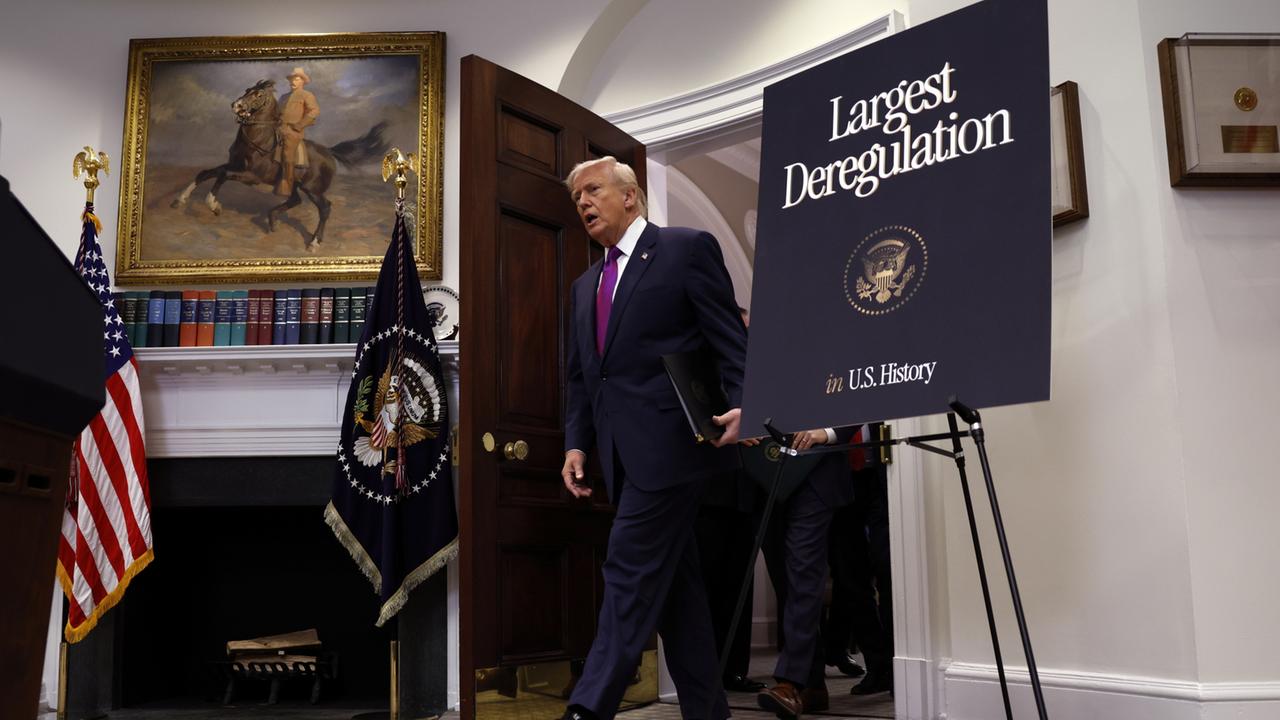
Venezuela’s interim President Delcy Rodríguez and U.S. Energy Secretary Chris Wright speak with the media after attending a meeting, marking the highest-level U.S. visit focused on energy policy to the OPEC nation in nearly three decades, as Washington conducts its first on-the-ground assessment of the oil industry it aims to help rebuild, in Caracas, Venezuela, Feb. 11, 2026.
Leonardo Fernandez Viloria | Reuters
Venezuela oil revenue will no longer be deposited in an account in Qatar, Energy Secretary Chris Wright told NBC News in an interview this week.
“An account was set up in Qatar, controlled by the U.S. government the whole time, to land that money in and then send the money from there down to Venezuela,” Wright told NBC News on Thursday.
“Now we have an account at the U.S. Treasury. The money won’t go to Qatar anymore,” the energy secretary said.
The Trump administration has taken control of Venezuela’s oil sales after capturing former President Nicolás Maduro in military raid last month. Wright met Venezuela’s interim President Delcy Rodríguez in Venezuela this week, the highest-ranking U.S. official to visit the country in decades.
Wright told NBC News that revenue from Venezuelan oil sales now tops $1 billion. The U.S. has short-term agreements to sell another $5 billion of the country’s crude over the next few months, he said. The oil has gone to U.S. refineries and Europe so far, he said.
The U.S. deposited the initial $500 million of oil sales in the Qatar account before transferring the funds back to Venezuela, Wright said. Democrats in Congress have questioned the transparency and legality of the arrangement.
Sen. Chuck Schumer, D-N.Y., and Sen. Adam Schiff, D-Calif., introduced legislation Thursday that directs the Government Accountability Office to conduct an independent audit of the Qatar account.

Wright said the U.S. deposited the initial sales in Qatar because the funds face the risk of Venezuela’s creditors attempting to claim them. Caracas faces tens of billions of dollars in outstanding claims from defaulting on its sovereign debt and nationalizing the assets of oil companies like Exxon Mobil and ConocoPhillips.
“Since Venezuela has so many creditors and they owe a lot of money, we had some risk if we put it into a U.S. bank account set up quickly that creditors could freeze that money,” Wright said. “We want those creditors ultimately to get their money back, but that money urgently needs to get to Venezuela.”
The U.S. faces the added complication that it does not officially recognize the government led by Rodríguez. President Donald Trump recognized the 2015 opposition-led National Assembly during his first term in 2019.
Secretary of State Marco Rubio told the Senate Foreign Relations on Jan. 28 that Washington must find a way to resolve the issue of government recognition for the funds to be deposited in the U.S.
“You have to recognize a government, but we don’t recognize this government,” Rubio said. “We recognize the 2015 National Assembly, so we have to find some creative way legally to meet that standard.”
Venezuelan oil revenue deposited in the U.S. should in theory be under control of the opposition National Assembly due to Trump’s recognition, said Scott Anderson, an international law expert who previously served with the State Department and the U.S. Embassy in Baghdad under President Barack Obama.
This raises the question of which government the U.S. will ultimately recognize and when. Wright told NBC that elections and a transition of power will likely happen in Venezuela during Trump’s term. He said U.S. government oversight of Venezuela’s domestic affairs would conclude at that point.
“It is a question of a process to get there,” Wright said. “Ultimately, what the long-term political leadership in Venezuela is going to be, it’s going to be up to Venezuela.”