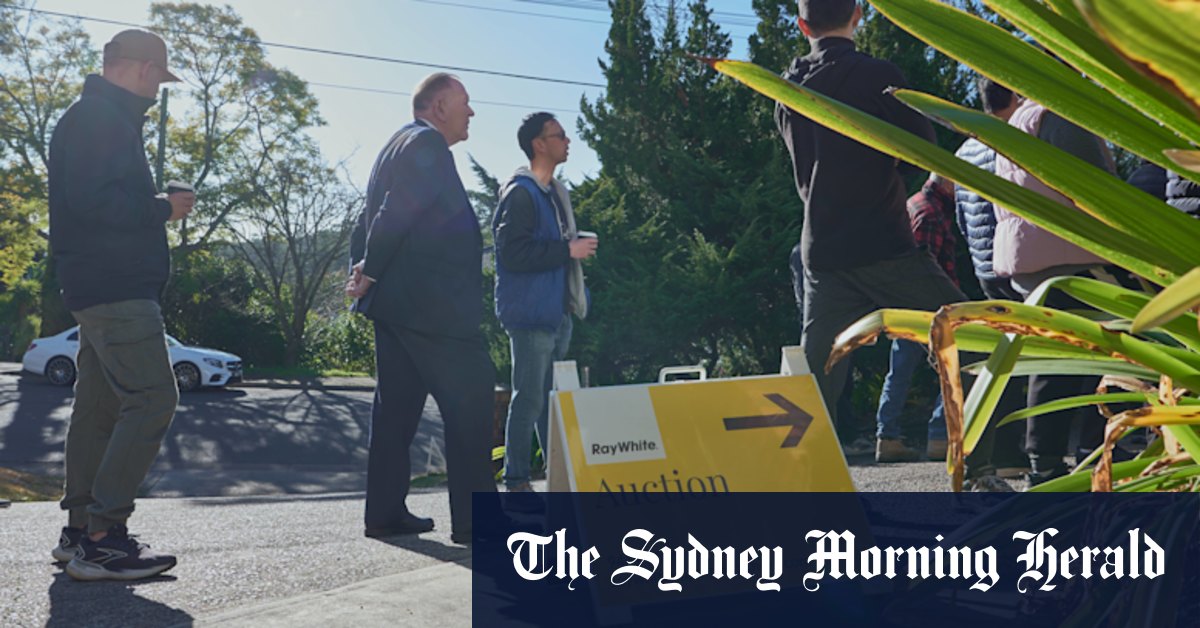

“Stronger housing demand at the lower price points is likely a culmination of serviceability constraints eroding purchasing power, persistently higher than average levels of investor activity and what is likely a pick-up in first home buyers taking advantage of the expanded deposit guarantee,” he said.
Lawless warned the surge in investor activity, with credit to prospective landlords growing at its fastest pace in a decade, could force banking regulators to tighten lending rules.
A surge in interest-only loans to investors in the mid-2010s, during which property prices in Sydney and Melbourne were climbing at double-digit levels, led to the Australian Prudential Regulation Authority imposing a cap on the proportion of loans made by banks to investors.
That cap was 30 per cent. The share of loans going to investors over the past three months has climbed to 38 per cent.
While outer suburbs in most capital cities continue to experience sharp increases in values, the biggest lifts are occurring in regional centres.
Over the past 12 months, values in the north-western Victorian centre of Mildura have jumped by 18.7 per cent, by 13.4 per cent in the NSW north-west centres of Tamworth and Gunnedah, and the Darling Downs of Queensland have experienced a 17 per cent increase.
The single largest surge, of 22.2 per cent, has been in the West Australian south coast city of Albany, which is more than 400 kilometres south of Perth.

The hottest property market in the country is the small West Australian coastal centre of Albany.Credit:
Financial markets, which a week ago had fully priced in an interest rate cut by Christmas, are not expecting a further easing in monetary policy until the middle of next year.
The turnaround in interest rate expectations occurred after the September quarter consumer price report showed headline and underling inflation accelerating over the past three months. New house construction inflation rose by 1.2 per cent in the quarter to be almost 45 per cent up on its pre-pandemic levels.
Capital Economics senior economist Abhijit Surya said while the recent inflation data meant the Reserve Bank was all but certain to leave interest rates steady this week, this did not mean further interest rate relief was off the agenda.
“With unit labour cost growth on track to subside, the recent stickiness in services inflation is unlikely to be sustained,” he said.
Loading
“At the same time, business surveys point to renewed disinflationary pressures in the goods sector as well. The upshot is that we believe the RBA will have scope to deliver a couple more rate cuts in the second half of next year.”
ANZ head of Australian economics Adam Boyton also cautioned that the lift in underlying inflation was exacerbated by one-off factors, many of which were driven by government actions. These include the large lift in council rates and charges, the end of electricity subsidies and a further increase in tobacco excise.
He said the recent drift up in unemployment would also be a factor of concern for the Reserve Bank.
“We expect the RBA to express some concern about market sector services inflation next week, although the modest easing in the labour market over the past year does suggest a little downward pressure is still likely over coming quarters,” he said.
Expert tips on how to save, invest and make the most of your money delivered to your inbox every Sunday. Sign up for our Real Money newsletter.


