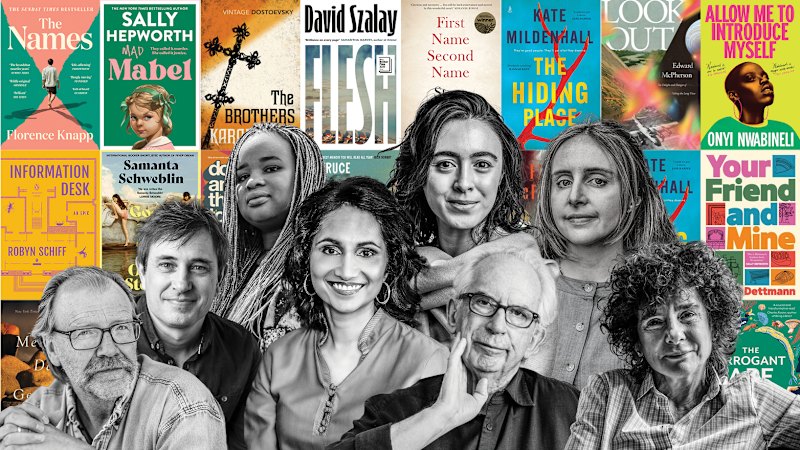

As the year’s reading draws to a close, we asked writers to share the books that stayed with them – the ones that made them laugh, caught them by surprise or caused a late-night obsession. Who better to recommend books than the people who spend their lives making them? Their choices offer a snapshot of 2025 and plenty to add to your summer stack.
I really enjoyed the essays in the collection Look Out: The Delight and Danger of Taking the Long View (Astra House) by Edward McPherson. McPherson travels backward (and forward) in time to argue that how we see is always the result of a particular cultural moment, exemplified by extremely detailed 19th-century maps to the views afforded by early planes to contemporary surveillance. I also loved the family memoir Leg: the Story of a Limb and the Boy Who Grew From It (Trapeze) by Greg Marshall. Marshall’s big, warm, zany family faced lots of health challenges—including his father’s ALS, his mother’s cancer, and the cerebral palsy his parents didn’t tell him he had until he was an adult—but Marshall describes his upbringing with frankness, love and hilarity.
Curtis Sittenfeld’s most recent book is Show Don’t Tell.
I loved Miriam Toews’ A Truce That Is Not Peace (4th Estate). It’s a memoir that gets about as close as possible to life – and death – as it may be safe to go. She tracks almost exactly my generation, in all our messiness and boldness. Extraordinary writing from a writer at the absolute top of her game, daring all. Fiona McFarlane’s Highway 13 (Allen & Unwin) is a tour de force. In softly, barely interlinked stories of huge imaginative power about everyday people, McFarlane gives us a kaleidoscope of fates vaguely linked to a highway murder that stays firmly in the background. What McFarlane foregrounds is our common humanity, detailed in the most subtle but powerful ways. I absolutely loved Geraldine Brooks’ Memorial Days (Hachette), a beautifully braided memoir of marriage, grief, love and living it makes you treasure every instant of “normal” life.
Anna Funder’s most recent book is Wifedom: Mrs Orwell’s Invisible Life.
Florence Knapp’s The Names (Phoenix) will be on a lot of best-of-the-year lists; it’s a rightly celebrated debut with a striking premise – how much do our names, and the circumstances of our naming, shape us? – which tackles difficult subject matter without ever becoming a difficult read. Rebecca Wait’s Havoc (Riverrun), meanwhile, is a riot. Set in a third-rate girls’ boarding school, and featuring a cast that wouldn’t have disgraced St Trinian’s, it’s part mystery (what is causing the sickness and seizures spreading through the school?), part social comedy and thoroughly enjoyable. And finally, The Poems of Seamus Heaney (Faber Poetry) is a monumental tome showcasing monumental achievement – a book for the ages.
Mick Herron’s most recent novel is Clown Town.
Anne de Marcken’s short novel It Lasts Forever and Then It’s Over (Giramondo) is a haunting, hellish, breathtaking book. It reads almost like the crystallisation of a single final breath, and the loss it grieves, I’ve never come across in such strange shape. Though similar in page count, Robyn Schiff’s Information Desk (Penguin) is an epic: a book-length poem planted in the Metropolitan Museum of Art in New York from which Schiff launches the most wondrous excursions into memory, history and matter. And back home, I was deeply moved by Omar Musa’s Fierceland (Penguin) and S. Shakthidharan’s Gather Up Your World in One Long Breath (Powerhouse Publishing), both of which grapple honestly and exactingly with the binds of inheritance.
Nam Le’s most recent book is 36 Ways of Writing a Vietnamese Poem.
The Hiding Place (Scribner) by Kate Mildenhall swept me away in that delicious “cancel my plans, the children can forage for themselves” kind of way. It’s tense, beautifully written and so emotionally precise, it feels like Kate’s been eavesdropping on your inner life. Your Friend and Mine (Atlantic Books) by Jessica Dettmann is the book I want to press into every woman’s hands. It’s warm, wickedly funny and so relatable. Jessica writes female friendship with an authenticity rarely seen. And The Names (Phoenix) by Florence Knapp. Oh, my heart. It’s smart, haunting and exquisitely crafted – the kind of novel that lingers, nudges and rearranges you a little. A genuine stunner.
Sally Hepworth’s most recent novel is Mad Mabel.
Good and Evil and Other Stories (Picador) by Samanta Schweblin: I taught Schweblin’s beautiful A Fabulous Animal (from this collection) on my Substack, Story Club, and what a joy it was to watch people react to the story’s complex beauty. The Brothers Karamazov (Vintage) by Fyodor Dostoevsky: When I read this novel years ago, I didn’t get it. Now, thanks to this recent translation by Pevear and Volokhonsky, I get it: Dostoevsky is a dark, funny, Gogolian, and the book is the wellspring of true crime lit. The History of Sound by Ben Shattuck (Swift Press): This collection is subtle, tender and perfectly paced to wake the reader up to the beauties of the world. Shattuck’s prose charms, calms and reassures.
George Saunders′ new novel Vigil will be published on February 3.
I thought Memorial Days (Hachette) by Geraldine Brooks was a staggeringly raw look into grief and sudden loss by a writer whose work never ceases to amaze and inspire me. It’s a book that made me want to be silent and alone as much as it made me want to bear-hug and sing with and get drunk and dance with every person I have ever loved. Kimberley Allsopp is a wonderful Brisbane writer who has written something seriously compelling and beautiful in Rise and Shine (HarperCollins). It’s complex and raw and private and quiet and cool and sad, like long-term love can be. Cameron Crowe kind of got me into magazine feature writing at the age of 13 when he wrote a Rolling Stone magazine cover story on my favourite band, Pearl Jam. One of the great book listening experiences for me this year was Crowe reading his memoir, The Uncool (4th Estate), while I made my way around glorious Adelaide for three days. Love it when people read their own stuff and let their emotions fly into a permanent public recording. Crowe chokes up multiple times about extremely personal moments, but also conveys the awe that a young music writer felt in the 1970s encountering the likes of David Bowie and Jimmy Page. Incendiary!
Trent Dalton’s most recent novel is Gravity Let Me Go.
Old Soul (Penguin) by Susan Barker is a fictional tale tracing a string of mysterious and horrific deaths that take place over the course of centuries, yet are linked together by one woman. I rarely read horror, but Old Soul came highly recommended, and I was drawn in from the very first page. Barker writes with striking beauty; there were moments when this story almost made me reconsider my aversion to the genre. Almost. If you’re a fan of literary horror, this is a propulsive, satisfying read. I love a female character with a touch of crazy, and Alice – the protagonist of This Immaculate Body (Fleet) by Emma van Straaten – more than satisfies that craving. She works part-time as a cleaner, a job she holds onto solely because she has become fixated on the man whose apartment she tidies each week. She is convinced she loves him, and even more convinced he loves her, despite the fact that they have never met. It’s a tense, often uncomfortable read; we sense it cannot end well, and part of the experience is waiting for the inevitable collapse around her. In Allow Me to Introduce Myself (Magpie) by Onyi Nwabineli, Anuri’s stepmother begins documenting her experience as a white mother to a black child – initially with good intentions. But when attention and fame follow, Anuri grows up under the relentless gaze of the internet. As an adult, she wants nothing more than to escape the version of herself that the world thinks it knows. Allow Me to Introduce Myself feels like a glimpse into our near future. It imagines the moment, not far off, when the children of social media influencers push back, reclaiming their identities just as Anuri fights to reclaim hers.
Oyinkan Braithwaite’s most recent novel is Cursed Daughters.
Sally Hepworth again had me glued to the couch with Mad Mabel (Macmillan Australia). It’s funny, moving and mysterious, and a lot of people on my Christmas list will be receiving this book this year. Kate Mildenhall expertly jumps genres like no other author, this time dishing up the addictively twisty page-turning mystery, The Hiding Place (Scribner). Following an extended family on a nightmare bush weekend, this book is can’t-look-away writing at its best. Andy Griffiths wove his magic yet again in You and Me and the Peanut Butter Beast (Pan Australia). My children aged nine and six loved this second instalment in the Adventures Unlimited series and were captivated by Bill Hope’s illustrations.
Jane Harper’s most recent novel is Last One Out.
In Katabasis (HarperVoyager) by R. F. Kuang, two Cambridge students travel to Hell to rescue one of their professors. In the capable hands and mesmerising imagination of Kuang, it is both beautifully and intelligently written, but also a thrill ride. In The Unraveling of Julia (Bedford Square Fiction) by Lisa Scottoline, a bereaved young woman inherits a mysterious estate in Tuscany, where events quickly turn diabolical. Scottoline outdoes herself in this eerily gothic tale of a life turned upside down with more twists than you can count. The History of Sound (Swift Press) by Ben Shattuck is a series of short stories with interconnections set over several centuries in New England with art and the sea as compelling set-pieces. The writing is elegant and bone deep, and the lessons served up will resonate with everyone who has loved or been loved.
David Baldacci’s most recent novel is Nash Falls.
Arsenic Flower (Hachette) feels like a book engineered to embody everything I love about poetry. This electric debut collection from Bundjalung and Gumbaynggirr poet Dakota Feirer is precise, devastating and reverent, moving across subjects of colonial violence, cultural love and the many tender moments we make and share between each other. This collection is full of humid, steaming air while you walk through a scarred and bloodied earth still heaving with life.I’ve been waiting hungrily for A Savage Turn (Magabala Books) by Gamilaroi writer and educator Luke Patterson for several years. A practiced and deeply clever poet, Patterson never missteps in this collection: it’s funny, loving and watchful, drawing in the world and handing it back to us through a searing gaze. Discipline (UQP) by Randa Abdel-Fattah will stay with me forever. As a great lover of Abdel-Fattah’s writing and advocacy, I thought I knew what to expect from this novel and her expert voice, capable of holding so much complexity and insight. I wasn’t prepared for how permanently this work would move me as I sat with her characters while they navigate Islamophobia, fractured communities, injustice and the daily movements of life, all against the backdrop of Israel’s genocide of Palestinians in Gaza. Discipline proves once and for all that Abdel-Fattah is a master of her craft.
Evelyn Araluen’s most recent book is The Rot.
First Name Second Name (UQP) by Steve MinOn is a wildly original novel about racial identity, sexuality and reckoning with the past. Zany and serious by turns, this book gave me a new perspective. David Szalay’s Flesh (Jonathan Cape) was deeply moving; the more disassociated and passive the protagonist, the more emotional my response. It was the opening chapters that held the key – spare, brutal and mesmerising. I could not look away. Inside Out (Penguin) by Kathleen Folbigg and Tracey Chapman tells of Folbigg’s 20-year imprisonment for crimes she did not commit. Folbigg and Chapman’s story is essentially a call to action; our misogynist justice system needs to change.
Sofie Laguna’s most recent novel is The Underworld.
Having read many books this year, picking favourites was difficult. Not Quite Right in the Head (UQP), Melissa Lucashenko’s strong collection of essays, provides a telling reminder of the work needed in Australia to bring justice to Aboriginal and Torres Strait Islander people, particularly those in the incarceration system. Things In Nature Merely Grow (Farrar, Straus and Giroux) a memoir by novelist and short story writer Yiyun Li, delivers a courageous and ultimately tender story on the loss of the author’s son to suicide. I also read Claire Keegan’s Small Things Like These (Faber and Faber) for maybe the 10th time. As a writer hoping to get better, I still don’t know how she does it.
Tony Birch’s most recent book is Pictures of You.
He Would Never (Macmillan Australia) by Holly Wainwright is the perfect summer read about a mother’s group on their annual camping trip, where the cracks in each family’s lives start to show. Suspenseful and deeply observant, I inhaled this in a single weekend. A Beautiful Family (Allen & Unwin) by Jennifer Trevelyan, told from the perspective of a 10-year-old girl, felt like returning to the wonder and confusion of childhood. It’s a mystery set in a beach town, with deftly drawn characters, and I particularly adored how Trevelyan painted the intensity and complexity of a relationship between sisters. Mad Mabel (Macmillan Australia) by Sally Hepworth is unexpected, gut-wrenching, and brilliant. Hepworth is at her best, with an 81-year-old heroine who feels warm and deeply familiar despite her infamous past. Cleverly plotted and full of soul. I couldn’t put it down.
Clare Stephens’ debut novel is The Worst Thing I’ve Ever Done.
Bob Hughes called him the most gifted art critic of his generation, and anyone who has read his magnificent book on Caravaggio knows Andrew Graham-Dixon is also a scrupulous historian, a detective, a terrific writer with the power to make his readers really see each painting. His thrilling new work, Vermeer: A Life Lost and Found (Allen Lane), will forever change the way we see Woman with a Pearl Necklace and all those seemingly secular masterpieces we think we know so well. The rigorous detective work reveals that these were devotional paintings for a persecuted religious group which embraced the ideal of a radical feminist Christianity. Who knew?
Peter Carey’s most recent novel is A Long Way From Home.
I greatly resent Harriet Armstrong and her brilliant debut To Rest Our Minds and Bodies (Les Fugitives). Should someone so young should have this much talent? This campus novel of love on the spectrum announces a name we’ll be hearing for decades to come. I adored Pip Finkemeyer’s rollicking sophomore, One Story (Ultimo). A parable of hubris and ambition, this broadside against tech is fresh, fun and feminist to the marrow. Clear the decks for May 2026 for The Ruiners (Summit Australia) by Ellena Savage. My eyes are still burning from the proof. This hilarious, fearsomely original anarchist comedy about the end of the world has the hallmarks of an instant classic. You’ve been warned!
Dominic Amerena’s debut novel is I Want Everything.
Required reading for anyone with a beating heart, One Day, Everyone Will Have Always Been Against This (Text) by Omar El Akkad was a breath of fresh air in a year in which I feel like the media has begun turning its back on the genocide still occurring in Palestine. It’s one of the most scathing, poetic and accurate dissections of Western liberal attitudes that I have ever had the pleasure to read. Another sucker-punch was The Weight (Drawn and Quarterly) by Melissa Mendes – a brutal portrayal of domestic violence across generations, with beautiful moments of play, tenderness and a fart joke here and there. Finally, Stag Dance (Serpent’s Tail) by Torrey Peters lived up to expectations. Funny and disconcerting, with the same cheeky deep cuts on queerness and gender that I loved Detransition, Baby for.
Lee Lai’s latest graphic novel is Cannon.
Loading
The Arrogant Ape (Abacus) by Christine Webb: Primatologist Dr Webb has written this fully researched and enjoyably readable polemic that offers a new way to think about humanity. She argues that the so-called “natural” hierarchy with us at the top is as false as all the other “natural” hierarchies we used to live by … think straight white male. Less important women. “Inferior” people of colour. This is a fact-based book that asks us to challenge our superiority complex before we wipe out the planet, its life and ourselves. Don’t Burn Anyone at the Stake Today (Fig Tree) by Naomi Alderman, Fabulous Alderman, who brought us The Power, turns her laser-gaze to what she calls the information crisis, and how we deal with the tsunami of slop that overwhelms our judgment, even our sense of self. Funny and clever as always, this will change the way you think about how we are living and what we can do about it. Aussie writer Lucy Nelson is a new and thoughtful voice, and the short stories in Wait Here (Summit), about the lives of women with no children, are absorbing, sometimes upsetting but always dismantling the catch-all cliche of childlessness. Young or older, the women here are 3-D, but not only social-realist portraits. Their inner lives compel us past their outer circumstances.
Jeanette Winterson’s most recent novel is One Aladdin Two Lamps.
The White Crow (Hachette) by Michael Robotham has all of Michael’s nuanced plotting and pacing, with one of the genre’s most engaging protagonists, Philomena McCarthy – a cop conflicted by belonging to a notorious London crime family. Five Found Dead (Ultimo Press) by Sulari Gentill is a playful modern take on Murder on the Orient Express – full of humour and wry observations. It’s cosy crime meets meta-fiction. Dust (Affirm) by Michael Brissenden is a gritty take on the hard-scrabble lives of rural Australia’s underclass featuring a highly readable plot that also touches on the fault lines in our society.
Chris Hammer’s most recent novel is Legacy.
My reading year has been dominated by acclaimed novels that have confounded me in the past (and confound me still), but relief has been found in the following books. The Safekeep (Penguin) by Yael van der Wouden – a tense and sensual story about secrets, longing and war. Hannah Kent’s memoir, Always Home, Always Homesick (Picador) – a beautiful and rare insight into the life of a novel (Burial Rights) and the making of a writer. Geraldine Brooks’ heartbreaking (and ultimately practical) memoir, Memorial Days (Hachette), about her grief and mourning following the sudden death of her husband. All three books are emotionally generous and provide keen observations about our shared humanity.
Pip Williams’ most recent novel is The Bookbinder of Jericho.
Crackling of a thunderstorm opens Natalia Figueroa Barroso’s Hailstones Fell Without Rain (UQP). Her debut novel, a pioneer of Latin American Australian literature, is a multilingual and multigenerational brushstroke of genius. Made mistakes? Take great comfort in Daniel Nour’s hilariously unreliable ethnic memoir How to Dodge Flying Sandals and Other Advice for Life (Affirm). Who says you can’t have a divine gay awakening after criticising same-sex marriage on national television? And no book is as essential for these past two years as Micaela Sahhar’s Find Me at the Jaffa Gate (NewSouth). As she creates an encyclopaedia of her family’s history in Palestine, she takes readers to the crossroads of genocide and sovereignty, lies and truth, revealing we are all free only when Palestine is free.
Winnie Dunn’s debut novel is Dirt Poor Islanders.
Since I am 70 this year, my mind has begun to wander. This means that I often have the fleeting sensation that I am – literally am – T.S. Eliot. This means I am delighted with Volume 10 (Faber Poetry) of his correspondence, written between 1942 and 1944, edited by Valerie Eliot and John Haffenden. On a more serious note, 38 Londres Street by Philippe Sands (W&N) is a fascinating account of the attempted extradition from the UK to Spain of the former Chilean dictator General Pinochet. Sands can explain the minutiae of international extradition law as he draws memorable portraits of the lawyers and politicians involved. In Ireland, the book that will keep us all out of the pubs over Christmas is a magisterial doorstopper – all 1296 pages of it: The Poems of Seamus Heaney (Faber Poetry), edited by Rosie Lavan and Bernard O’Donoghue with Matthew Hollis.
Colm Toibin’s short story collection The News from Dublin will be published on March 31.
Tony Birch masters the art of lean precision yet deeply evocative storytelling in his anthology Pictures of You (UQP), a beautifully drawn mosaic of family and community reflecting facets and fractures of love, violence, survival and everyday courage. For a perfect poolside-in-summer read, Anita Heiss’ Red Dust Running (Simon & Schuster) offers up romance, friendship and a rodeo, in a cracking story that hums with a love of Country and sisterhood. Warra Warra Wai (Scribner) Darren Rix and Craig Cormick invites the reader to view what we think are known events from a wonderfully alternate perspective, and in doing so, deepens and enriches our understanding of the societies, lives and people of the oldest continuous cultures in the world.
Tasma Walton’s most recent novel is I Am Nannertgarrook.
Defiance: Stories From Nature and Its Defenders by Bob Brown (Black Inc) is totally inspiring in encouraging us to “be defiant” in the face of the unrelenting destruction of our planet. “nature is so vital to the soul of humanity and all other life on earth we shouldn’t concede another hectare of it to destruction. Not a hectare.” As an only child with a widowed mother, I find reading about families interesting and challenging. Suzanne Do weaves together pain, humour and intrigue in her debut book The Golden Sister (Macmillan Australia). I look forward to her next one. I never thought I’d read 392 pages on the 500-million-year history of sharks . . . which are now threatened with ramifications beyond our oceans. The Secret History of Sharks (Quercus Books) by Professor John Long – fascinating!
Di Morrissey’s most recent novel is The Endless Sky.
The novel I have recommended most this year is Arborescence (Hachette) by Rhett Davis which asks if humans stood still long enough, could we turn into trees. Original, hopeful and unsettling in the very best of ways. The debut collection of short fiction from Lucy Nelson, Wait Here, exploring the lives of women without children is a stunner and a masterclass in writing craft. The book I most want everyone to read is Omar El Akkad’s One Day, Everyone Will Have Always Been Against This (Text). Guaranteed crowd-pleasers I’m packing for sharing at the beach are Tenderfoot (Hachette) by Toni Jordan, Big Feelings by Amy Lovat (Macmillan Australia) and Mad Mabel (Macmillan Australia) by Sally Hepworth.
Kate Mildenhall’s most recent novel is The Hiding Place.
This year, I went old school. The world felt unhinged, and I needed Stephen King’s Life of Chuck (Hodder & Stoughton) to remind me of the beauty of ordinary life. It’s King at his most tender, and it left me hopeful. Then came Charlotte McConaghy’s Wild Dark Shore (Penguin), a haunting exploration of love and survival against ecological collapse – Australian fiction at its finest. And finally, Percival Everett’s I Am Not Sidney Poitier (Picador). After a disappointing read this year (no names – my book club was split), I turned to Everett to restore my faith in literature. Percival, if you’re reading this, call me.
Shankari Chandran’s most recent novel is Unfinished Business.
This year I loved The Wedding People (Phoenix) by Alison Espach, a tragicomedy about love, weddings, depression and everything in between. I knew it was good because I was so annoyed when I finished it that I hadn’t thought of it myself. I also loved Kate Weinberg’s There’s Nothing Wrong with Her (Bloomsbury), a short, forensically observed novella about modern relationships, women and illness that is quietly devastating but also contains a caustic 16th century ghost called Luigi. On a non-fiction note, I was fascinated by neuroscientist Joseph Jebelli’s The Brain At Rest (Penguin), which made me reconsider my own working and living habits and finally embrace the guilt-free nap.
Jojo Moyes’ most recent novel is We All Live Here.
Perfection (Text) by Vincenzo Latronico translated by Sophie Hughes is, well, what it says on the tin: stylistically daring but never gimmicky literary fiction, which says something astute about the way we live now. Perfection! Audition (Fern Press) by Katie Kitamura is a slippery, taut novel which rewards close attention and refuses to wrap things up neatly for the reader. And The Hypocrite (W&N) by Jo Hamya is remarkably like Audition in many ways: psychologically astute writing, themes of identity and intergenerational tension, a plot that revolves around children writing plays about their parents. I loved both and I’m particularly excited to see what Jo Hamya, who is a Gen Z author, writes next.
Diana Reid’s most recent novel is Signs of Damage.
Jacinta Parsons brings energy and fierceness and the hard-won wisdom of older women to A Wisdom of Age (ABC Books), which urges us all to speak up, speak loud and to resist invisibility. It’s about “doing ageing differently” and elevating the fierce girl in every woman. Randa Abdel-Fattah’s Discipline (UQP) is a battle cry for justice, for the people of Gaza. It focuses on Ashraf, an academic, and journalist Hannah who, despite facing new motherhood and family trauma, fights hard against racism in the newsroom. This extraordinary and timely book interrogates the cost of freedom, justice and silence for all us. Tasma Walton’s great-great-great-grandmother, Nannertgarrook, along with other Indigenous people, was abducted by sealers from Nerrm — Port Philip Bay — and sold into slavery and imprisonment by sealers. Their idyllic life in Nerrm is over, their culture destroyed. I Am Nannertgarrook (Bundyi Books) outlines atrocities barely mentioned in schools and asks important questions – who were the real savages? – and what it truly means to be civilised.
Kristina Olsson’s most recent novel is Shell.
In winter, I stumbled upon Ferryman, The Life and Deathwork of Ephraim Finch (Wild Dingo Press), Katia Ariel’s beautifully written mix of biography, memoir and cultural history. It became a wise companion, inviting me to consider the meaning of mortality and values by which I live. In the manner of a degustation menu, I paired it with Dr Stephanie Dowrick’s Creative Journal Writing (Allen & Unwin), an insightful and gentle mix of reflections, stories and exercises which proved to be a sustaining gift. Fiction-wise, it’s been a year of re-reading and discovering unread classics, including a delicious Edna O’Brien mini-fest, but some newer titles absorbed me, particularly Jumaana Abdu’s Translations (Vintage), a beautifully confident debut.
Kathryn Heyman’s new novel Circle of Wonders will be published on March 31.
I think I’d like to be buried with a copy of Sula (Vintage Classics) by Toni Morrison. I first read Morrison as an undergraduate, and her writing has occupied space within me since. I haven’t read anything of her work, either fiction or non-fiction, that I have not been able to draw comfort, learning or inspiration from. I have just started to read Looking from the North (NewSouth) by Henry Reynolds. I adored being in his classrooms as an undergraduate student, and then as I read his ever-growing volumes, I could feel Aboriginal Australians growing shape and flesh in the Australian literary landscape. I wasn’t ever really attracted to most forms of poetry, to read for its own sake, but then I met Ali Cobby Eckermann and read her work. Poetry has grown its own personality now. Evelyn Araluen’s (The Rot, UQP) writing always impresses me with her commitment to human decency and an honourable living, as hard and as complex as that can be.
Debra Dank’s most recent book is Ankami.
I loved Markus Zusak’s Three Wild Dogs (and the Truth) (Picador), a hilarious account of the hapless author’s adventures with a series of canine companions. None are the types you’d rush across the street to pat, but Zusak adores them, and the humour is balanced with the pain of losing beloved pets. In fiction, Garrett Carr’s The Boy from the Sea (Picador) was an excellent debut Irish novel about a difficult sibling relationship, while John Irving’s Queen Esther (Scribner) was a total joy, returning the reader to Dr Larch and the orphans of St Cloud’s, the setting of The Cider House Rules, through the story of a young Jewish child. Few writers combine comedy, tragedy and wisdom as well as Irving.
John Boyne’s most recent novel is The Elements (Penguin).
When it comes to literature, my only commandment is “thou shall not bore”. Fundamentally (W&N) by Nussaibah Younis is a darkly funny debut novel about the deradicalisation of Islamic State brides. I know. Sounds about as funny as waking up mid-surgery. But with a wit sharp enough to shave your legs, Younis addresses this most serious subject with caustic, confronting humour. The book is also a moving exploration of love, family and religion. What Have I Done? (Macmillan) charts Ben Elton’s dazzling success. His brilliant mind not only zings with jokes but also with perspicacious political insights. Warning: this memoir will make you feel like a total underachiever. Don’t Make Me Laugh (Bedford Square) by Julia Raeside – finally! A #MeToo moment for the comedy world. Set in London, this provocative and funny debut novel explores the serious areas of coercion and intimacy. Tell Me Everything (Viking) by Elizabeth Strout: This is a writer who makes the ordinary, extraordinary. Her prose shimmers with empathy, pathos and compassion, illuminating how our relationships, even those with a touch of the Titanics, keep us afloat.
Kathy Lette’s new novel The Sisterhood Rules will be published on February 3.
What were your favourite books in 2025? Tell us in the comments.
The Booklist is a weekly newsletter for book lovers from Jason Steger. Get it delivered every Friday.