
The Simpsons showrunner reflects on reaching nearly 800 episodes and the show’s freaky reputation for predicting real-world events through satire.
A Historic Milestone for Television’s Longest-Running Cartoon
February 15, 2026: The Simpsons is approaching a landmark moment in television history as the series nears the 800-episode mark, and the showrunner says the achievement feels both surreal and energizing. After decades on air, the animated comedy remains one of the most recognized and discussed shows in the world, continuing to generate new storylines while also being celebrated for its cultural longevity.
Reaching this episode count places the series in an elite category that few scripted programs — animated or live action — have ever entered. What began as a satirical animated experiment grew into a global institution, and its leadership says the creative engine behind it is still very much alive. HOLR has the latest news on what the showrunner shared about the milestone and the series’ famously “freaky” track record of predicting real-world developments.

Image Credit: Fox
From Risky Experiment to Cultural Institution
When The Simpsons first launched, few expected it would grow into a multi-decade franchise spanning generations of viewers. Early seasons built momentum through sharp satire, family-centered absurdity, and social commentary that felt both playful and pointed. Over time, the show evolved into a cultural reference machine — influencing comedy writing, animation standards, and television storytelling structure.
The showrunner noted that longevity was never the original goal. The early creative teams focused on making each episode funny and relevant, not on building a record-breaking run. The fact that the series is now approaching 800 episodes is described internally as a byproduct of creative adaptability rather than long-term planning.
That adaptability — the ability to comment on changing culture — is widely credited as the core survival mechanism of the show.
The Creative Challenge of Staying Fresh
Producing hundreds of episodes of any series creates a creative pressure that few writing teams ever face. According to current leadership, the biggest challenge is not generating jokes — it is generating new angles on familiar characters. With such a deep episode library, avoiding repetition requires constant structural experimentation.
Writers now approach stories by focusing on emotional pivots, genre parodies, and format shifts rather than traditional sitcom setups alone. Episodes increasingly play with storytelling devices — flash-forwards, alternate timelines, documentary styles, and meta narratives — to keep the show feeling inventive.
HOLR breaks down the strategy: format flexibility has become just as important as humor density in sustaining ultra-long series.

Image Credit: Pagesix
The “Freaky” Prediction Reputation
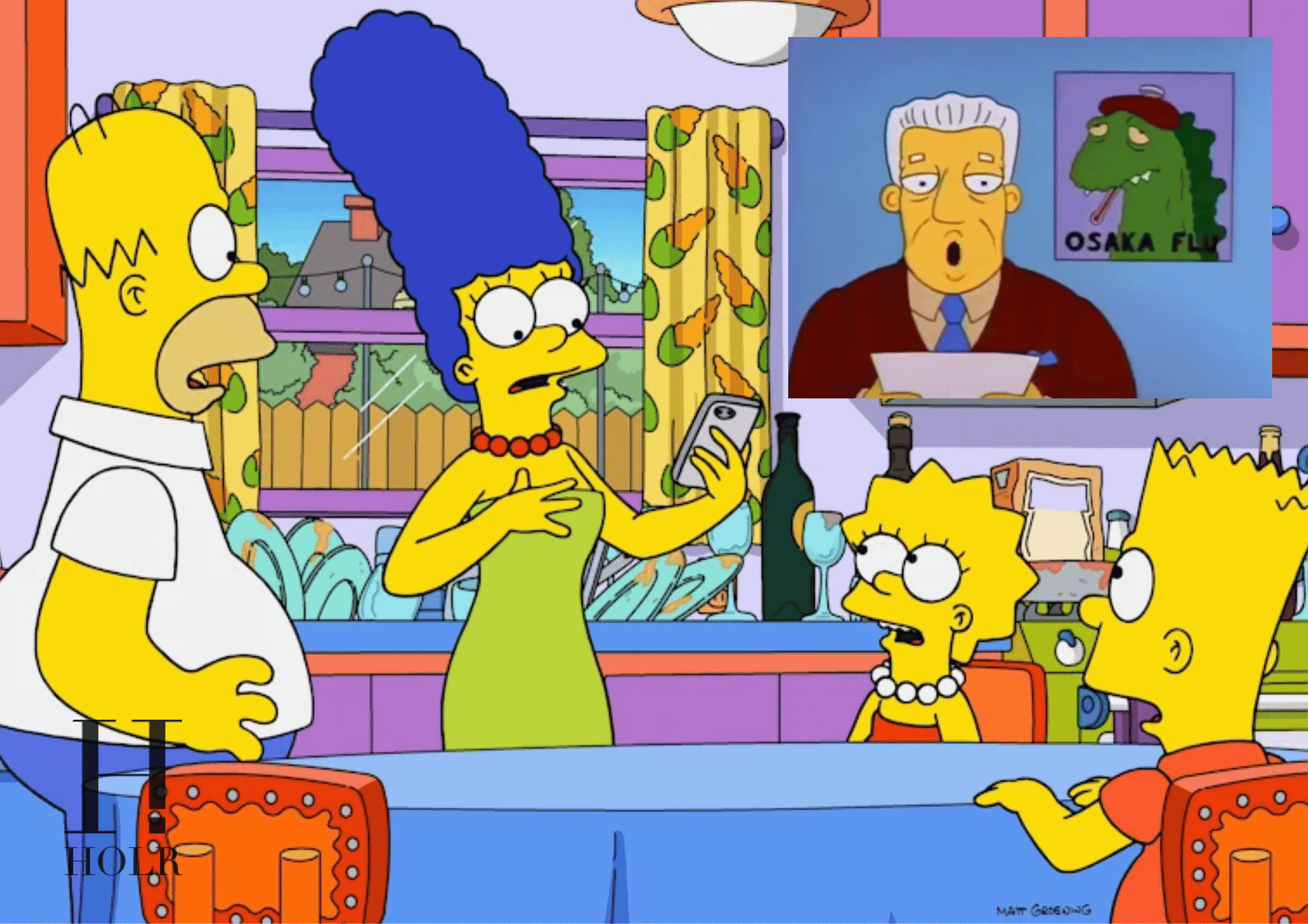
One of the most talked-about aspects of The Simpsons’ legacy is its reputation for seemingly predicting future events. Over the years, fans have compiled lists of episodes that appear to mirror later real-world developments — from technology trends to political moments to corporate shifts.
The showrunner addressed this reputation with humor, describing it as “freaky” but also partly statistical. With hundreds of episodes covering politics, science fiction, media, and social change, the show casts a very wide imaginative net. When enough speculative jokes are made, some are bound to line up with future reality.
Still, the number of apparent hits has kept the prediction narrative alive — and it continues to fascinate audiences.
Satire as an Accidental Forecast Tool
Satire often works by exaggerating existing trends. Writers take early signals — technological, political, or cultural — and push them to absurd conclusions. Sometimes reality moves in that same direction, making the satire look prophetic in hindsight.
According to the showrunner, many so-called predictions were simply logical extensions of what was already visible at the time. When those extensions later came true, viewers interpreted them as foresight rather than satire extrapolation.
Comedy writers, he explained, are often trend observers first and joke builders second. That observational habit increases the odds of near-future alignment.

Image Credit: ©20thCentFox/Courtesy Everett Collection
Why Viewers Still Care After So Long
Audience loyalty after so many seasons is rare, but The Simpsons benefits from multi-generational reach. Parents who watched early seasons now share the show with their children, creating layered nostalgia. At the same time, newer episodes continue to reference current platforms, technologies, and social behaviors, keeping the show connected to present culture.
The showrunner emphasized that emotional familiarity plays a major role. Viewers return not only for jokes, but for character consistency. Springfield functions like a comedic constant in a rapidly changing media landscape.
HOLR has the latest news that long-running series with stable character cores tend to outperform trend-driven shows in long-term recall.
Evolving With the Media Landscape
The Simpsons has survived massive shifts in how audiences consume television — from broadcast dominance to streaming fragmentation. Leadership credits survival partly to distribution flexibility and partly to writing evolution. Episodes are now created with replay and clip culture in mind, where short segments circulate independently online.
This changes pacing and structure. Scenes are designed to stand alone more often, creating shareable moments without breaking episode flow. That adjustment helps the show remain visible in digital conversation even between full-episode airings.
The result is a hybrid storytelling model — traditional episode arcs with modular viral-ready segments.
Balancing Legacy and Experimentation
One ongoing internal debate, according to the showrunner, is how far the show can experiment without losing its identity. With such a large back catalog, legacy expectations are strong. Some fans want classic-style episodes, while others welcome structural risks.
The creative approach has been to alternate — pairing familiar-format episodes with experimental ones. That rhythm keeps long-time fans grounded while giving writers room to explore new comedic territory.
It’s a portfolio strategy rather than a single formula approach.

Image Credit: Fox
Writing Comedy in a Faster News Cycle
Modern satire faces a new challenge: the speed of real-world news. Events move so quickly that topical jokes can age out before episodes air. The writing team now aims for theme-based satire instead of headline-based satire — focusing on patterns rather than incidents.
This allows episodes to remain relevant longer. Instead of referencing a single event, stories target recurring behaviors in politics, media, or technology. That broader framing increases shelf life and international relatability.
HOLR breaks down the shift as satire moving from “what happened” to “why it keeps happening.”
The Role of Guest Voices and Cultural Crossovers
Guest appearances remain a major part of the show’s appeal. Celebrity voice cameos and crossover episodes introduce novelty and attract new viewers. However, producers say guest roles must serve story first, publicity second.
The most successful guest spots are written as character moments, not stunt moments. That philosophy has helped maintain quality control across hundreds of episodes.
Cultural crossover episodes — blending genres or parodying major franchises — also help refresh tone without altering core characters.
Looking Beyond Episode 800
Reaching 800 episodes is being treated internally as a celebration — but not a finish line. The showrunner indicated that the creative team is still generating story ideas at a sustainable pace and does not view the milestone as an endpoint marker.
Future plans include continued genre experimentation, character-deepening stories, and new animation techniques integrated subtly rather than disruptively. The goal is evolution without identity loss.
Longevity, he suggests, is maintained through curiosity, not repetition.
Why the Milestone Matters
Television milestones matter because they measure cultural endurance, not just production volume. Few shows remain relevant across decades of social change, media disruption, and audience fragmentation. The Simpsons reaching 800 episodes represents not just output — but adaptation success.
It demonstrates that animated satire can function as a living cultural record, capturing shifting anxieties and humor styles over time.
HOLR has the latest news that the milestone is already prompting retrospectives, rankings, and renewed academic interest in the show’s social commentary legacy.
A Series That Became a Time Capsule
Perhaps the most unexpected outcome of the show’s longevity is that it now functions as a time capsule. Earlier seasons reflect past media fears and cultural obsessions, while newer ones capture current anxieties and digital behaviors. Watching across eras reveals how humor — and society — changes.
That layered archive effect gives the show academic as well as entertainment value. Few comedies unintentionally document cultural evolution at this scale.
The Joke That Keeps Going
When asked how it feels to approach 800 episodes, the showrunner reportedly framed it simply: the joke is still working — and as long as it works, the show continues. That philosophy — humor first, milestone second — may be the clearest explanation for the series’ survival.
After all these years, the mission remains unchanged: find the joke, tell it well, and let Springfield keep spinning.
FAQs
How many episodes is The Simpsons nearing?
The series is approaching the 800-episode milestone.
Why is The Simpsons known for “predicting” events?
Because many satire-based storylines later resembled real-world developments, creating a prediction reputation.
Did the show actually try to predict the future?
According to leadership, no — writers extrapolate trends for satire, and some later align with reality.
How does the show stay creative after so many seasons?
By experimenting with format, genre parody, and emotional character angles.
Is the show ending at 800 episodes?
No — current comments suggest continued production plans.