
Loading
What this all did was to underline another truth. While England’s pace attack has been assembled with plenty of care and attention to detail, marshalling a group of speedy, committed and relentless fast bowlers, the batting lineup is nowhere near as tuned.
It is a curious aspect of the cricket played under Ben Stokes and Brendon McCullum that the bowling has generally been both clever and disciplined. In 2023, on flat pitches, the bowlers kept asking awkward questions of Australia and ultimately broke the touring side’s batting down for collapses at Headingley and the Oval that secured a 2-2 series draw.

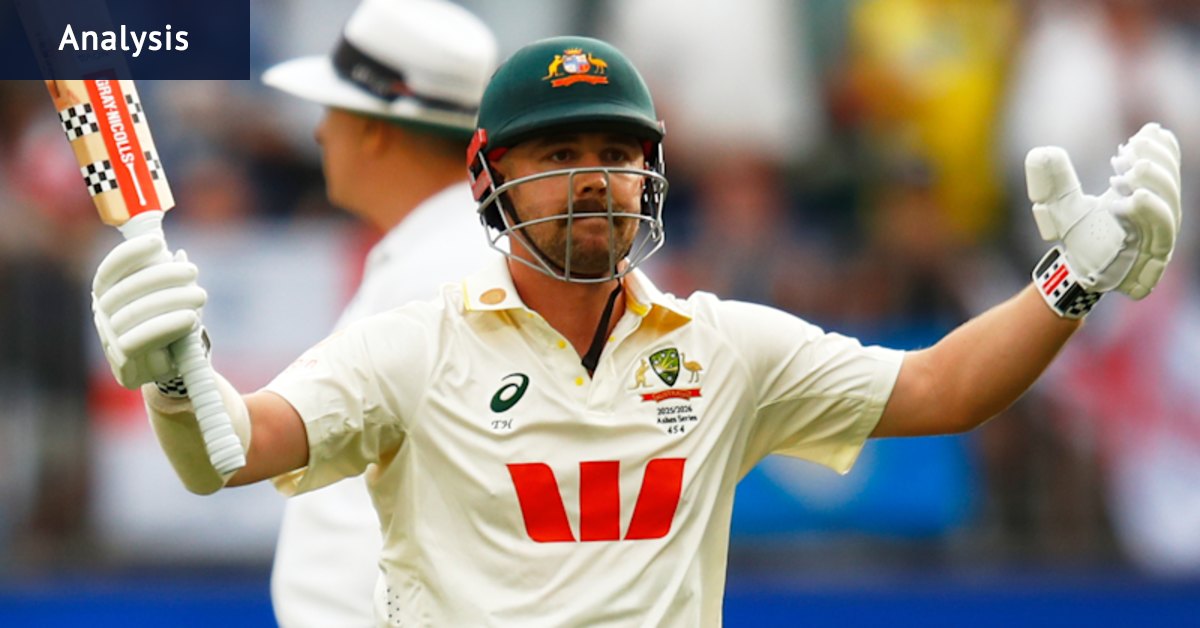
Travis Head flays a six.Credit: Getty Images
As Brydon Carse put it after day one, the bowling group has been united in the knowledge that it isn’t just speed that will kill Australia, but relentless pressure.
“That’s the collective messaging throughout the group, everyone 100 per cent buys in to that, and we are never going to shy away from that,” he said.
Loading
“Hopefully, that relentlessness, passing the ball over to each other and sticking to what we want to work towards as a group of seamers, will stand us in good stead. The group of six or seven fast bowlers we have, we all offer different skills and attributes, and we complement each other well.”
By contrast, England’s approach to batting is, for lack of a better term, largely vibes-based. Harry Brook, Stokes’ deputy and an outrageous talent, has told those close to him that his game plan can be distilled around his simple desire to stop pace bowlers from attacking his stumps.
It is true that this approach has unlocked some incredible displays over four years: Brook, Joe Root, Ben Duckett, Zak Crawley, Stokes and Jonny Bairstow have all contributed centuries that could pass for highlights packages.
But there was wide acknowledgement, both within and outside the England team, that this series would require something greater and more nuanced if Stokes was going to join Douglas Jardine and Ray Illingworth as the only England captains to regain the Ashes on Australian soil.
Having been bailed out so magnificently by their bowlers on the first evening, here was the ideal opportunity to show that evolution. Instead, Ollie Pope, Brook and Root all jumped like lemmings into the trap of trying to drive in Perth.

Ollie Pope reacts to his dismissal.Credit: Getty Images
Around them were some blameless dismissals. Duckett and Stokes were both dismissed by movement and bounce on the perfect line from Scott Boland and the magnificent Mitchell Starc respectively. Those are going to happen in Test cricket, particularly on a surface as lively as this one.
When accompanied by the uncontrolled urge to drive early on, however, they bring the recipe for the sort of collapse that pulled Australia back into the Test match.
After six wickets had fallen for 39 runs, it took a 50-run stand between Carse and Gus Atkinson to prolong the innings and take England’s lead to 200.
Loading
Their partnership demonstrated that it is possible to make proactive decisions with a little less risk than by trying to drive good-length balls. They also showed how, for the first time in some years, England came into his match with a more capable lower order than Australia.
The roars that accompanied another rush of wickets at a packed stadium made for a sense of the gladiatorial. Another near sellout crowd is expected for Sunday, but there were no guarantees that this match would have much cricket left in it by then.
England’s brand of entertaining Test cricket is compulsively watchable. “Bazball” should share equal billing with Slow Horses for the most entertaining limited series to come out of the UK since COVID.
But to win the Ashes on Australian soil, it will be necessary for the batsmen to take a few more cues from the bowlers. Saturday’s play was more River Cartwright than Jackson Lamb, and it was left to Travis Head to provide the popcorn.
News, results and expert analysis from the weekend of sport are sent every Monday. Sign up for our Sport newsletter.