
The first time he “retired”, in 1956, Warren Buffett was 25. Benjamin Graham, the famous stock-picker who employed him, had closed his fund. The oracle of Omaha, as Buffett would later become known, went home to Nebraska. His break from work was brief; he soon started an investment partnership of his own. But then in 1969, aged 38, Buffett retired for a second time, telling investors he was “not attuned to this market environment” so would shut down his fund. His attention shifted to Berkshire Hathaway, a struggling textile concern he controlled. It has since been among the greatest successes in the history of business.

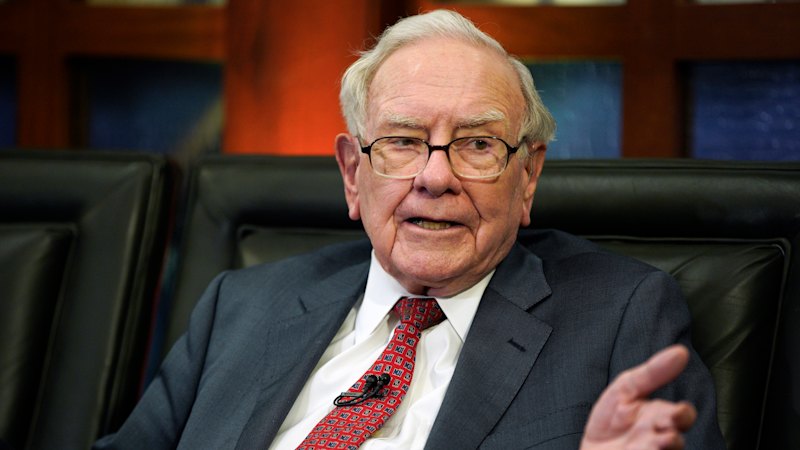
Berkshire Hathaway’s Warren Buffett, known as the “Oracle of Omaha”, has handed his role of chief executive to Greg Abel.Credit: AP
On New Year’s Eve, Buffett, who is 95, will retire for a third – and presumably final – time. He will step down as chief executive of America’s ninth-most-valuable company, and its most unique. Berkshire is a financial colossus. It is America’s second-largest property and liability insurer, and holds tradeable stocks, bonds and cash worth nearly $US700 billion ($1.04 trillion). It is also an industrial conglomerate. Berkshire controls about 200 companies including BNSF, one of four “class 1” railways in America; a collection of power utilities; and consumer brands from Brooks running shoes to See’s candy. And it is a capitalist religion. The 1934 edition of Security Analysis, a textbook by Benjamin Graham and David Dodd, is its bible. Sermons are delivered annually by Buffett at Berkshire’s shareholder conference.
It is hard to imagine a more difficult act to follow. Sprawling, analogue and fraternal, Berkshire is a singular company that long revolved around its singular boss. It has been enormously successful: since Buffett took control of Berkshire in the 1960s, its shares have generated a far greater return than America’s S&P 500 index. The transition to Gregory Abel, his anointed successor, will therefore be closely watched. Can Buffett’s creation continue to thrive after he steps aside?
America’s most revered company is also one of its least well understood. Berkshire is known, first and foremost, as a vessel for Buffett’s investing genius. He is a “value” investor insofar as he began his career scouring markets for companies worth less than the accounting value of their assets. But he has also owned plenty of “growth” stocks. His purchase of Apple shares between 2016 and 2018 was among the most profitable investments in Berkshire’s history.
Loading
Buffett dislikes both terms. But one piece of investment jargon he can’t talk about enough is “moats”—a competitive advantage that allows a business to consistently earn a rate of return above its cost of capital. Buffett’s knack for spotting them is one reason for Berkshire’s remarkable performance. Some moats are bestowed mainly by the tastes of consumers, as in the case of Apple (Berkshire owns stock worth $US65 billion) or Coca-Cola ($US28 billion). Others are conferred, at least in part, by regulation, as with Bank of America ($US32 billion) or Moody’s ($US13 billion). Berkshire owns a sliver of both Visa ($US3 billion) and Mastercard ($US2 billion), America’s dominant credit-card providers, as well as a fifth of American Express ($US58 billion).
Perhaps Buffett’s greatest innovation, however, is not in allocating capital, but raising it. In 1967 Berkshire bought National Indemnity, a Nebraskan insurer. Together with GEICO, a car insurer, and a large reinsurance business, it provides much of Berkshire’s capital. The idea is simple. Policyholders pay premiums to insurers before insurers pay claims to policyholders. When an insurer is run profitably, collecting more in premiums than it pays in claims and costs, it can invest those premiums and pocket the returns. Most insurers park them in bonds. Private-equity-owned life insurers now experiment with buying higher-yielding private debt. But, unusually, half of the assets held by Berkshire’s insurance arm are invested in a concentrated portfolio of stocks.
Underwriting profits from Berkshire’s insurance business make up a small and volatile part of its bottom line, but the premiums collected have funded some huge deals. BNSF was owned first by National Indemnity before it became a directly held subsidiary of Berkshire in 2023. The quarter of Occidental Petroleum Berkshire owns is also housed by the insurer.
Another spigot of capital mastered by Buffett is retail investors. Berkshire’s annual meeting is a jamboree of adoring middle-class capitalists. It is the opposite of the gambling-adjacent retail trading which drives markets these days, but almost as fun. Berkshire’s meeting in 2015 began with a video of Buffett pretending to box Floyd Mayweather. There are also newspaper-tossing competitions (though Buffett tossed print publications out of his portfolio in 2020).