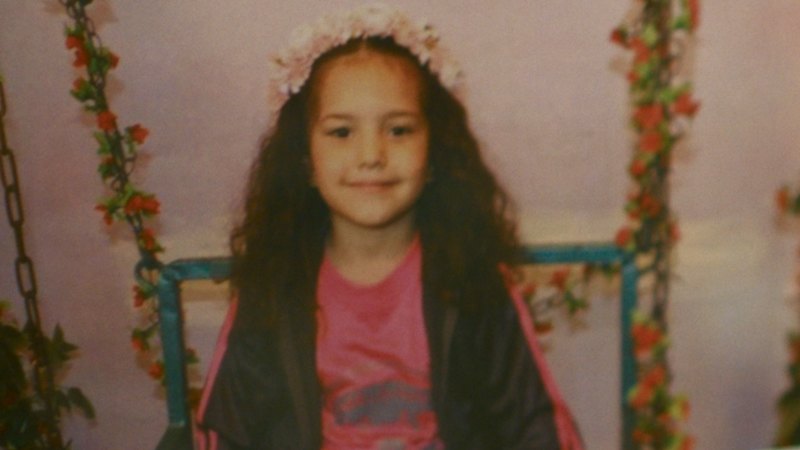

There was no disputing the fact that The Voice of Hind Rajab was the buzz film at last year’s Venice Film Festival, earning a record-breaking 23-minute standing ovation after the final titles rolled. Kaouther Ben Hania’s hard-hitting film is set in the Red Crescent’s cramped centre of operations in Gaza, where the emergency services workers are on the line for hours with a five-year-old girl trapped in a car shot to pieces by Israeli forces. She tells them that she is surrounded by the bodies of her uncle, aunt and four cousins. She begs to be rescued. One of their ambulances is only eight minutes away, but it will never be allowed to reach her.
When the film finished its premiere screening, there were rows of people in evening dress in the Palazzo, crying. They stood and clapped. Surely, journalists said afterwards, a film that made this kind of impact would have to win the Golden Lion, the top prize at Venice.
When Alexander Payne’s jury chose Jim Jarmusch’s wry film about adult families, Father Mother Sister Brother – a trio of stories that alights on us gently as gossamer, by contrast with Hind Rajab’s bazooka – the decision was met with broad disbelief. Ben Hania’s film made do with second prize, a Silver Lion. Was this a political decision?

Ben Hania, a Tunisian filmmaker based in France, certainly made her film with a political purpose. Hind Rajab died in that wrecked car in January 2024. Her phone call to the Red Crescent had been recorded.
“The story was so heartbreaking. It touched me in my soul,” says Ben Hania. “When I heard the voice of Hind Rajab for the first time on the internet I felt sorrow, but also helplessness. I did this movie because of this. Because of thinking what can I do? I’m not a politician, I’m not an activist, I’m a filmmaker. I can do a movie.”
The dazed plaintive voice we hear crackling over the line in the film is the voice of the real Hind Rajab. Ben Hania considered using a child actor to repeat Hind’s words but, she says, dismissed the idea “after 50 seconds”. Instead, she approached the girl’s mother.
“I knew from the beginning that I couldn’t do anything without her blessing. For a mother it is perhaps the most horrible thing to lose a child, but her mother is one of the most courageous and most resilient persons. For her, it was very important that her daughter should have justice. Which she hasn’t.”

The Red Crescent workers are played by Palestinian actors. Motaz Malhees plays Omar, the explosive first responder at the emergency centre who works out her location but soon starts to crack as he searches for words to comfort a five-year-old. The call is taken over by motherly Rana (Saja Kilani) as their boss Mahdi (Amer Hlehel) plunges into the web of protocols required to get an ambulance through bombed streets patrolled by tanks.
He has to call his counterparts in the Red Cross; they have to liaise with a unit in Israel’s Ministry of Defence; an order not to blow up the ambulance in transit has to be issued to individual soldiers in the street. All of them. That’s difficult, but every scraping pulley and lever in this process is very likely to fail.
“For ordinary people living their life, when a child calls asking for help, needing an ambulance, all over the world you send it immediately,” says Ben Hania. “But people don’t know the reality of occupation. What does occupation mean? It means that there are Kafkaesque rules to make the lives of the colonised impossible.”
From the outset, we know that the ambulance will not be allowed to get there, but Ben Hania creates a heat of suspense in the aid workers’ drab office as they desperately make calls, trying to get their rescue workers safe passage. Their desperation is so palpable that we find ourselves holding out hope that history will somehow be rewritten and the owner of that little voice will go home.
“When I started doing this movie I started immediately by contacting the Red Crescent, talking to the real people about what happened that day,” says Ben Hania. “And they talked to me honestly about what they were feeling. I stayed very close to what they told me because for me, honouring their work also in an impossible situation was very important. And then when I cast the actors, every actor talked to the real person to portray them.”

Honouring doesn’t mean indulging anybody. The emergency workers blame each other, lose their tempers and divert their fear into pitched ideological battles about whether they should be negotiating with the Israelis at all: pointless arguments that ring terribly true.
During rehearsal, Kilani said in an online interview, the actors worked from script but without Hind’s recorded voice. On the day filming started, they were fitted with earpieces and heard her for the first time. Their collective response was electric. Sometimes they forgot they were acting and spoke as themselves.
“All my actors are Palestinian, so already they are bringing their life, their experience and their share of tragedies,” says Ben Hania. “For them and for me, it was beyond acting. I didn’t need to direct them; they were immersed in the moment. For me, this authenticity was very important. It wasn’t about ‘please don’t cry now’; ‘here, I need a tear’. For me, that would be horrific, I couldn’t ask them this, you know. And for me, I was really very lucky to have those actors.”
Not all responses to The Voice of Hind Rajab were entirely positive. Critics worried at the ethics of mingling the real girl’s voice with a drama pumped with adrenalin and couched in a language familiar from conventional thrillers. In Variety, Guy Lodge called the film “a blunt instrument” and questioned “Ben Hania’s layering of tearjerker tactics over material that hardly requires extra emotional amplification”.
In The Guardian, Peter Bradshaw wondered if it could be classed as exploitative. “Perhaps Ben Hania’s high-concept idea is debatable, and it might have been just as moving to present this extraordinary real-life recording in the straightforward documentary context of interviews with the responders and emergency workers.”
There can be no doubt, however, that the director’s chosen approach packed the punch she wanted. Her account is even, in the end, surprisingly life-affirming. A high-profile group of Hollywood stars had already signed up to it as executive producers, their names bouncing up unexpectedly, including Brad Pitt, Joaquin Phoenix, Rooney Mara and directors Alfonso Cuaron and Jonathan Glazer. It is easy to see why they felt able to support it: The Voice of Hind Rajab is fierce but never strident or sloganeering. It is partisan, but adheres scrupulously to truth.
Even so, Ben Hania was braced in Venice for accusations of making propaganda. Perhaps she has. “I don’t know which movie-maker said it, but someone did: that every movie is the propaganda of its director,” she says. “In cinema, you choose a point of view. That is already a political decision and you can’t do movies otherwise.”
She is setting out to make a true testament addressing one of the great issues of the day. “Telling me I am doing propaganda, with the bad connotations that word has, is trying to silence the voice of Hind Rajab.”
The Voice of Hind Rajab is in cinemas from March 5.
Must-see movies, interviews and all the latest from the world of film delivered to your inbox. Sign up for our Screening Room newsletter.