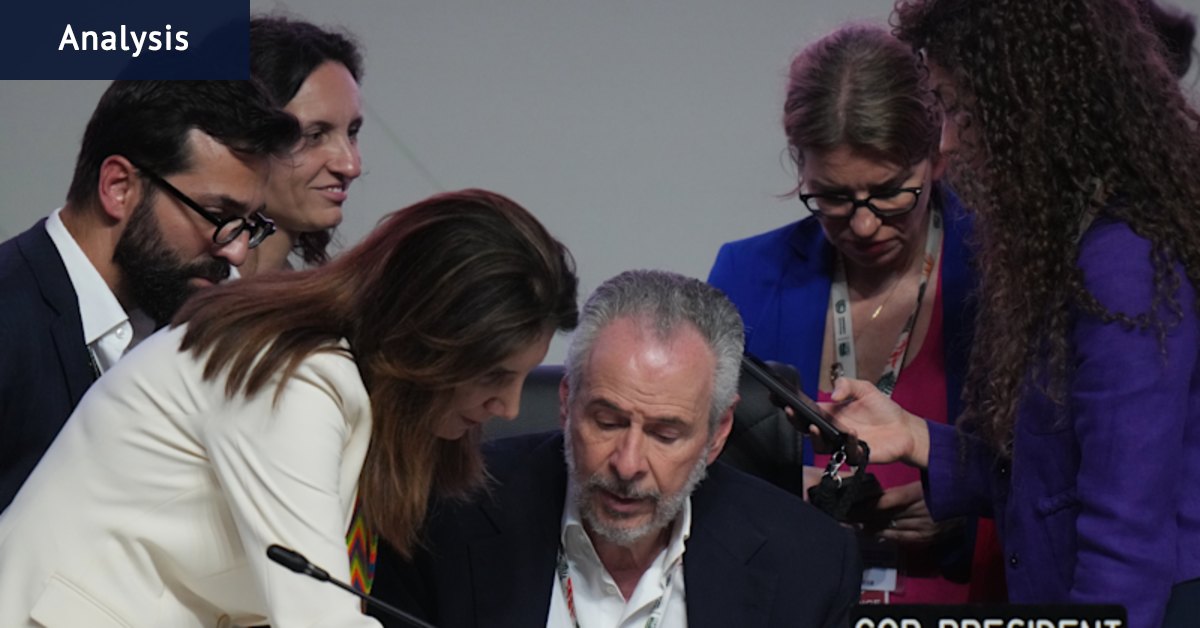

This year’s COP will be judged at best as an ugly compromise. Brazil had chosen to host in Belem, its gateway to the Amazon, and will be bitterly disappointed it did not manage to secure a formal agreement on halting global deforestation. That effort will now be hived off out of the COP process.
Negotiators from 80 nations including Australia, Brazil, the United Kingdon and Germany failed to secure agreement on a “road map” to transition the global economy away from fossil fuels. The group included many developing nations hit hard by climate change, along with the United Kingdom, Germany, and oil producers such as Mexico and Brazil.

Climate and Energy Minister Chris Bowen in Brazil for COP30 earlier this week.Credit: AP
Russia and Saudi Arabia led the opposition.
COP presidents, appointed by host nations, are not diplomatic figureheads. In the months leading up to the annual talks they and their teams set and drive the negotiating tracks, and in the talks themselves they wrangle 190-plus nations to have them agree upon a set of costly initiatives that might drive the world’s efforts to stabilise the climate.
Tennant Reed, the head of Climate Change and Energy at Australian Industry Group who was also in Belem and at the last eight COPs, said the process is becoming harder as the decisions facing the world become tougher.
The COP has already failed to arrest warming at 1.5 degrees, as was one of the Paris goals, at least without significant and prolonged overshoot. It is confronting the loss of support from the United States, whose State Department was once one of the world’s largest engines of climate diplomacy. It has not lived up to agreements to channel sufficient funds from developed to developing nations for adaptation, and it has not yet worked out an economically practicable pathway from fossil fuels, as it agreed to in Dubai two years ago.
The world is not going to get any easier either, particularly as climate-driven extreme weather inflames international tensions and batters economies more over coming years.
“There are no easy choices left [to the COP]. Soon it is going to have to start making horrible choices. It might not be next year, but it is coming,” says Reed.
Matt Kean, the former NSW Liberal treasurer who now serves as chair of the federal Climate Change Authority, who was also in Belem, strikes an optimistic tone.
The climate talks have already bent the warming pathway down from over 5 degrees to 2.5 degrees, should all nations live up to commitments, he notes.
“It is not enough, but it proves that co-operation can work,” he says.
And what about Chris Bowen?
“Well, there’s no one better qualified or more respected on that stage,” said Kean.
The UN’s chief climate official, Simon Stiell, struggled to find a positive spin on past fortnight.
“I’m not saying we’re winning the climate fight,” he said as the talks concluded. “But we are undeniably still in it.”
Get to the heart of what’s happening with climate change and the environment. Sign up for our fortnightly Environment newsletter.