

The Reserve Bank has defended its tactics in the battle against inflation, revealing that almost 200,000 more people would be out of work and mortgage holders hit with much higher repayments if it had more aggressively hiked up interest rates.
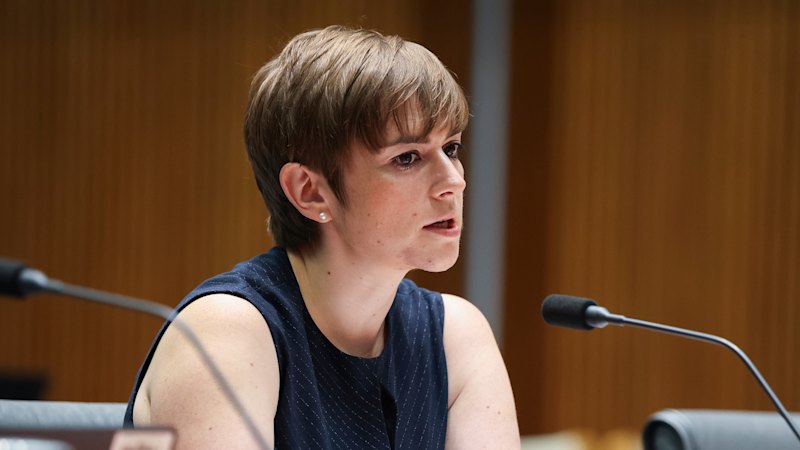
In a speech in Norway overnight, the bank’s chief economist Sarah Hunter released internal modelling showing if the RBA had pushed up interest rates as high as some other countries then inflation would have eased more quickly before rising again in recent months.
The bank has a dual mandate to hold inflation between 2 and 3 per cent while keeping as many people as possible in work. It has come under attack from some economists who have argued that interest rates should have been lifted more quickly and to a higher level after the pandemic.
Shadow treasurer Tim Wilson told his masthead there should be a rethink of the Reserve’s mandate, saying it should focus more on bringing down inflation.
The RBA took the cash rate from 0.1 per cent in early 2022 to a peak of 4.35 per cent in November 2023. By contrast, almost every other central bank took their cash rates higher, including Canada (5 per cent), the United States (5.25-5.5 per cent), New Zealand (5.5 per cent) and England (5.25 per cent).
Hunter said the Reserve Bank had consciously decided not to push interest rates as high as other nations in a bid to protect the broader economy, including the jobs market. Unemployment, which reached much higher levels in most other nations, has remained steady at about 4.1 per cent.
She said the bank had modelled the economic fallout if the Reserve had followed the lead of its overseas counterparts.
Interest rates would have reached 5.5 per cent by late 2023, gradually falling to 3.85 per cent – the current cash rate – at the start of this year.
“Unsurprisingly, a sharper increase in interest rates would have reduced the peak level of inflation and increased the speed of subsequent disinflation,” she said.
“But the more contractionary policy path would have caused higher unemployment.”
Hunter said the higher cash rate, which on a $600,000 mortgage would have increased repayments by almost $500 a month, would have brought underlying inflation down to 2.5 per cent last year. The lowest it reached was in June at 2.9 per cent.
However, the “inflation spike” that caused the RBA to lift interest rates this year would have also occurred even with the higher cash rate.
The nation’s jobless rate would have started climbing and reached 5.3 per cent in late 2025. At 5.3 per cent, the number of people out of work would be 190,000 more than the current level.
Interest rates would have remained above the level the Reserve Bank kept them for the three years between 2022 and this year.
Hunter said there was no set path for a central bank to bring down inflation.
“Some chose to increase policy rates sharply and slow their economy quickly. The RBA board chose a more gradual increase and more gradual subsequent policy rate decline, while being very mindful that this strategy relies on inflation expectations remaining anchored,” she said.
The Reserve analysis did not cover the broader economic fallout from higher interest rates, including the impact on housing construction, investor activity in the property market and wages growth.
Financial markets expect the Reserve Bank to lift interest rates to 4.1 per cent before the May budget.
But Betashares chief economist David Bassanese said the war in Iran may force the bank to delay a rate hike.
He said while an increase in oil prices would lift inflation, it would also curb spending by consumers.
“On balance, however, heightened geopolitical tensions, if they persisted and escalated, would tend to make the RBA less likely to hike rates amid such uncertainty,” he said.
Hunter’s speech follows revelations by this masthead of concerns that investor activity in the property sector is contributing to higher-than-expected inflation, prompting calls for action by the Australian Prudential Regulation Authority.
Greens’ finance and housing spokesperson, Barbara Pocock, said the authority should tighten regulations around bank lending to investors, giving first-time buyers an opportunity to own a property.
“This housing crisis is heading toward a point of no return. We urgently need to cool the overheated investor credit market,” she said.
“APRA must intervene to even out the playing field to give first-home buyers a chance. It must use all the tools in its tool box to rein in investor lending that is exacerbating the housing affordability crisis.”
Cut through the noise of federal politics with news, views and expert analysis. Subscribers can sign up to our weekly Inside Politics newsletter.
 Shane Wright is a senior economics correspondent for The Age and The Sydney Morning Herald.Connect via X or email.