

Updated ,first published
Liberals interviewed about the disastrous 2025 election loss blamed others and did not reflect on their own shortcomings, according to a leaked copy of the party’s secret election review that even accuses some participants of changing their story.
The review also asserts that the “party’s capacity to thoughtlessly offend” migrant voters, particularly Chinese-Australians and Muslim voters, was potentially a bigger problem for the Liberals than the number of female voters deserting the party.
This masthead has seen the second and final version of the scathing review, which was partially rewritten in January after the first draft was presented to the federal executive in December and rejected. The Liberal Party federal executive announced on Friday, after a fiery meeting, that it would suppress the report.
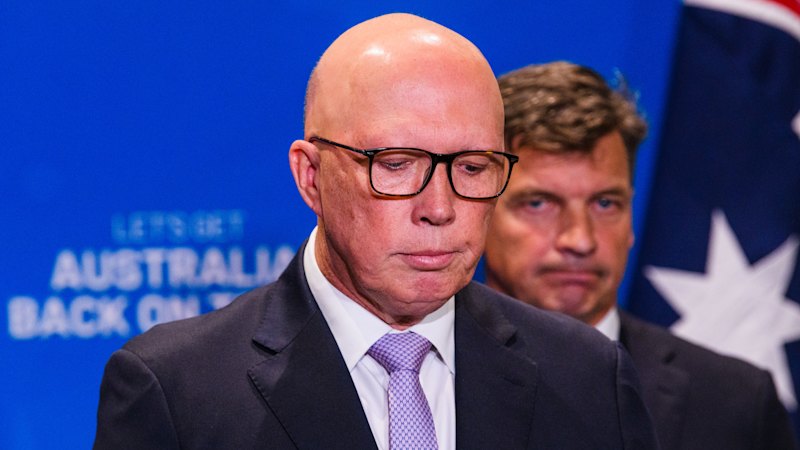
It contains new information from central players to the campaign, including former leader Peter Dutton and his former chief of staff Alex Dalgleish, who met with the report’s authors in January, and disputed some of its earlier findings about Dutton’s relationship with party headquarters and the work of his staff.
The final version deleted a paragraph that described Dutton as “grim and introverted” during the campaign.
The report’s authors, Liberal Party elders Nick Minchin and Pru Goward, have argued for the report’s release, and wrote within the review that “there was little feedback from those decision makers in this campaign about their own shortcomings”.
“While every submission criticised the actions of other decision makers and provided examples, there was a notable absence of reflection on how a decision maker – that is a campaign director, paid official, MP or candidate – could have done better,” Minchin and Goward wrote.
“Furthermore, recollections of the campaign have also changed since we began the review and some have drastically changed their accounts of what happened. This has made the task of determining what went wrong more difficult and we have often been left with opposing accounts of events.
“Critical self-reflection must become part of the party’s professional practice.”
Housing Minister Clare O’Neil brandished a copy of the report at a doorstop interview on Tuesday morning, and said she had “spent an hour of my morning reading what is an incredibly important report for the Australian people, and I urge the Liberal Party of Australia today to release this report to the public”.
Speaking shortly after O’Neil, opposition home affairs spokesman Jonno Duniam said: “I would have thought a minister of the crown had better things to do than read a Liberal Party election review.”
In question time on Tuesday afternoon, Prime Minister Anthony Albanese tabled the first draft of the review from December.
While the final version from February is not substantially different, it contains one additional recommendation: “to ensure political research is well understood by the parliamentary party in its policy and communications preparations, the federal director, when in opposition, should attend all shadow cabinet meetings and regular party-room briefing.”
This point was made because Dutton did not have Liberal federal director Andrew Hirst attend shadow cabinet.
The final version deleted a paragraph from the first draft that stated, “the takeover of campaign management by the leader and his office had several consequences, one being that the leader did not appear to enjoy the campaign”.
“Campaigning is a daunting task, but also an exciting one and should be full of energy, engagement, even humour. The electorate expects to see and hear an upbeat and inspiring leader. All of that was lacking and the leader’s grim and introverted demeanour, clothed in the ubiquitous suit whatever the occasion, did not change during the campaign and perhaps reflected the heavy and additional burden he imposed on himself.”
Other tweaks to the 18 recommendations include a change in the second version that the party’s pollster should not communicate directly with the leader unless the federal director is aware. The first draft stated the party leader should receive permission from the director before speaking to the pollster.
The review was discussed at the Liberal Party room meeting on Tuesday morning, as MPs agreed the party must learn from election defeats regardless of whether the review was made public.
Dutton told this masthead on Monday that the review was a “gratuitous and personal” hit job on him, a claim rejected by report author Minchin.
In the review, Minchin and Goward warn the Liberal Party is facing an existential threat and state “our recommendations cannot be put on the back burner or implemented over the course of five years. The party’s survival requires urgency, determination and unity.
“Furthermore, it is our view that the publication of this report, including the views of the authors and interview subjects as set out in the report and the recommendations we have made, is in the public interest.”
The alienation of recent migrants to Australia is a central feature of the report, as is the party’s ongoing problem of attracting and retaining female voters and supporters.
Former Menzies MP Keith Wolahan’s submission to the review was praised for its insightful analysis, and it was noted that when first elected in 2022, Wolahan had suffered a 6.3 per cent swing against him, which was “largely attributed to the party losing support with a growing Chinese diaspora”.
To counter this, Wolahan developed a three-year campaign to win back voters in a seat that has the highest proportion of voters with Chinese heritage in the country, and the MP believed he had made inroads despite his loss in 2025.
“But it collapsed in the final days with the dominant coverage Senator Hume’s unfortunate ‘Chinese spies’ comment, which went viral in local Chinese language platforms,” the review states.
On the party’s failure to attract women voters, the decision to announce an end to working from home for Commonwealth public servants – later dumped – was identified as a major campaign mistake.
“A significant minority of submissions also said that the leader’s change of heart on the policy, after consistent attacks, then reduced his credibility as a strong leader, and so the party lost both ways,” the authors stated.
“Such a misstep could have been easily avoided had the party ensured it tested the responses of female voters, including its own female MPs, to the policy proposal. The policy was not brought to the federal secretariat and tested, as a matter of course, before its announcement.”
The report also noted that “several female candidates told us that Peter Dutton was disliked by women and asked for him not to visit their electorates. The policies were also seen as female unfriendly. At least one regional candidate considered the working from home policy was the turning point which cost her the seat.”
Cut through the noise of federal politics with news, views and expert analysis. Subscribers can sign up to our weekly Inside Politics newsletter.
 James Massola is chief political commentator. He was previously national affairs editor and South-East Asia correspondent. He has won Quill and Kennedy awards and been a Walkley finalist. Connect securely on Signal @jamesmassola.01Connect via X or email.