
NSW Police were heavily criticised for not assigning enough officers to watch over the Jewish community at Bondi Beach, and governments responded with tougher legislation and inquiries to ensure public safety and unity.
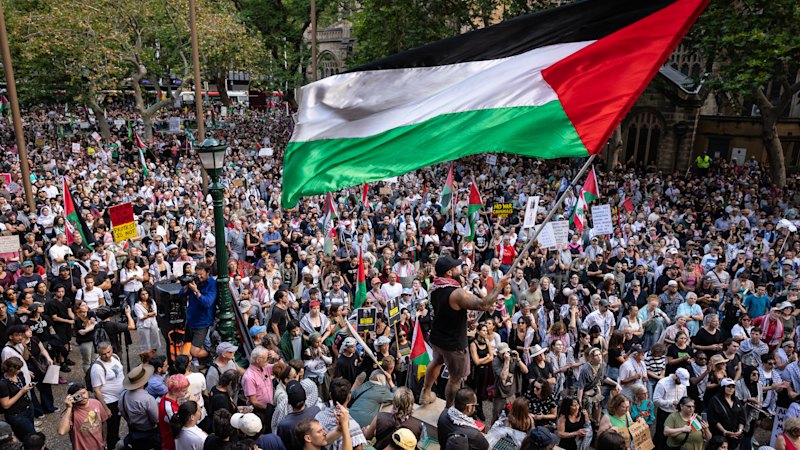
Police clearly were taking no risks on Monday night and flooded the zone to control protests against the visit of Israeli President Isaac Herzog.
But the reaction to their violent crackdown suggests the Minns government’s laws promising to protect the community from racial hatred, offensive symbols, desecration and harassment at places of worship failed on their first outing.
Instead of promoting a sense of unity, social cohesion has taken a back seat to concerns about police brutality.
On George Street on Monday night, a team of Herald reporters and photographers were on the ground covering the demonstration and police response, and captured videos and images as the situation deteriorated and protesters made repeated attempts to break through police lines.
Officers were filmed punching and capsicum-spraying demonstrators. One incident captured in footage from the scene appeared to show several men kneeling to pray before some were dragged away by police.
Commenting on footage showing two officers repeatedly punching a man pinned beneath them, NSW Police Commissioner Mal Lanyon said police would allege that the demonstrator had bitten one of the officers.
Lanyon told 2GB the actions taken “were in response to a violent and aggressive crowd that marched on police”, but seemed to step back from unqualified support, saying all officers would be held “accountable for their actions”.
Meanwhile, Premier Chris Minns said police would internally investigate the violent incidents from the protest shared on social media, including an analysis of body-worn camera footage. The premier urged the public not to rush to judgment by looking at “a 10-second clip without the full context”.
Of course, camera angles can tell different stories.
But the widespread dissemination of videos, photographs and reports showing officers physically restraining protesters outside the Sydney Town Hall looked eerily similar to footage we’d expect out of the US, where bystanders and security cameras have captured horrific incidents of police brutality.
Such scenes are scarcely seen on Sydney’s streets.
In 1978, police violently broke up the street parade that would eventually evolve into the Sydney Gay and Lesbian Mardi Gras. The peaceful movement ended in violence and 53 arrests among the more than 500 activists.
The difference between now and then is that public outrage after 1978 saw police lose a number of powers in relation to street protests, whereas the Minns government’s laws, instead of fostering law and order and calm, seem to have helped make confrontation inevitable.
The authorities are holding further comments until the arrested protesters work their way through the NSW court system.
But it was Minns who recalled parliament shortly after the December 14 shootings to tighten laws around protests. These have not only failed to keep the peace, but needlessly pushed NSW Police into the firing line.
It is now incumbent on Minns to be absolutely transparent in explaining how he plans to address the underestimated, unintended consequences of his legislation.
Get a weekly wrap of views that will challenge, champion and inform your own. Sign up for our Opinion newsletter.
 The Herald’s View – Since the Herald was first published in 1831, the editorial team has believed it important to express a considered view on the issues of the day for readers, always putting the public interest first.