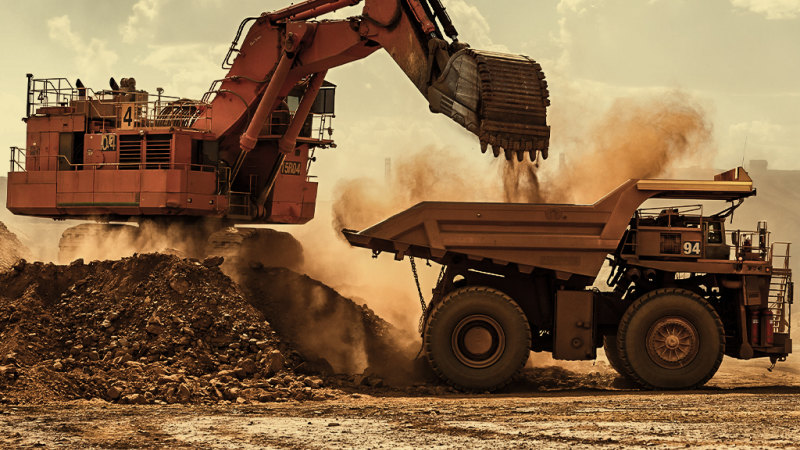


Mining giant Rio Tinto has delivered a $14.1 billion full-year profit after boosting its output of a key commodities copper and iron ore from its Pilbara operations.
The London and ASX listed miner said it achieved a “strong operational performance” and increased its copper output 8 per cent as it ramped up its Oyu Tolgoi underground copper mine in Mongolia.
The company it will pay out 60 per cent of the $US10 billion profit in a $US6.5 billion ordinary dividend, the tenth consecutive year at the top end of its range, chief executive Simon Trott said.
“This strong operational performance, together with a diversifying portfolio and firm cost discipline, underpinned a 9 per cent increase in underlying EBITDA to $US25.4 billion and operating cash flow of $US16.8 billion,” said Trott, who took over from Jakob Stausholm as chief executive in August last year.
Rival BHP said on Tuesday it had hit a new milestone. Its half-year results showed copper output contributed 51 per cent of the group’s underlying earnings, overtaking revenue from the vast iron ore reserves dug out and shipped from at its huge Pilbara operations in Western Australia.
Resource companies are riding a surge in global commodity prices.
Copper has soared about 55 per cent over the last two years and gold, silver and uranium are on a tear. Rio shares surged 38 per cent in a year, BHP’s are up 30 per cent, while gold miner Evolution Mining has jumped 137 per cent.
BHP also reported a 28 per cent jump in its half-year profit to $8 billion this week, but said the average price realised for its iron ore in 2025 slipped 7 per cent on the previous year, down to $US102 a tonne. The global iron ore price is currently trading just under $US100 per tonne after sliding from $US108 in early January.
Demand from the world’s largest iron ore buyer China, where vast mills churn out metal products made from the key steelmaking ingredient, is expected to remain resilient, supported by the Asian giant’s strong steel exports and solid manufacturing by its automobile and machinery makers.
But China’s steel exports are alarming trade partners. The Australian government this month slapped a 10 per cent tariff on ceiling frames from China after local manufacturers complained a flood of cheap imports had left them uncompetitive.
Analysts and mining companies expect China’s seaborne iron ore demand to plateau at current levels over the next few years at the same time as shipments of high-quality ore are rising as the new supply from Rio’s Guinea mine comes online.
Rio will pay a fully franked 2025 final dividend of $US2.54 per share on 16 April.
The Business Briefing newsletter delivers major stories, exclusive coverage and expert opinion. Sign up to get it every weekday morning.
 Simon Johanson is a business journalist at The Age and The Sydney Morning Herald.Connect via X or email.