
When Michael Fullilove was invited to deliver the prestigious Boyer lectures a decade ago, the head of Australia’s top foreign policy think tank insisted upon one condition. The Lowy Institute’s executive director wanted to deliver his first speech, examining Australia’s place in a rapidly transforming world, in Beijing. Since the annual lecture series was launched in 1959, Fullilove’s talk at Peking University was the first, and to this day only, time an address has been given overseas.
It was a divisive choice. Fullilove recalls that some conservative commentators criticised him for choosing the capital of communist China over Washington or London. When he stepped onto the tarmac in China, he had a voicemail from an Australian diplomat saying: “May I just ask you one favour: please don’t screw up the relationship with Beijing this week!” But he believed no other nation was changing Australia’s relationship with the world as much as China, the emerging superpower.

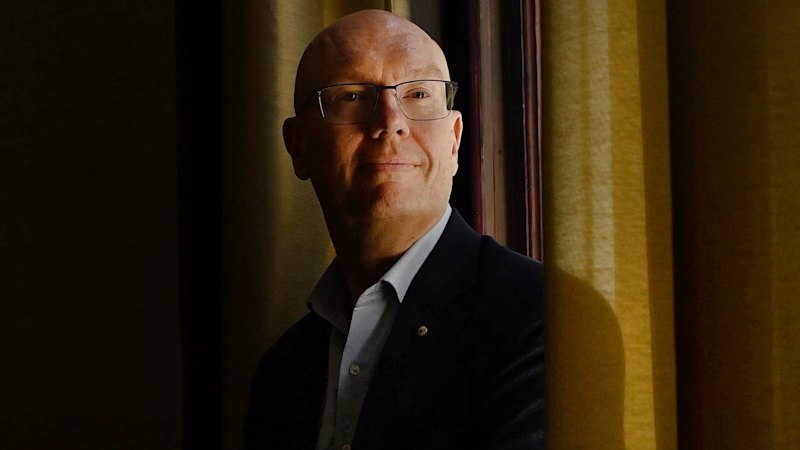
Lowy Institute executive director Michael Fullilove argues Australia needs a larger diplomatic network and reinvigorated foreign service.Credit: Kate Geraghty
The geopolitical vista of 2015 looked, in many ways, much less grim than today. Barack Obama was in the White House and Donald Trump’s ambitions for high office were largely seen as fanciful. Xi Jinping had not yet been named China’s president for life. Vladimir Putin had seized Crimea, but a full-scale invasion of Ukraine seemed unthinkable. So did the horrors of the October 7 attacks and two years of war in Gaza.
Yet Fullilove titled his speech Present at the Destruction, reflecting his fear that the post-Cold War global order that had benefited Australia was beginning to disintegrate. It seemed like a dire message. Reflecting now, he says he was probably not gloomy enough. “Ten years later, the liberal international order has almost faded away,” he will say in a speech at the Lowy Institute on Wednesday.
A central theme of Fullilove’s Boyer lectures was that Australia needed to adopt a more ambitious and confident foreign policy, shaking off the tendency to talk ourselves down and downplay our potential influence.
Loading
A decade on, he says there is much to be proud of when examining Australian foreign policy. He praises the Albanese government for striking an alliance with Papua New Guinea, innovative security agreements with Pacific nations like Vanuatu and a new security treaty with Indonesia. As for its approach to China – summed up in Anthony Albanese’s dictum “co-operate when we can, disagree when we must” – he could hardly dispute it, given he coined the phrase in his 2015 lecture.
But Fullilove believes Australia still needs to strive for a bolder, more expansive role on the world stage – and to invest the necessary energy and money to make this possible.
Coming off Albanese’s successful White House meeting with Trump in October, Fullilove is urging the prime minister to think strategically about how to maximise Australia’s influence with a transactional US president. A cautious, narrowly self-interested approach is not enough, he argues.