
The injection of critical minerals into the Australia-EU deal talks reflects the increasing geopolitical importance of access to rare elements crucial to building modern defence, green energy and manufacturing sectors. China’s stranglehold on the supply and refinement of the minerals has spooked Western competitors who fear Beijing will use its control as a tool of coercion. An EU deal would build on Australia’s export agreement with the United Arab Emirates.
China’s embassy has been keen to boost its prestige and credibility by being admitted to the CPTPP. In May, its embassy in Canberra issued a plea to the prime minister to back its membership bid.
The CPTPP was established as a successor to the Trans Pacific Partnership, which the first Trump administration pulled out of after it had been established by his predecessor, Barack Obama. It has some of the loftiest member standards in terms of following fair trade practices.
Farrell said the Melbourne talks would focus more on countries that could gain access soon, predicting Costa Rica would be next off the rank. Other countries in the pact include Australia, Brunei, Canada, Chile, Japan, Malaysia, Mexico, New Zealand, Peru, Singapore, Britain and Vietnam.
Asked if China had dented its credibility as a force for good in free trade after its high-profile critical minerals threat, Farrell said: “Any country who wants to join will have to satisfy that they meet the high standards of that agreement. It’s not China-specific: every country will have to meet those requirements.”
US President Donald Trump on Saturday exempted beef, including billions of dollars worth of Australian exports, from his tariffs as he responded to rising unrest about inflation.
Farrell said Trump’s decision was made largely for domestic reasons, but he said Australia had not stopped lobbying to get rid of import charges on Australian products including beef and steel.
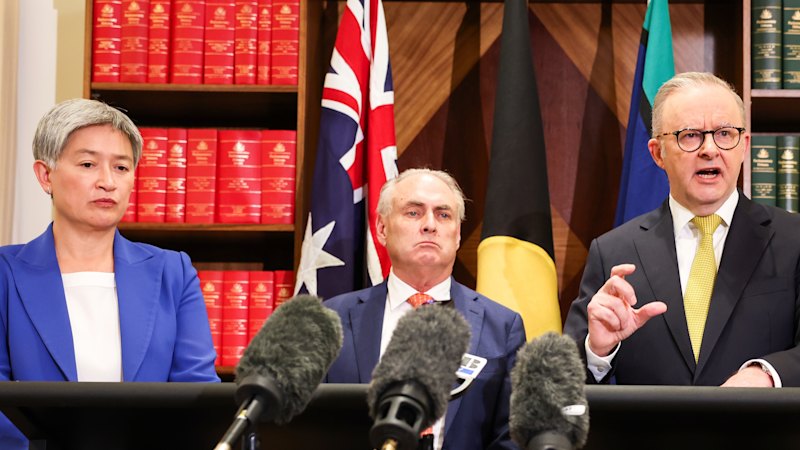
Striking a different tone, Albanese said Trump’s move was “a direct result of the strong advocacy of Don Farrell as the trade minister, of the other Australian ministers, and indeed, my meetings with president Trump.”
In a speech to be delivered at RMIT University on Monday evening, the prime minister will hail the detente struck at last month’s APEC forum between Trump and Chinese President Xi Jinping. It came after weeks of anxiety over a possible trade war sparked by China’s rare earths manoeuvring.
“It was a positive meeting with good outcomes for the world,” Albanese will say, according to a draft copy of his speech.
“But what it demonstrated is how APEC, and the support for trade generally, can act as a bulwark against conflict. It can incentivise de-escalation, even at the highest levels. Because trade doesn’t happen in isolation.”
Cut through the noise of federal politics with news, views and expert analysis. Subscribers can sign up to our weekly Inside Politics newsletter.