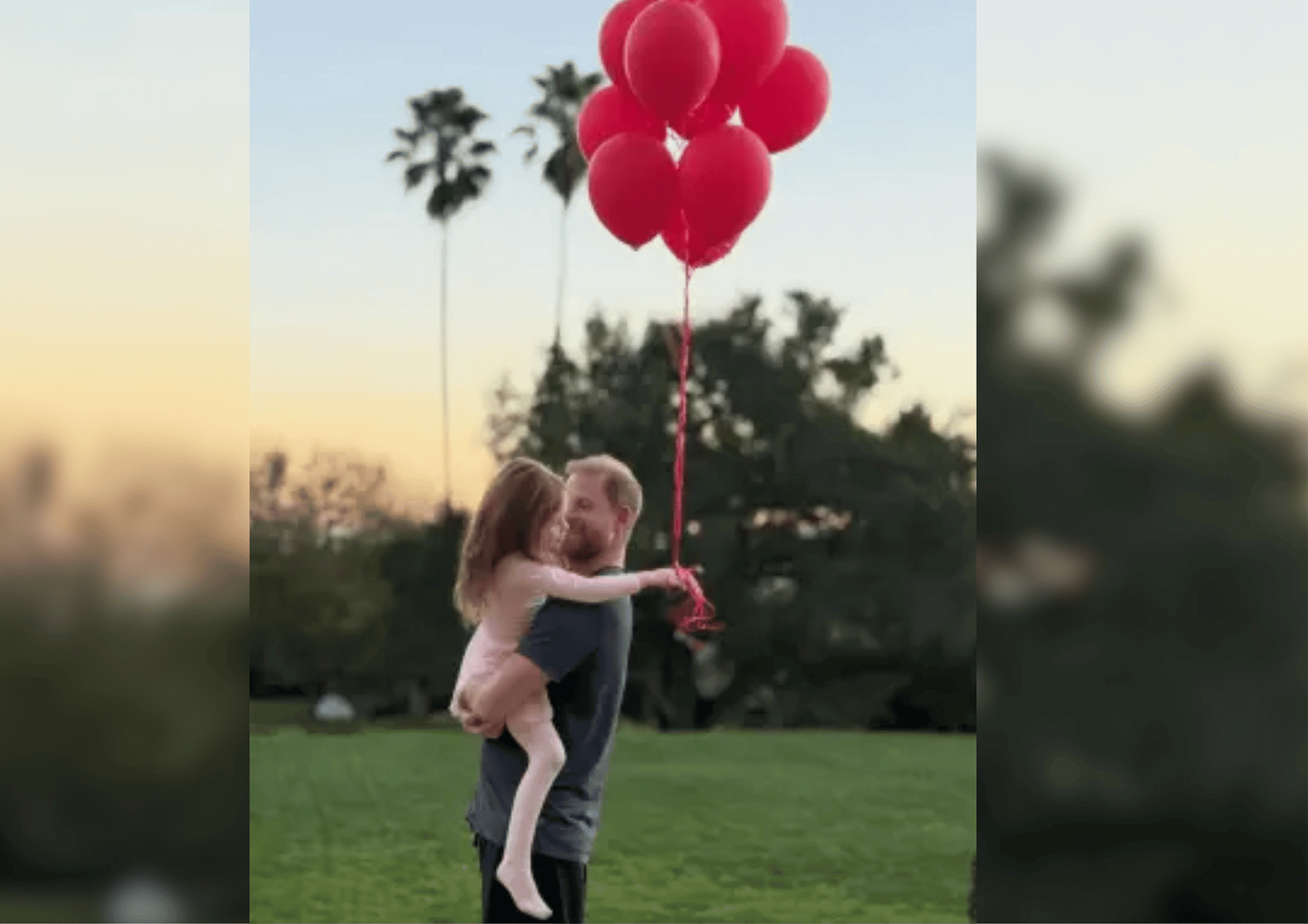

Meghan Markle shared a rare Valentine’s Day photo with Prince Harry and daughter Lilibet, giving fans an unusual family glimpse captioned “Forever Valentines.”
A Rare Family Photo Captures Public Attention
February 15, 2026: Meghan Markle has shared a rare and heartfelt family image featuring her daughter, Princess Lilibet, alongside Prince Harry — and the Valentine’s Day moment quickly became one of the most talked-about royal-adjacent posts online. The photo, captioned “Forever Valentines,” offered an unusually clear look at Lilibet’s face, something the couple has historically kept largely private.
Because the Duke and Duchess of Sussex have consistently limited how much of their children’s faces are shown publicly, the image stood out immediately. Within hours, the post circulated widely across entertainment and royal-watch coverage, with audiences responding to both the warmth of the message and the rarity of the visual.
HOLR has the latest news on why this particular photo resonated so strongly and how it fits into the couple’s evolving approach to public family sharing.
Privacy Has Been Their Long-Standing Policy
Since stepping back from senior royal duties, Meghan Markle and Prince Harry have maintained a careful boundary around their children’s visibility. While they have occasionally shared family photos, those images have typically obscured faces, used side angles, or shown the children at a distance.
This consistent privacy posture made the Valentine’s image especially notable. Viewers accustomed to partial glimpses immediately recognized that this post revealed more than usual. Royal commentators say that when a public figure is known for strict privacy choices, even a small shift reads as significant.
The couple’s approach has centered on giving their children as normal an upbringing as possible despite global recognition and media demand.
The Meaning Behind “Forever Valentines”
The caption “Forever Valentines” added emotional weight to the image and helped frame it as a family-centered holiday message rather than a publicity gesture. Valentine’s Day posts from celebrities often focus on romantic partners, but this one expanded the theme to include parent-child love.
That framing resonated with audiences who interpreted the message as emphasizing family unity and affection rather than spectacle. The wording also kept the tone soft and personal, avoiding promotional language or campaign tie-ins.
Short captions with emotional clarity often travel further than longer explanations because they feel more intimate and less managed.

Image Credit: meghan/Instagram
Why Rare Royal Family Glimpses Travel Fast
Photos involving royal-connected children — especially rare ones — almost always generate heightened attention. The combination of legacy interest, limited access, and emotional storytelling creates strong engagement momentum.
In this case, three factors amplified reach: the rarity of Lilibet’s visible appearance, the Valentine’s Day timing, and the presence of Prince Harry in the frame. Each element broadened audience appeal beyond royal watchers to general pop culture readers.
Digital engagement patterns show that rare-family-image stories typically outperform standard appearance coverage by a wide margin.
Meghan and Harry’s Media Strategy Has Evolved
Since relocating and restructuring their public roles, the couple’s communication style has shifted toward controlled direct sharing rather than third-party leaks or staged press access. Social posts, documentaries, and selective interviews now function as their primary storytelling channels.
This Valentine’s photo fits that strategy. Instead of responding to media curiosity, they offered a self-directed glimpse on their own terms. Controlled sharing allows them to choose timing, framing, and tone — which reduces misinterpretation risk.
HOLR notes that direct-channel storytelling has become the preferred approach for many high-profile families seeking narrative control.

Image Credit: meghan/Instagram
Public Reaction Focused on Warmth, Not Controversy
Audience response to the image has leaned overwhelmingly warm. Comment sections filled with heart emojis, supportive messages, and appreciation for the family moment. Unlike some past Sussex-related stories that sparked debate, this post generated a largely unified positive tone.
Many commenters focused on the tenderness of the image and the visible bond between parent and child. Others emphasized how meaningful it felt to be included in a rare personal moment.
When celebrity family content centers on affection rather than messaging, reaction tends to be more emotionally cohesive.
Children of Public Figures and Image Boundaries
The conversation around this photo also revived a broader media ethics topic: how much visibility children of public figures should have. Meghan and Harry have been vocal about protecting their children from excessive exposure, and this post shows a nuanced middle path — selective sharing rather than full access.
Media analysts describe this as boundary-managed visibility — allowing occasional glimpses without normalizing constant exposure. It acknowledges public interest while preserving childhood privacy.
That model is increasingly common among high-profile parents navigating digital-era fame.
Valentine’s Day as a Family Storytelling Window
Valentine’s Day has expanded in celebrity culture from strictly romantic celebration to broader love-themed storytelling. Many public figures now include children, parents, and close friends in holiday posts centered on affection and gratitude.
This broader framing makes family-inclusive Valentine posts more common — and more relatable. Meghan’s caption and image composition align with that expanded holiday narrative.
Holiday framing often softens celebrity coverage tone and increases shareability because audiences are already emotionally primed.

Image Credit: pagesix
Visual Composition Helped the Image Connect
Beyond subject matter, the photo’s composition contributed to its impact. The image reportedly emphasized closeness and natural warmth rather than formal portrait staging. Naturalistic celebrity photos tend to generate stronger audience connection because they feel less produced.
Lighting, posture, and physical proximity communicate emotional cues quickly. In this case, viewers described the image as gentle, loving, and grounded — qualities that enhance viral spread without controversy.
Visual authenticity now travels farther than visual perfection.
Brand Sussex: Family-Forward Identity
In recent years, Meghan and Harry have increasingly presented themselves publicly through a family-forward lens — emphasizing parenting, partnership, and values. This image reinforces that identity positioning.
Public brand identity matters because it shapes how audiences interpret each new post. When a couple is known for family-centered messaging, family imagery feels consistent rather than strategic.
Consistency reduces skepticism and increases trust in emotional posts.
Limited But Intentional Sharing
Importantly, this post does not signal a shift toward frequent child-image sharing. Media strategists say selective visibility is more likely than full openness. Occasional glimpses maintain audience goodwill without creating expectation of regular access.
Intentional rarity increases value. When images are scarce, each one carries more emotional and media weight. That appears to be the model still in place here.
HOLR has the latest news that rarity-based sharing strategies often produce higher engagement with lower long-term privacy cost.
Royal Interest Remains Strong Worldwide
Even outside formal royal duties, Meghan and Harry remain subjects of intense global interest. Stories involving their children draw attention across entertainment, lifestyle, and international news spaces simultaneously.
That cross-category interest explains why a single holiday photo can generate multi-day coverage cycles. Royal-adjacent figures occupy a hybrid celebrity category that blends tradition, fame, and family narrative.
Few public families command that level of sustained curiosity.
Emotional Storytelling Over Formal Messaging
Notably, the post did not include announcements, projects, or advocacy tie-ins. It functioned purely as emotional storytelling. That purity of purpose often strengthens audience reception because it doesn’t feel transactional.
When posts are clearly personal rather than promotional, engagement quality improves. Comments become supportive rather than argumentative.
Emotional clarity is a powerful media filter.
A Moment That Humanized the Headlines
Coverage involving Meghan and Harry can often become policy-heavy or controversy-focused. A simple family Valentine image shifts that lens toward humanity and warmth. That tonal change is one reason the story spread quickly — it offered emotional contrast to heavier narratives.
Humanizing moments reset public perception cycles and remind audiences of the personal side behind public roles.
Why This Valentine Post Matters
Ultimately, the significance of the photo lies in controlled openness. It shows that privacy-focused public figures can still share meaningful moments without abandoning boundaries. That balance is increasingly important in modern celebrity culture.
The image delivered connection without overexposure — a difficult line to walk successfully.
FAQs
What did Meghan Markle share for Valentine’s Day?
She posted a family photo featuring Prince Harry and Princess Lilibet with the caption “Forever Valentines.”
Why is the photo considered rare?
Because it showed a clearer view of Lilibet’s face than the couple usually shares publicly.
Do Meghan and Harry often show their children’s faces?
No, they typically limit direct facial visibility in public images.
Was this tied to an announcement?
No, it appeared to be a purely personal Valentine’s Day message.
How did the public react?
Reaction was largely warm and supportive.