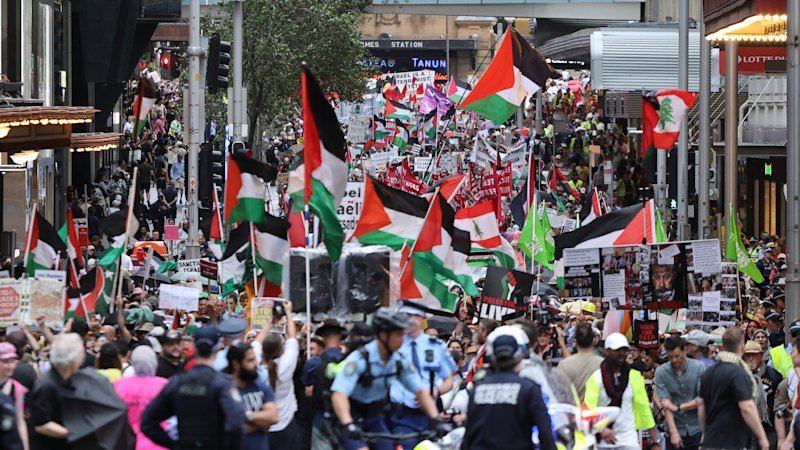


A Labor-controlled parliamentary committee has given the Minns government the green light to introduce legislation to ban the phrase “globalise the intifada” but not other pro-Palestine slogans, such as “from the river to the sea”.
The lower house inquiry, which was established after the Bondi terror attack, found the chant was not a fair political view but a call for violence against Jewish Australians.
The lower house inquiry received over 700 submissions, of which around 150 were made public. Due to the short time frame the inquiry did not hold any public hearings – a decision criticised by committee members Tamara Smith, a Greens MP, and Paul Toole, a Nationals MP, who both voted against the committee’s recommendations.
While the report conceded many of the submissions it received opposed banning the phrase, which Palestinian activists contest refers to a “shaking off” of oppression, several Jewish groups told the inquiry that Jewish Australians feel threatened by it.
“The evidence we received from the Jewish community was clear and consistent. When this slogan is used, it is experienced not as political speech but as a threat,” Labor MP and committee chair Edmond Atalla said.
The inquiry faced criticism from the opposition and The Greens for its short consultation period, which gave organisations and experts just over three weeks over the Christmas break to submit feedback.
Leading constitutional expert Anne Twomey cautioned any such laws may not withstand a constitutional challenge on the grounds they could impede the implied freedom of political communication, especially given the short time frame of the inquiry.
“It is unrealistic to expect a parliamentary committee, in such a very short time over the Christmas holiday break, with no oral hearings and presumably few submissions by experts in the field, to come up with the desired constitutionally challenge-proof law,” she said.
The report did not detail the independent advice provided to the inquiry, but said it recommended any legislation not be unduly broad.
The inquiry found that existing laws already prevented the public incitement of violence, but these offences were difficult to prosecute. The inquiry did not recommend other phrases be banned, despite some Jewish organisations saying chants including “from the river to the sea” also incited hatred and violence.
Premier Chris Minns made clear when the inquiry was established last month that, in his view, the slogan “globalise the intifada” incited violence and would be banned.
Minns dismissed the concerns of a potential constitutional challenge on Thursday.
“If we’d relied on a random or individual constitutional lawyer who said ‘you shouldn’t have pursued this change’, then we wouldn’t have had in place laws to protect places of worship on the statute books today, which have gone through the High Court and are now functionally operational,” he said.
Laws expanding police powers at protests near places of worship had to be reworked last year when the NSW Supreme Court ruled them unconstitutional.
The government will now consider the recommendations of the report.
Attorney-General Michael Daley said he was deeply concerned by Toole’s choice to vote with the Greens against the recommendations of the inquiry.
Toole said he voted against the release of the report because it was rushed over Christmas and the inquiry did not hold public hearings.
“It feels like it was a done deal even before it began,” he said.
Liberal attorney-general spokesman Damien Tudehope said the opposition was “unimpressed” by the short timeline of the inquiry.
“This report looks less like careful law reform and more like a hurried attempt to appear decisive without doing the hard work required to get it right,” he said
Smith did not support the banning of the phrase based on the evidence before the committee. In an unsupported amendment, she insisted at least 10 weeks was needed to conduct a fair and useful inquiry.
“My dilemma is: what was the purpose of this inquiry? If it was to be informed by high level legal advice and to make recommendations about law, then it’s woefully lacking,” she said.
“If the point of the inquiry was to get some sort of public opinion poll on whether that phrase ‘globalise the intifada’ should be proscribed and banned, then they’ve ignored the evidence because the majority of submissions argued against the ban.”
Start the day with a summary of the day’s most important and interesting stories, analysis and insights. Sign up for our Morning Edition newsletter.
 Jessica McSweeney is a reporter at The Sydney Morning Herald covering urban affairs and state politics.Connect via email.