

Updated ,first published
Donald Trump declared war on Iran tonight, in a move that has seemed inevitable for weeks but turned out to be bigger, bolder and more consequential than anyone imagined when it finally came.
In an eight-minute video address to the world, the US president made it clear this was not just a one-and-done strike on the Islamic Republic. This is about regime change, plain and simple.
Many analysts thought a limited attack, aimed at forcing concessions from Iran at the negotiating table, was the most likely outcome. But Trump has now blown that out of the water.
“For 47 years, the Iranian regime has chanted ‘death to America’, and waged an unending campaign of bloodshed and mass murder targeting the United States, our troops and innocent people in many, many countries,” he said.
It was a speech couched in historical significance. Trump invoked the Iran hostage crisis of 1979, the Marine Barracks bombing in Lebanon of 1983 and the downing of the USS Cole in the year 2000 of evidence that the Islamic Republic of Iran has long posed an existential threat to the US, and must be wiped off the map.
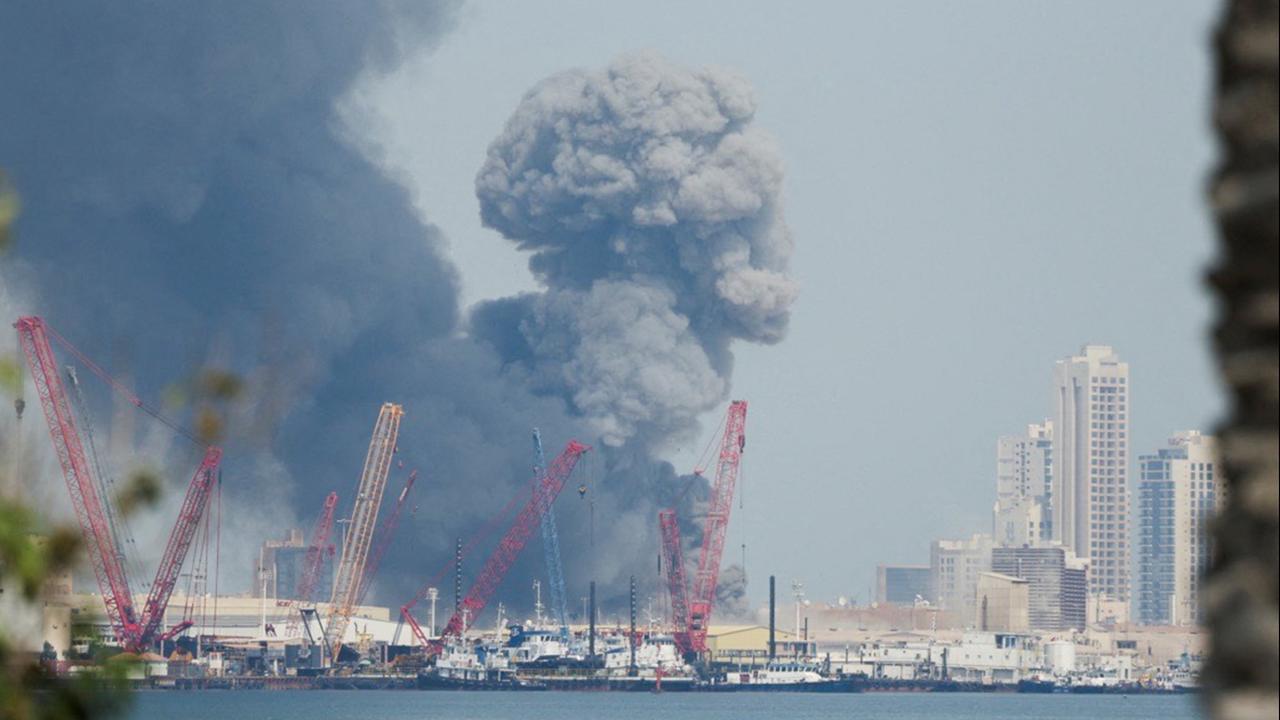
“It has been mass terror, and we’re not going to put up with it any longer,” Trump said. He said the US was now engaged in a “massive and ongoing operation” against Iran, and American lives would likely be lost.
What Trump outlined on Friday night (US time) amounts to a declaration of war against the Ayatollah Ali Khamenei, much more involved and dangerous than most Washington commentators thought he would ultimately opt for.
Indeed, at one point he acknowledged that this was a “war”, with all the risk that entails.
The caution of “America First”, which called for the US to abandon entanglements abroad – especially in the Middle East – and focus on the battles at home, has been thrown out the window.
Trump made a direct offer to the Islamic Revolutionary Guard Corps, the Iranian armed forces and the police: surrender now, lay down your weapons and be granted “total immunity”, or face “certain death”.
And, lest there be any doubt about the end game, Trump explicitly called upon the Iranian people to overthrow their repressive, terrorist regime.
“When we’re finished, take over your government,” he told them. “It will be yours to take. It will probably be your only chance for generations.” The bombs would fall thick and fast, he warned them.
The mission was conducted with Israel, and the end of the Islamic regime is Israel’s overriding goal. Trump has moved in lock step, almost, with Israel’s Prime Minister Benjamin Netanyahu for the past 13 months, and it is impossible to conceive this operation could have happened without their mutual resolve and appetite for risk.
Trump had paid lip service to the idea of a negotiated deal, but it never seemed genuine. Earlier on Friday, hours before the bombing started, he effectively gave the game away, telling reporters that he didn’t want to use force, but “sometimes you have to”.
Foreign governments appeared to be aware of Trump’s plans. They pulled their people out of harm’s way at the last minute and had full statements ready to deploy.
Australia’s Prime Minister Anthony Albanese was among those who offered his support for regime change, noting Iran had been a destabilising global force for decades, and directed at least two terrorist attacks on Australian soil.
“We support the United States acting to prevent Iran from obtaining a nuclear weapon and to prevent Iran continuing to threaten international peace and security,” he said.
Trump is a man with a 1970s mindset about the risks to the US and the western world. He has always displayed heightened sensitivity about the risk of the Iranian regime. It was a key priority in his first term; he was never going to leave his second, final term without a definitive resolution to the Iranian question.
This was without a doubt the most consequential day of Trump’s presidency, and the prelude to what will be his most consequential undertaking.
His mission is to extinguish the force which has menaced the United States and the western world for five decades. If he succeeds, he will probably demand to be recognised as the most significant US president of all time.
Read more on the US-Israel-Iran conflict:
Live updates: Israel attacks Iran
The news: Iranian Supreme Leader targeted in Tehran
What we know so far: Why have Israel and the US attacked Iran?
Explainer: How the era of the Ayatollahs began
Get a note directly from our foreign correspondents on what’s making headlines around the world. Sign up for our weekly What in the World newsletter.
 Michael Koziol is the North America correspondent for The Age and Sydney Morning Herald. He is a former Sydney editor, Sun-Herald deputy editor and a federal political reporter in Canberra.Connect via X or email.