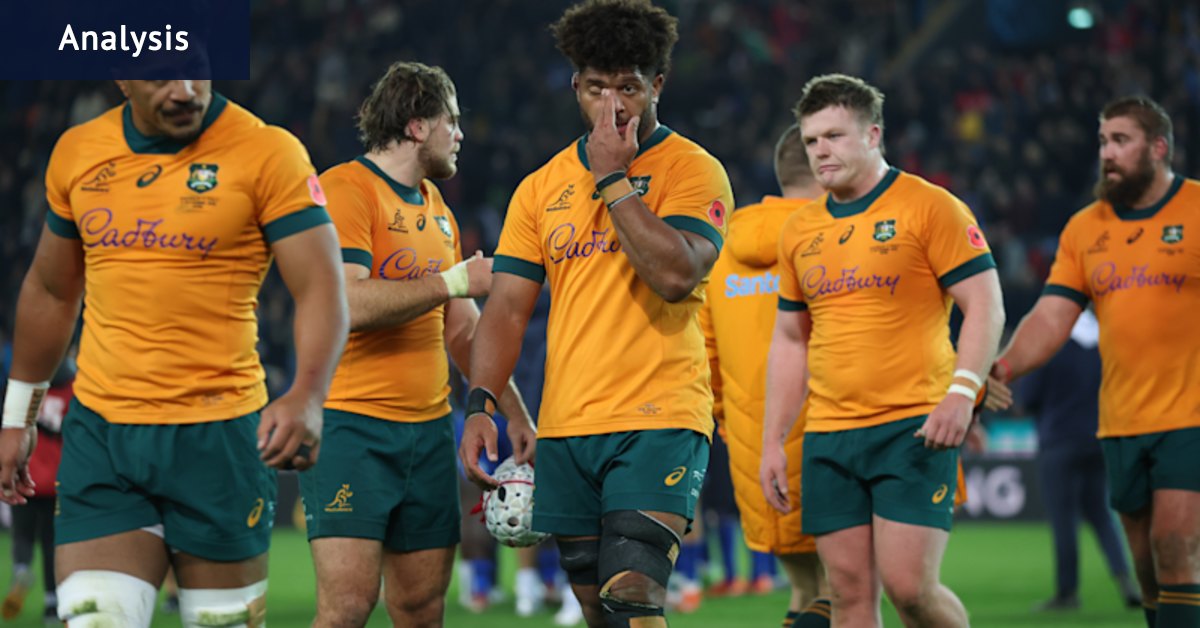

The Wallabies’ relative decline in the north has been aided by the accompanying rise of Six Nations teams. Since about 2015, and the Six Nations sides’ miserable Rugby World Cup in England – the hosts were dispatched in the group stages and the French humiliated 62-13 by New Zealand in the quarter-finals – three European nations have bounced back to produce their best sides since professionalism.
Ireland and France – coincidentally the Wallabies’ last two opponents this year – have at times been ranked No.1 in the world or looked like the best team in the world for brief periods since 2015.
Scotland, too, are effectively unrecognisable from previous versions that the Wallabies knew in advance they would beat. After the Scots were whitewashed in the 2012 Six Nations, they fell outside the world’s top 10. The current version is a historically good Scotland team.
There is, therefore, a cyclical element to the current balance of power that has shifted away from Australia. It might not last forever if Rugby Australia is effective in its pathways work and determination to improve the standard of the four Super Rugby outfits. It is no coincidence that the Wallabies’ relative decline lines up with the last Australian Super Rugby title.
And, without seeking to poke the bear, evidence is starting to emerge that a very good Irish era is coming to an end, as a Welsh one did before that.
The other factor at play, although this is harder to prove, is that the collapse of the old Super Rugby hasn’t helped the Wallabies’ attempts to be good tourists once more.
Loading
The South Africans provided a style of rugby that is far closer to the norm in the northern hemisphere than Super Rugby Pacific, and even the lost act of touring for weeks on end in unfamiliar surrounds might be having a high-performance impact.
The irony, of course, is that the rise of the north and the Wallabies’ relative fall is the product of the sport’s globalisation: the treasure that rugby league is currently chasing.
No rugby fan can sneer at rugby league’s desire to broaden its horizons without being a hypocrite – the international element of the 15-man sport is one of its strengths, and why wouldn’t rugby league want to enjoy it?
But part of that package is accepting the ability of rivals overseas to improve, even if it hurts the Wallabies’ win percentage and ultimately the bottom line.
That is what has happened over the past decade, and that significant headwind is still causing plenty of turbulence for the Wallabies.
News, results and expert analysis from the weekend of sport sent every Monday. Sign up for our Sport newsletter.