

The long, complex shadow of international geopolitics has threatened to engulf one of the world’s most prestigious film festivals, Germany’s Berlinale, with tensions rising between organisers, participants and the media over the handling of sensitive questions at the festival.
Though the realm of filmmaking is frequently if not inherently political, the spectre of American domestic political turbulence – that is, news images of ICE agents harassing and detaining people, including US citizens, and rising protests across the United States – has also become a thorny issue.
This week the conflation of those issues ignited at the Berlinale – also known as the Berlin International Film Festival – with one filmmaker pulling out of the festival, the festival’s jury awkwardly crash-tackling the issue, Hollywood stars facing tough questions about fascism, and the state of American democracy and the festival itself issuing a statement pleading for calm.
“Artists are free to exercise their right of free speech in whatever way they choose,” the organisers said, in a statement released to media. “Artists should not be expected to comment on all broader debates about a festival’s previous or current practices over which they have no control. Nor should they be expected to speak on every political issue raised to them unless they want to.”
Founded in 1951, Berlinale is one of the five major global film festivals – with, Cannes, Venice, Toronto and Sundance – and the largest by attendance. Last year, 336,000 tickets were sold to the 11-day festival.
The spark that lit the fire flared on the opening day of the 76th annual festival last Thursday (Berlin time), as its jury – including director Wim Wenders and Polish producer Ewa Puszczyńska – faced the press and were met with questions about the conflict in Gaza.
Puszczyńska called the question unfair. And Wenders responded with this: “We have to stay out of politics because if we make movies that are [specifically] political, we enter the field of politics.”
In response, Booker Prize-winning author and filmmaker Arundhati Roy withdrew from the festival. She had been scheduled to attend to present the restoration of her 1989 film, In Which Annie Gives it Those Ones.
In a statement, Roy described the suggestion that art should not be political as “jaw-dropping”.
The 64-year-old author and filmmaker said that Wenders’ comments were “a way of shutting down a conversation about a crime against humanity even as it unfolds before us in real time – when artists, writers and filmmakers should be doing everything in their power to stop it”.
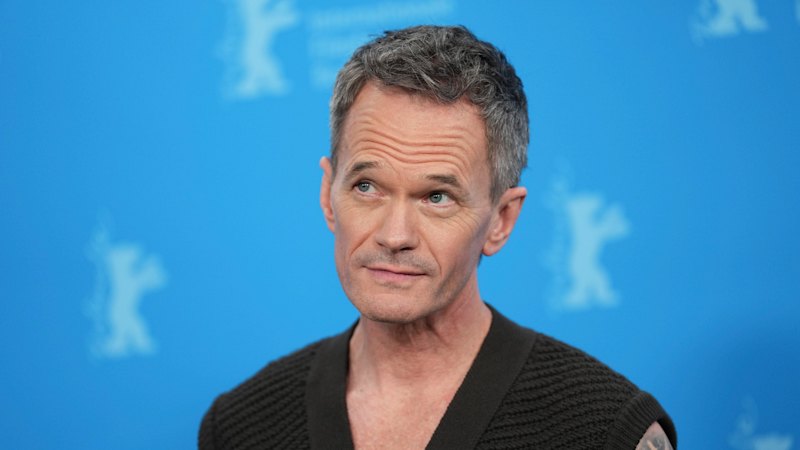
A day later, it was American domestic politics that spilled onto the Berlinale stage, with two Hollywood stars – Neil Patrick Harris and Michelle Yeoh – tackling difficult questions about rising global unease about the state of America’s democracy.
While Hollywood’s PR machinery often tries to contain the line of questioning at domestic film junkets, international film festivals are still something of the Wild West when it comes to the media’s handling of A-list film stars.
Harris was at the festival promoting the film Sunny Dancer, accompanied by co-star Bella Ramsey (Game of Thrones, The Last of Us) and director George Jaques. In the film, Ramsey plays a young girl who is sent to a summer camp for kids affected by cancer and, despite her disaffection for the experience, discovers a group of unlikely friends.
But the line of press questioning quickly turned to US politics, off the back of questions over whether the film was making a commentary on the state of healthcare in the US.
Asked whether art should be political and if cinema can fight fascism, Harris replied: “I think we live in a strangely algorithmic and divided world right now, and so as artists, I’m always interested in doing things that are apolitical. Because we’re all, as humans, wanting to connect in some way.”
Then, this question: “Do you dare to criticise your government and do you think democracy in the [United States] is in danger?”
Harris replied simply “wow,” and then: “While I have my own political opinions … I never read this script as a political statement. It was much more about a human growing up and having realisations about themselves, singularly and [about] friendship.”
Later, more tension during a press conference for Academy Award-winning Malaysian actor Michelle Yeoh, whose high-profile career includes Tomorrow Never Dies, Crouching Tiger, Hidden Dragon, Crazy Rich Asians, the television series Star Trek: Discovery and the two Wicked films, Wicked and Wicked: For Good.
When pressed to comment on the state of US domestic politics, Yeoh declined to respond in detail. “I don’t think I am in the position to really talk about the political situation in the US, and also I cannot presume to say I understand how it is,” she said. “So, best not to talk about something I don’t know about. [I want] to concentrate on what is important for us, which is cinema.”
Yeoh was at the festival as the recipient of its lifetime achievement, the Golden Bear.
The statement from the festival’s organisers pressed the point that artists were criticised for their responses to political questions, regardless of how they responded.
“Increasingly, filmmakers are expected to answer any question put to them. They are criticised if they do not answer. They are criticised if they answer and we do not like what they say. They are criticised if they cannot compress complex thoughts into a brief soundbite when a microphone is placed in front of them when they thought they were speaking about something else,” the statement said.
The statement acknowledged there were 278 films in the festival’s program, covering “many perspectives”.
“[At the festival] filmmakers are speaking constantly,” the statement said. “They are speaking through their work. They are speaking about their work. They are speaking, at times, about geopolitics that may or may not be related to their films. It is a large, complex festival.”
Must-see movies, interviews and all the latest from the world of film delivered to your inbox. Sign up for our Screening Room newsletter.
 Michael Idato is the culture editor-at-large of The Sydney Morning Herald and The Age.Connect via X or email.