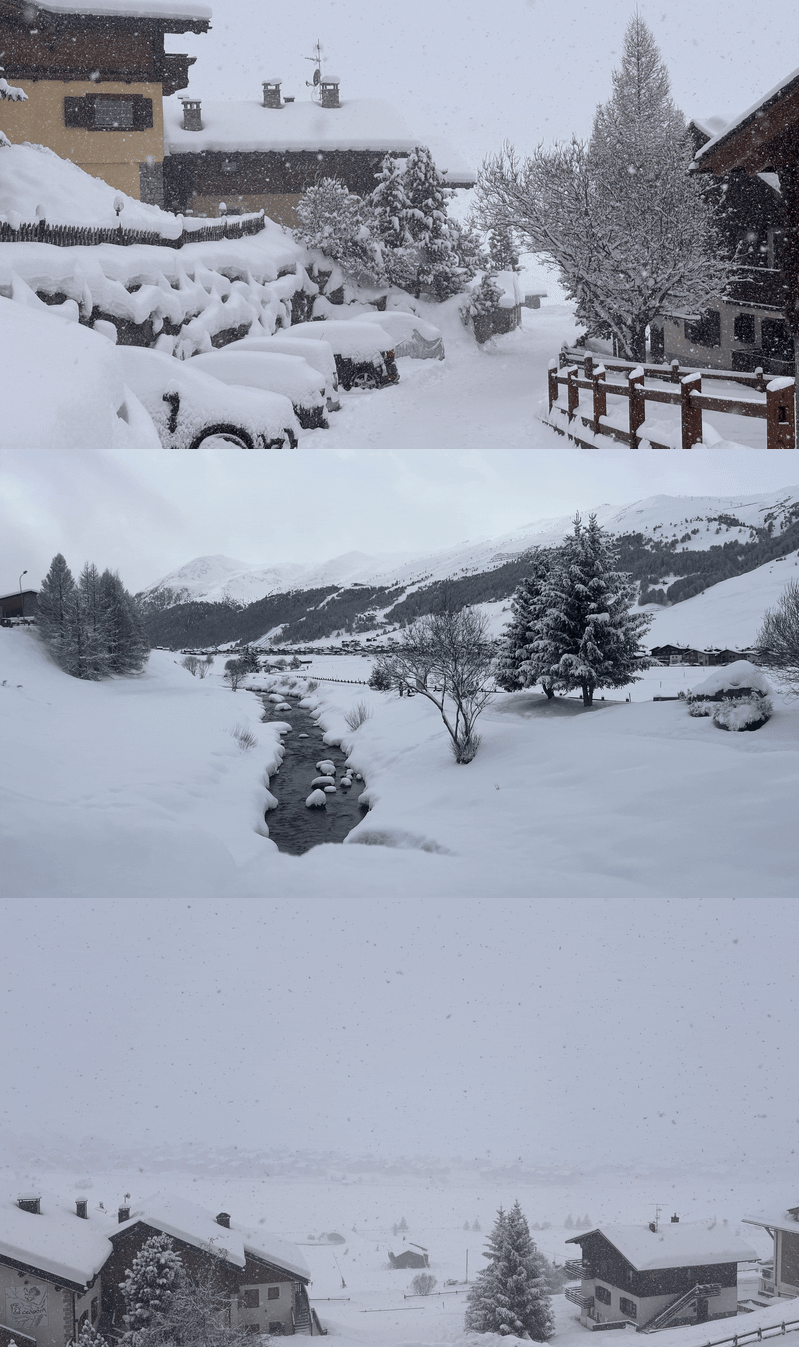

With the heavy snow making it difficult to move around, a slow day was on the cards for the aerials team, with a bit of Monopoly Go and Uno after a recovery session.
“Everyone’s a little bit different. We do like to do something as a team usually – we’re a very close, tight-knit team,” Flanagan said.
“We’ve been getting together, watching the other athletes compete on TV, watching the Aussies, playing a bit of cards sometimes, and sometimes that also means having a bit of alone time, switching off, doing what you need to do.”

Livigno wakes up to 13cm of fresh snow on Monday.
Olympic organisers preempted the chaos and disruption by bringing forward the men’s and women’s snowboard slopestyle qualifying event by a day, with slopestyle the event most affected by the conditions.
“Of all the Park & Pipe competitions, slopestyle is the most sensitive to speed issues due to the length and width of the course and the number of features within said course,” a spokesperson for the International Ski and Snowboard Federation (FIS) said.
“With the amount of snow we have seen today, it would be nearly impossible to keep the course clear of fresh snow in a way that would allow for safe and fair competition for the athletes.”

Australian Ally Hickman competes in the slopestyle on Sunday.Credit: Getty Images
However, the women’s freeski big air final was going ahead as planned on Monday evening after conditions eased throughout the day.
“Tonight for finals we will have a large contingent of course maintenance workers on site clearing fresh snow from the in-run, take-off, and landing, as required,” the FIS spokesperson said.
“With just one in-run, one take-off, and one landing, the big air course can be kept in a safe and fair condition throughout training and finals in a way that a slopestyle course cannot be.”
Loading
It’s the same for halfpipe, with training going ahead for the women’s freeski halfpipe on Monday night, which would be the first Olympic training session for 16-year-old Australian and medal hope Indra Brown.
“Again, for halfpipe, it is a much more manageable field of play, and one where slightly slower speeds do not present a safety issue,” the FIS spokesperson said.
“While slower speeds may lead to less amplitude for the athletes and lower standard of tricks performed, the conditions will be the same for everybody and the athletes will adjust their approach to training accordingly.”
The Winter Olympic Games is broadcast on the 9Network, 9Now and Stan Sport.
News, results and expert analysis from the weekend of sport sent every Monday. Sign up for our Sport newsletter.