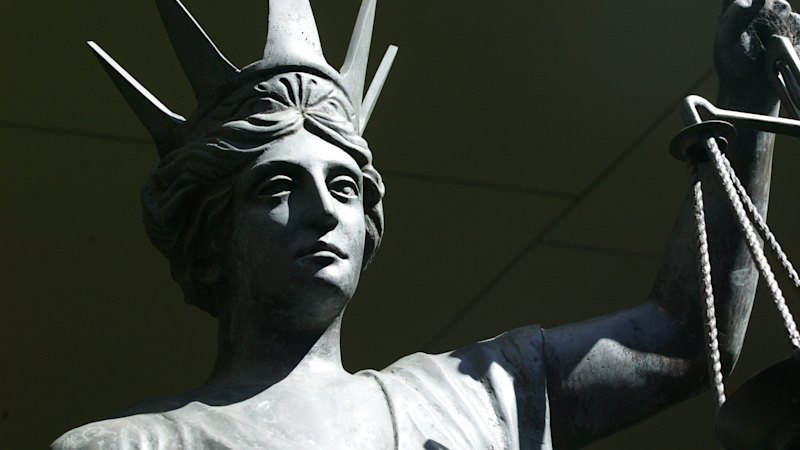


Growing hostility between judges and the media and the failure of laws designed to keep courts open to public scrutiny have reduced Victoria’s court system to the least transparent in Australia, a new report warns.
The study by Monash University researchers, commissioned by the Melbourne Press Club, warns the prolific use of suppression orders and deteriorating public access to court documents have produced a “crisis” in court reporting which threatens the fundamental principle of open justice.
The report calls for an overhaul of Victoria’s Open Courts Act (OCA)– legislation introduced 13 years ago to limit the use of suppression orders – and urgent steps to repair a fractured relationship between judges and journalists who report from their courts.
“The limitations to conducting public interest news journalism in Victoria are now so severe that the crucial role of news reporting holding powerful institutions and individuals to account is under significant strain,” the report’s authors concluded.
“The report found that Victorian courts frequently and routinely breach the OCA with impunity. This is a serious situation and could damage the doctrine of natural justice on which the legitimacy of the courts rests. The courts are supposed to uphold the law – not break it.”
The report by Monash University’s Associate Professor of Journalism Johan Lidberg and senior lecturer Alicia McMillan, based largely on interviews with working journalists, also examines the state’s “broken” Freedom of Information system and access to information across police and political reporting.
The journalists interviewed included senior reporters from The Age, The Guardian and the ABC.
Lidberg said he was struck by the “despair” in the reflections of court reporters whose jobs were previously valued by the courts.
“The relationship and communications between the judiciary and the media has broken down,” he told this masthead. “The public is not well served by having a stand-off between the media and the courts.
“Court reporters used to be seen as part of the open justice doctrine. They feel they no longer are and are actually seen as being the enemy.”
Chief Magistrate Lisa Hannan, Chief Judge of the County Court Amanda Chambers and Supreme Court Chief Justice Richard Niall all declined to contribute to the research and no current judge accepted an invitation to speak at a Melbourne Press Club event, where the report will be formally launched.
Niall issued a statement on Monday defending the “substantial and daily” engagement between courts and journalists and expressing his disappointment with the report.
“It contains a number of misleading claims, selective citations and suppression order data which has been debunked as incomplete and misleading,” the judge said.
The editor of The Age, Patrick Elligett, Herald Sun editor Sam Weir and former Supreme Court justice Betty King will discuss the report’s findings at Tuesday’s launch.
The state’s Director of Public Prosecutions, Brendan Kissane, KC, rejected two of the report’s key findings – that Victoria issues more suppression orders than other jurisdictions and that judges were misapplying the law.
He said the number of suppression orders issued was not a problem if each was necessary.
“It is not clear that Victorian courts do issue a high number of suppression orders compared to other Australian jurisdictions,” Kissane told the researchers. “No evidence has been provided to suggest that the courts are not applying the criteria appropriately.“
The report claims that nearly half of all suppression orders in Australia are issued by Victorian courts. This is based on previously published data compiled by News Corp lawyers showing suppression orders made in each jurisdiction in 2023.
The figures show that of 1113 suppression orders, 521 were issued in Victoria compared to 133 in NSW and 38 in Queensland.
Melbourne Law School Associate Professor Jason Bosland, an open justice advocate whose research led to the introduction of the state’s Open Courts Act, agrees there is a serious problem in Victoria and the law has failed its principal objective.
He also says the data relied upon in the report is flawed because it only captures orders where the media was notified – not all suppression orders issued by the courts. South Australia is the only jurisdiction which requires notification and annual reporting of all suppression orders.
“Presenting it as the overall count of suppression orders made in Australia is fundamentally misleading,” Bosland said. “This idea that Victorian judges have a greater propensity for making orders, just on the numbers we have got, doesn’t stack up.”
Lidberg acknowledges that the data is disputed and most likely underestimates the true number of suppression orders issued.
“Which is the worse state is neither here nor there,” he said. “The core of the matter is that the number of suppression orders, combined with deteriorated access to information and court documents, has caused a situation in the main Victorian courts where senior court reporters struggle to do their job in the public interest.”
Melbourne Press Club president Michael Bachelard said the study confirmed “that secrecy, suppression and spin have overtaken openness and disclosure across many of our institutions.”
The Open Courts Act was last reviewed in 2018 by retired Supreme Court justice Frank Vincent who found the number of suppression orders issued had not significantly decreased since the law came into force. He concluded that “more attention needs to be given to the education of judges” about how and when to issue them.
The Morning Edition newsletter is our guide to the day’s most important and interesting stories, analysis and insights. Sign up here.
 Chip Le Grand leads our state politics reporting team. He previously served as the paper’s chief reporter and is a journalist of 30 years’ experience.Connect via email.