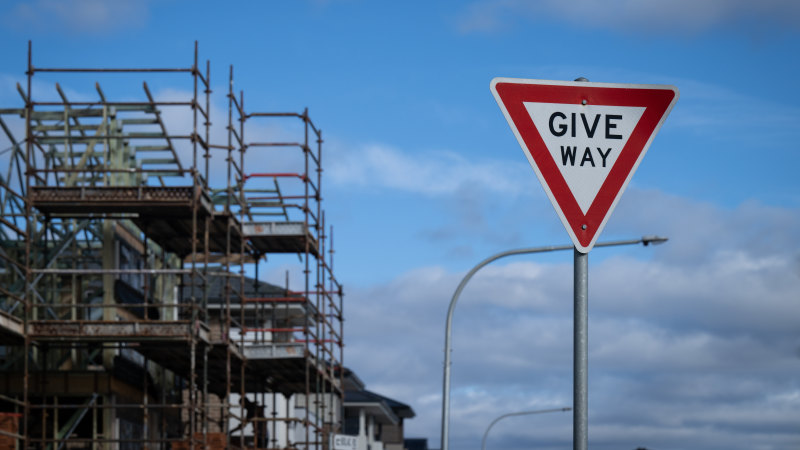

“If enabling infrastructure is not funded in growth areas, the planned 300,000 new homes in these communities will not be built by the 2029 deadline.”
The federal government has offered $3 billion in payments to the states and territories to find ways to fast-track construction, including essential infrastructure. However, the policy has come under criticism as the cash does not flow to the governments until they exceed their housing targets.
Independent MPs led by Allegra Spender this week urged the government to bring forward payments under the existing “new homes bonus” program that sees states rewarded as they make reforms such as zoning changes or accelerated building approvals.
According to the alliance, governments are too focused on trying to lift housing supply in inner-city suburbs, where infrastructure was already under pressure, while many Australians want to live in outer-suburban areas.
At least a quarter of the 1.2 million homes are likely to be built in the 29 outer suburban councils.
But alliance chair and mayor of the City of Gosnells, Terresa Lynes, said without a change to the federal government’s programs, homes in outer suburbs would not be built.
“We’re seeing entire estates without connected sewerage and [with] insufficient water. It’s concerning that in 2025, this is what governments are expecting people to accept as their lot,” she said.
“The government is failing these Australians before their house is even built, let alone by the subsequent underfunding of infrastructure communities need to thrive once they move in.”
AMP chief economist Shane Oliver said there were no quick fixes to improving the affordability of Australian homes.
He said building more homes, tax reform, encouraging people to live in regional centres and reducing immigration should all be examined by the nation’s governments.
Oliver said that since the mid-2000s, and particularly since the end of the pandemic, governments had failed to match the level of immigration with the ability of the property market to supply housing.
Loading
“Our rough estimate is that immigration needs to be cut back to around 200,000 a year from 316,000 over the year to the March quarter,” he said.
“But in seeking to address the problem we need to act in a balanced way. In particular, immigration has been a huge benefit to Australia by boosting labour supply and addressing labour shortages, supporting state and federal budgets, slowing the ageing of the population, boosting innovation and enhancing cultural diversity and vibrancy.”
Oliver said while the government’s 1.2 million housing target was a step towards boosting supply, much more had to be done to lift the number of homes under construction.
“To meet the target will require relaxing land-use rules, less red and green tape, shifting to faster ways to build including with modular and pre-fab homes, encouraging build-to-rent affordable housing, training and importing far more tradies and refocusing more on units,” he said.
Cut through the noise of federal politics with news, views and expert analysis. Subscribers can sign up to our weekly Inside Politics newsletter.