
Rosa Prince
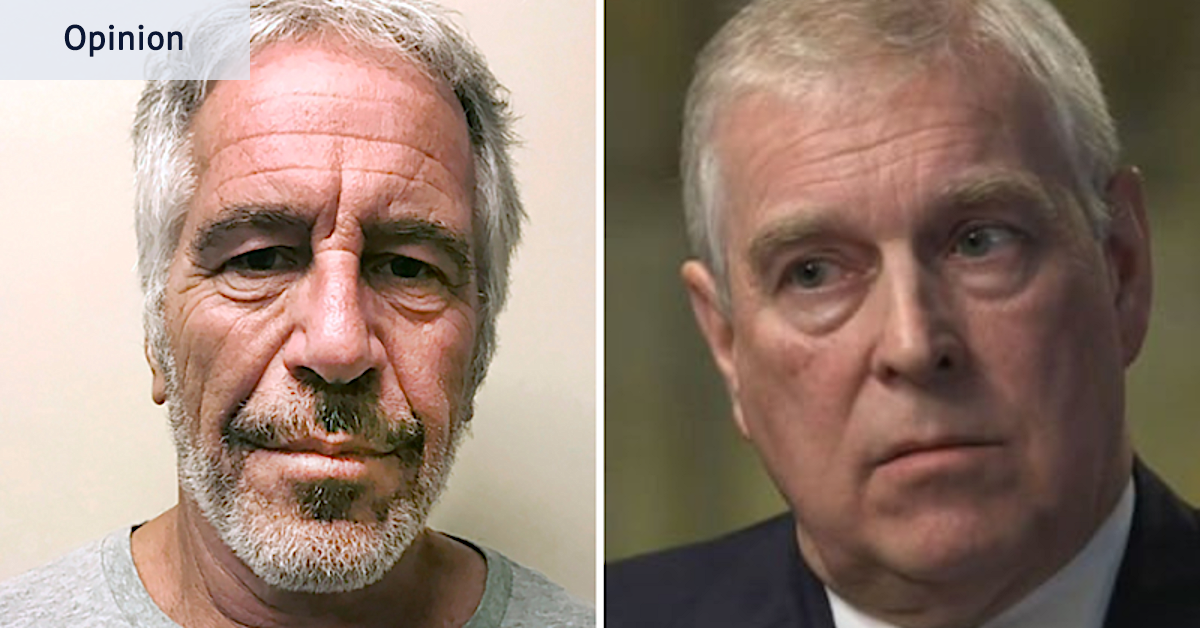
Just when you thought former prince Andrew Mountbatten-Windsor could sink no lower, fresh evidence shows that indeed he did.
King Charles’ troublesome younger brother had already been caught lying about his friendship with the late paedophile Jeffrey Epstein, making his denials of sexual wrongdoing, including allegedly abusing the late Virginia Giuffre when she was 17, look hollow.
Now, according to the latest dump of data released under the Epstein Files Transparency Act, it appears he may have shared with the disgraced financier confidential information gleaned during his work as a trade envoy for the UK government. Given that Mountbatten-Windsor and his ex-wife Sarah Ferguson are alleged to have used Epstein and the wealthy Middle Eastern princes and money men they introduced him to as cash cows, these tidbits had the potential effect of further enriching his pal and therefore ultimately himself.
The disclosures about Mountbatten-Windsor have become extensive, painting a picture of decades of apparent malfeasance — an ugly convergence of money, young women and travel to exotic climes where few questions were asked.
The latest batch of files suggests that the confidential, potentially lucrative information he passed to Epstein includes a memo about investment opportunities in gold and uranium in Afghanistan that had been prepared for him by the UK government in his envoy role.
According to the documents, he fired off details about trade missions to Singapore, Vietnam, China and Hong Kong, once forwarding an official report about an overseas mission within 30 minutes of receiving it. And the emails show he was prepared to use his influence to introduce Epstein to the powerful figures he met on his travels, including the then-emir of Qatar, Hamad bin Khalifa Al Thani, and Sheikh Abdullah bin Zayed Al Nahyan, foreign minister of the United Arab Emirates.
Throughout the exchanges is a drum beat of messages about the women he was meeting, often at Epstein’s behest. Photographs show Mountbatten-Windsor pawing young female bodies, faces redacted.
The list of authorities keen to question Mountbatten-Windsor about what he knew, saw and did is growing. Along with the US Congress and multiple British police forces, the chair of the UK Parliament’s powerful Business and Trade select committee has now confirmed it will consider summoning the ex-prince to explain his actions as trade envoy.
Meanwhile, former Prime Minister Gordon Brown has urged authorities to investigate Mountbatten-Windsor as an accessory or witness to Epstein’s use of London’s Stansted and Luton airports to traffic women and girls. And Congressman Ro Khanna, who helped force the release of the Epstein files, has said: “Andrew needs to come before our committee and start answering questions. I don’t think the appropriate punishment is you no longer get to be a prince. There’s got to be more than that.”
There is evidence the UK public has also had enough of Mountbatten-Windsor’s obfuscating. A recent poll found 82 per cent thought Charles should encourage his brother to give evidence to US police; a separate survey found more than half believed the royals ought to have done more to condemn the wayward Windsor.
In fairness, the King, alive to the existential reputational threat to the crown, has pledged to “support” any police inquiry “if we are approached,” a tacit acknowledgment that there may be a case for Mountbatten-Windsor to answer.
It would seem a no-brainer that, given the scale of the outrage, a proper reckoning will follow and that any necessary justice will be delivered. Not so fast. Mountbatten-Windsor has a track record of avoiding serious repercussions.
Take the allegations made by Giuffre more than a decade ago of being abused by him, including at a London property owned by Ghislaine Maxwell. The Metropolitan Police sat on the investigation even after Mountbatten-Windsor, who has always denied the accusation, paid Giuffre a reported £12 million ($16.3 million) to settle a civil claim, before quietly closing the case.
Meanwhile, his bad behaviour as trade envoy was an open secret for years. The historian Andrew Lownie, who has written a damning book about the lifestyle and behaviour of the former prince and his ex-wife, has spoken to more than 300 diplomatic and royal sources with stories about his antics, including the claim that he used prostitutes while on official government business.
Dazzled by royalty, afraid for their jobs — Lownie writes of senior civil servants finding they received less favourable postings if they didn’t play ball — there are possibly dozens of ambassadors and diplomats who failed to blow the whistle, perhaps hundreds of protection officers and police who turned a blind eye.
The signs were always there. Mountbatten-Windsor and his wife have repeatedly proven their capacity to turn trade missions and royal visits into personal money-making ventures. They became adept at cultivating associations with shady businessmen and oligarchs prepared to procure a sprinkling of royal glamor by writing a big check.
It has never, for example, been properly explained why a purchaser, only recently revealed as the Kazakh billionaire Timur Kulibayev, used funds from a firm allegedly implicated in corruption to buy the then-prince’s former home of Sunninghill Park for millions of pounds above asking price.
Many of these activities will remain obscured. Official papers relating to Mountbatten-Windsor’s time as trade envoy, which should rightly form part of the national archive, will remain sealed for 60 years — long after his death — with no explanation. By convention, Parliament does not debate the royals, a custom that will now surely have to be reviewed.
Until then, the only answers we have are in the Epstein files. Will anything come of their revelations? I wouldn’t count on it. The royal family’s MO when dealing with Mountbatten-Windsor and the Epstein scandal is well established: When the pressure escalates, they turn the release valve just enough to make the problem go away for a while.
After photos surfaced of him with Epstein in 2010 and then with Giuffre the following year, Mountbatten-Windsor was made to stand down as trade envoy. In the wake of his catastrophic Newsnight interview he stepped away from all royal duties.
When the scale of his association with Epstein, and the fact that he had lied about it, became apparent last year, he was stripped of his royal titles, and last month, after much procrastination, he was finally forced to leave his grace-and-favour mansion on the grounds of Windsor Castle.
Now Mountbatten-Windsor faces allegations of abuse of power and financial misconduct on a bigger scale. He has never had any motivation to answer Congress’s calls for him to testify, and given his calamitous performance on Newsnight, no lawyer would advise him to cooperate.
As for speaking to the British police or Parliament, any ordinary citizen would be unable to avoid their summons but, despite the withdrawal of his titles and baubles, Mountbatten-Windsor is not an ordinary citizen. And that’s always been the problem. He abused his entitled position for decades, and those around him have been too cowed by the mystique of royalty to force him to behave.
A constitutional monarchy is a contract. Through the accident of birth, one lucky family attains riches, prestige and fame. It’s not too much to ask that in return they behave with decorum. This time, the scale of the potential wrongdoing is too great to bury under the privilege of monarchy.
This column reflects the personal views of the author and does not necessarily reflect the opinion of the editorial board or Bloomberg LP and its owners.
Rosa Prince is a Bloomberg Opinion columnist covering UK politics and policy. She was formerly an editor and writer at Politico and the Daily Telegraph, and is the author of “Comrade Corbyn” and “Theresa May: The Enigmatic Prime Minister.”
Bloomberg