
“People simply do not rely on physical letters the way they used to,” PostNord Denmark communications director Andreas Brethvad said, adding that, because nine in 10 Danes shop online each month, the change “is about keeping up with times to meet the demands of society. It’s a natural evolution.”
Loading
Denmark is not forgoing snail mail entirely. Remaining pen and paper enthusiasts – as well as the few who have opted out of digital government communications – will be able to send and receive letters through Dao, a private company.
While some Danes are quietly mourning a service that, for the most part, they had largely stopped using, the transition feels like a sign of the times.
Physical mail delivery has declined around the world, hurting postal carriers in Germany, Greece, Britain and elsewhere. In March, PostNord announced layoffs in Denmark for 1500 people, from a workforce of 4600.
But Denmark appears to be the first country where the long-time designated postal carrier will stop delivering letters. The Switzerland-based Universal Postal Union, the United Nations’ postal agency, said it had no records of a similar move.
Birch, who now works as a communications officer in the Danish city of Odense, said that progress “isn’t wrong. But we should acknowledge what we lose along the way.”

Few people write letters any more, when they were once plentiful.Credit: Janie Barrett
In Birch’s rural home town, he said, the postal worker was a “human link in the local community. He knew the route, and he knew the people.” And something tastes sour to him about a private company taking over letter deliveries: “The old postal service existed as a public responsibility. To me, that’s a meaningful difference.”
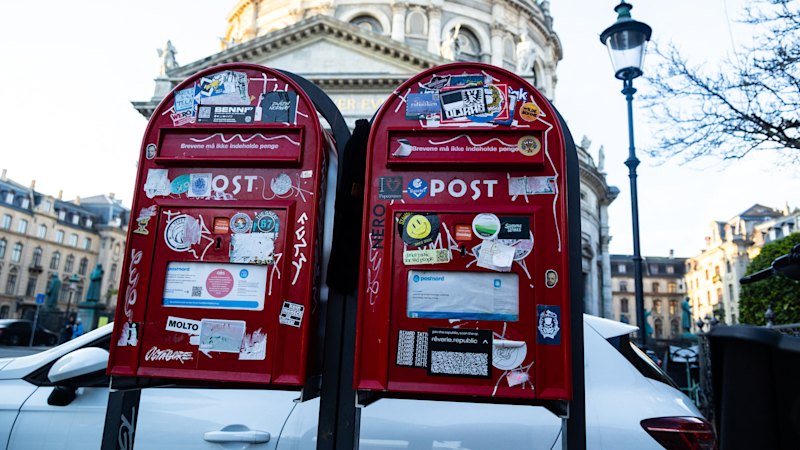
Many Danes were shaken when PostNord began taking down the bright red mailboxes in June.
When 1000 of the boxes went online this month, they sold out in less than three hours for the equivalent of $470 or $350, depending on their condition, with the proceeds intended to help children in poor areas.
Danes clamoured to own a piece of history, just like the New Yorkers who bought old orange seats and retired metal signs from the city’s subway system at a Metropolitan Transportation Authority pop-up sale in autumn.
“It was overwhelming,” Copenhagen lifestyle trend researcher Mads Arlien-Soborg said. “There’s a nostalgia in this that is super important.”
Next month, 200 additional boxes will be auctioned, many decorated by local artists. PostNord said it expected them to sell quickly, and at varying prices.
“An entire era is coming to an end,” Enigma communications museum director Magnus Restofte said.
Loading
Still, some experts have noted signs of younger generations returning to letter writing – if not as a regular habit, then at least as a countercultural embrace of vintage technology.
“Fifty years ago, people received so many letters that they were almost taken for granted,” Restofte said. Today, letters are more precious, he added, “precisely because we receive so few”.
This article originally appeared in The New York Times.
Get a note directly from our foreign correspondents on what’s making headlines around the world. Sign up for our weekly What in the World newsletter.