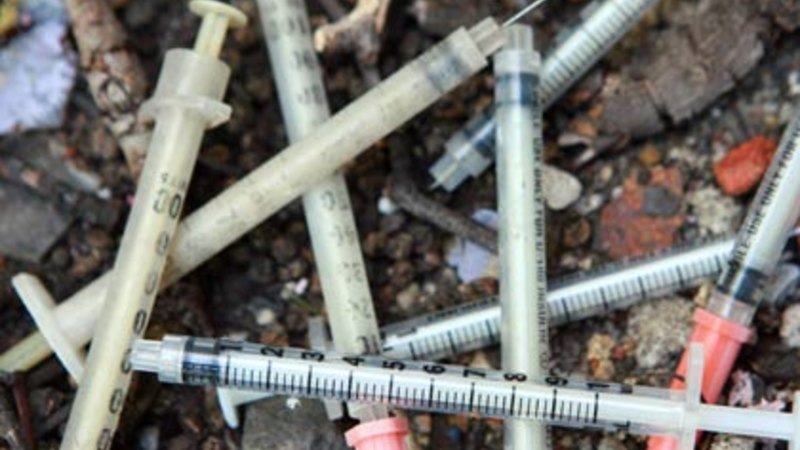


The Queensland government has brushed aside a call to introduce a needle-exchange program in the state’s prisons, after reports hundreds of former prisoners may have been exposed to HIV and hepatitis C by sharing injecting equipment.
Almost 300 former prisoners have potentially been exposed to the viruses by sharing needles with an unknowingly infected male offender, according to a memo sent to sexual health services by Queensland Health and first reported by the ABC.
The department’s Communicable Diseases Branch reportedly asked the health providers to offer full sexual health and blood-borne virus testing to anyone presenting at their service, “due to the nature of this risk” and the difficulty identifying the timing of exposures.
A Queensland Health spokesperson said it had contacted 295 people who were potentially exposed inside an adult male correctional centre between January and June 2025 – some of whom had since been released – recommending they get tested.
“Staff working at the correctional centre are not considered to be at risk, and while the community risk is low, we are taking necessary precautions,” the spokesperson said.
The news prompted a renewed call for prisons to provide free, sterile needles to help prevent new infections of blood-borne viruses and minimise harm from bacterial infections.
Hepatitis Australia chief executive Lucy Clynes said prisons remain high-risk environments for hepatitis C transmission, and measures such as needle-exchange programs “should be carefully considered as part of a comprehensive public health response”.
“It is estimated that 8 per cent of people in prisons have hepatitis C,” Clynes said.
“Needle and syringe programs, alongside testing and treatment, are evidence-based interventions that reduce transmission and protect both people in prison and the broader community.”
Asked on Tuesday whether the state’s jails should introduce needle-exchange programs, Health Minister Tim Nicholls said “there should not be needles in jails”, and he referred further questions to Queensland Corrective Services.
A spokesperson for QCS said it was not aware of a needle-exchange program in any Australian prison, and that prisoners “are not permitted to have needles in Queensland correctional centres, to protect officers”.
In Australia, about one in seven prisoners said they had injected substances in jail.
Almost 30 per cent of prisoners said they had injected drugs in their lifetime, with Queensland recording the highest rates at prison entry.
A study of those who injected drugs in Queensland prisons, published in the International Journal of Drug Policy this month, included anecdotes from 30 former prisoners.
One man said he counted 86 people using one needle in a day. Another said he contracted acute hepatitis after injecting the side of his foot with a syringe “made out of a bread bag, a pen and a sunscreen tube”.
A 29-year-old described a “never-ending cycle” in prisons, where hepatitis C is “cured” but then reintroduced because people are sharing needles.
The researchers said denying sterile equipment in prisons may breach Queensland’s Human Rights Act, which says inmates must receive the same standard of health care as the wider community.
Start the day with a summary of the day’s most important and interesting stories, analysis and insights. Sign up for our Morning Edition newsletter.