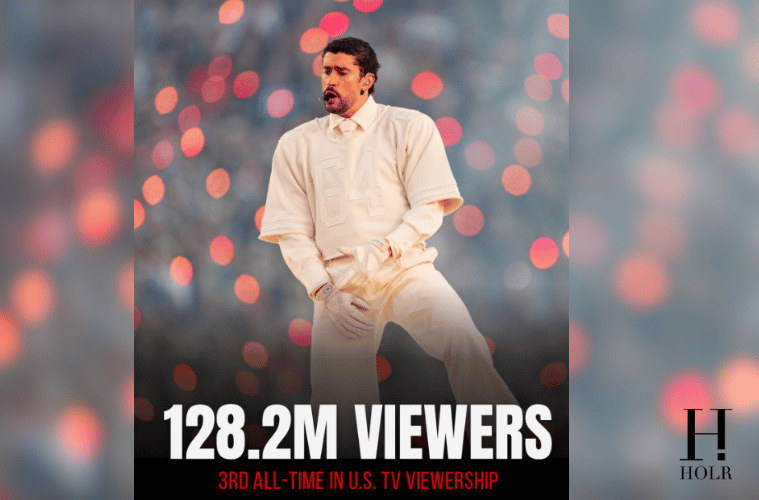

Performance Breaks NFL Social Records Despite Lower TV Average Than Last Year
Bad Bunny’s Halftime Show Delivers Massive Reach
February 13, 2026: Bad Bunny delivered one of the most talked-about halftime performances in recent memory, with his Super Bowl show reportedly reaching an average of 128.2 million viewers and setting multiple NFL social media engagement records. The performance generated enormous online buzz, trending globally within minutes and driving record interaction across league and broadcast platforms.
According to measurement data released after the game, the halftime show audience figure placed the performance among the most-watched music events of the year. While overall Super Bowl viewership remained extremely strong, comparisons to last year’s halftime benchmark have fueled debate about shifting audience behavior between television and digital platforms.
HOLR has the latest news on the numbers, the records broken, and what they reveal about how audiences now consume major live performances.

Image Credit: Reuters
TV Ratings vs Halftime Performance Reach
Viewership tracking firm Nielsen reported that this year’s Super Bowl broadcast averaged 124.9 million television viewers. That figure ranks among the highest totals in broadcast history and reflects continued dominance for the championship game as a live event draw.
However, halftime show reach is calculated differently from full-game averages. Halftime performance numbers often include cross-platform measurement, delayed engagement, and verified streaming audiences in addition to traditional TV ratings.
Bad Bunny’s halftime set reportedly averaged 128.2 million viewers, meaning the performance itself drew a larger measured audience than the game’s average minute rating — a pattern that has become more common as casual viewers tune in specifically for the music segment.
Comparison to Last Year’s Record Show
Despite the massive reach, this year’s halftime audience did not surpass last year’s record-setting performance by Kendrick Lamar, which drew approximately 133.5 million viewers. That show currently holds the top spot for highest measured halftime performance audience in recent tracking history.
Industry analysts say year-to-year comparisons should be viewed with nuance because measurement methods continue to evolve. Cross-device viewing, out-of-home tracking, and mobile streaming inclusion have expanded audience totals in newer reports compared to older models.
Even so, Bad Bunny’s performance ranks among the elite tier of halftime viewership results.

Image Credit: Yahoo
Social Media Records Shattered
Where this year’s halftime show clearly set a new bar was digital and social engagement. League sources and platform trackers report that the performance generated record-breaking interaction across official NFL social channels and partner platforms.
Reported record areas include:
- Most halftime show mentions per minute
- Highest real-time hashtag velocity
- Record short-form video shares during halftime window
- Peak halftime clip views within first hour
- Largest multilingual engagement spike
Music performances now function as dual broadcast-digital events. Social amplification begins before the show, peaks during performance, and often continues for days through replay clips and reaction videos.
Bad Bunny’s global fan base — particularly strong across Latin America, the U.S., and Europe — contributed significantly to the digital surge.
A Global Artist on a Global Stage
Bad Bunny’s selection as halftime performer reflected the NFL’s continued strategy of choosing artists with international reach and cross-market influence. As one of the most streamed artists in the world over the past several years, his catalog spans languages and genres, helping expand the event’s cultural footprint.
Analysts note that halftime shows increasingly serve not just domestic audiences but global streaming viewers. International fan participation online can dramatically increase total engagement metrics even when U.S. TV ratings remain flat year-to-year.
His performance incorporated large-scale staging, multilingual visuals, and genre-blending production — elements designed to resonate across audience segments.
Why Halftime Shows Drive Separate Audiences
Super Bowl halftime shows often attract viewers who are not regular football watchers. Research consistently shows that a meaningful share of the halftime audience tunes in primarily for the musical performance rather than the game itself.
Drivers include:
- Artist fan bases
- Cross-genre appeal
- Pop culture conversation
- Viral performance moments
- Guest appearances
- Visual spectacle
This creates a layered audience structure: core sports viewers, casual event viewers, and music-first viewers. That layered model helps explain why halftime performance reach can exceed average game ratings.
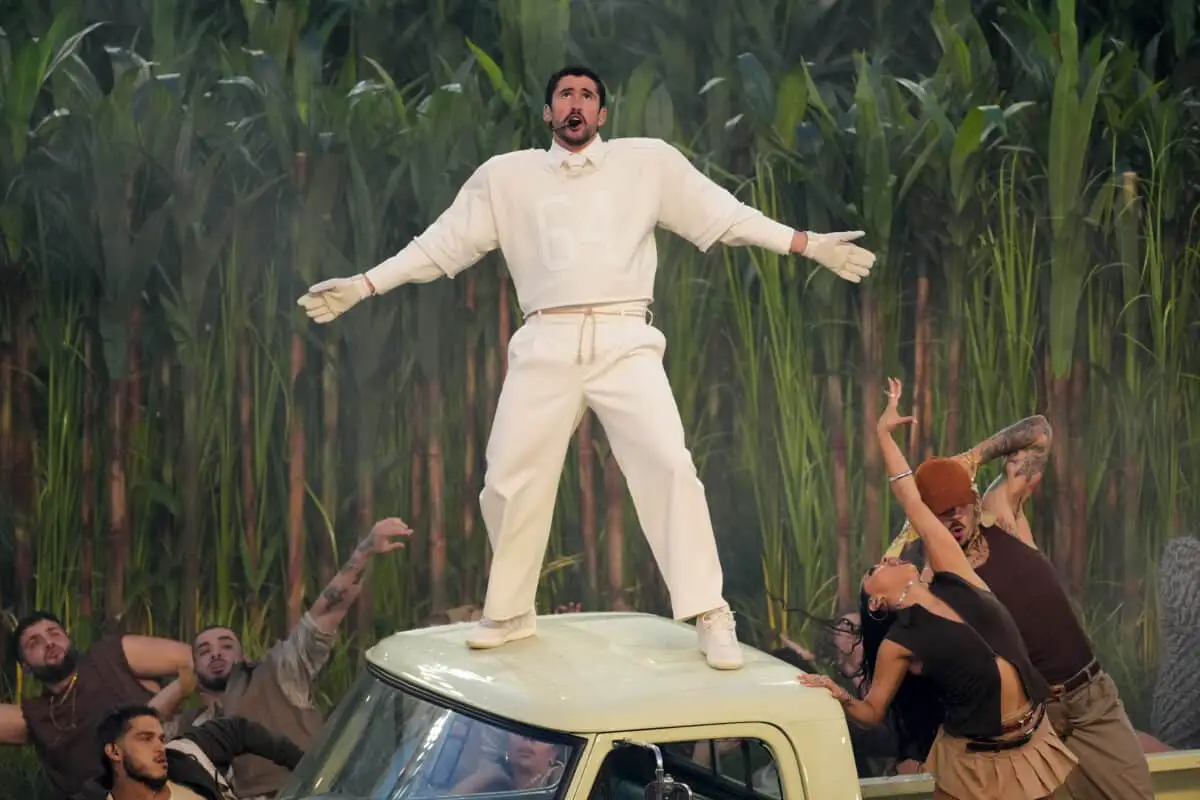
Image Credit: Gridiron Heroics
The Shift Toward Multi-Platform Measurement
Modern event measurement now includes more than just television sets. Audience totals increasingly factor in:
- Mobile streaming
- Connected TV apps
- Out-of-home viewing
- Verified digital simulcasts
- Social platform video plays
Because of this, headline numbers today are not always directly comparable to figures from a decade ago. Expanded measurement captures audience behavior that previously went uncounted.
Media analysts say halftime performances benefit disproportionately from multi-platform viewing because clips and segments are heavily replayed within hours.
Cultural Impact Beyond Ratings
Beyond raw numbers, halftime performances are judged by cultural penetration — how widely they are discussed, shared, and referenced afterward. By that measure, Bad Bunny’s show scored strongly, dominating trending lists and post-game conversation cycles.
Performance elements that fueled discussion included:
- Stage design choices
- Surprise musical transitions
- Costume styling
- Guest moments
- Visual symbolism
- Language representation
Music critics noted that halftime shows increasingly function as short-form cultural statements rather than simple medley concerts.
Brand and Advertising Value
High halftime engagement translates directly into brand value for sponsors and broadcast partners. Social interaction spikes during halftime create premium ad exposure windows and extended campaign life through replay clips.
Advertisers now evaluate halftime impact using:
- Engagement per minute
- Brand mention lift
- Share velocity
- Sentiment tracking
- Clip retention rates
Record social metrics can sometimes outweigh slightly lower TV numbers from a marketing perspective because digital engagement is more directly measurable and targetable.
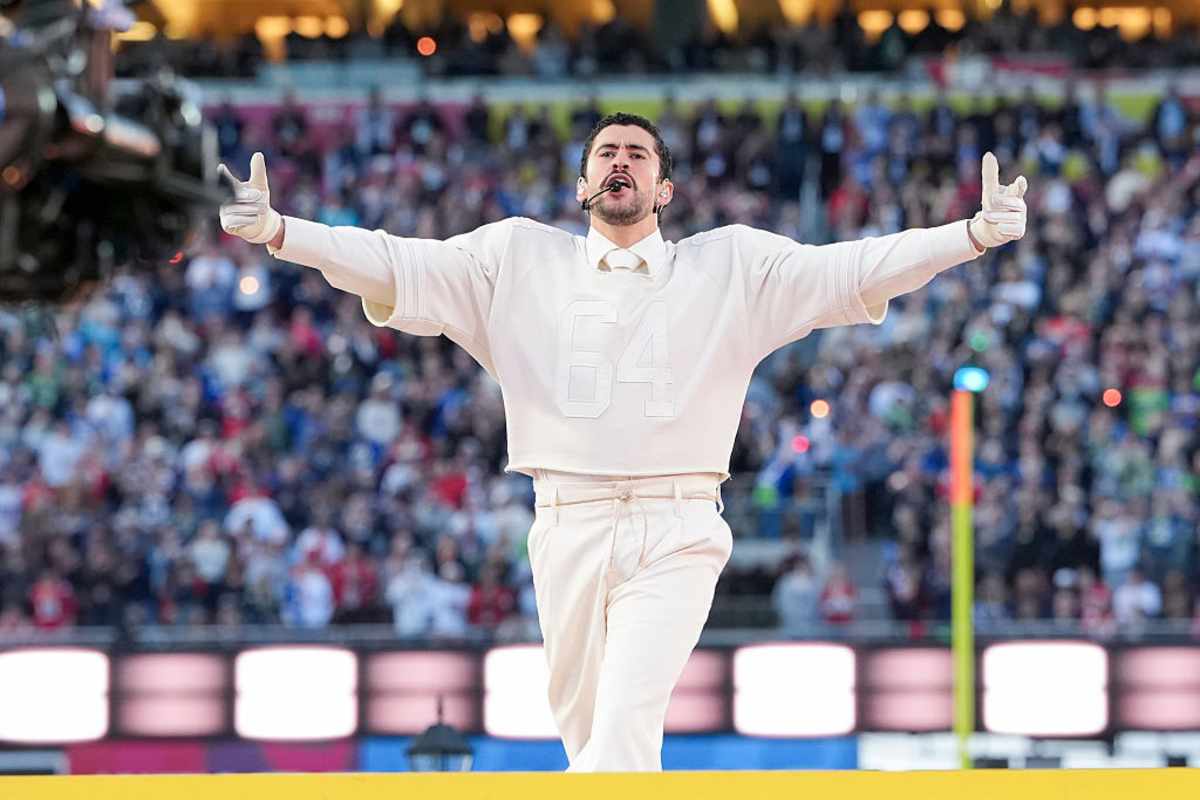
Image Credit: MEAWW News
What the Numbers Really Show
Taken together, the data suggests three key trends:
- Super Bowl TV audiences remain historically strong
- Halftime shows can outperform game averages in reach
- Social engagement is becoming as important as broadcast ratings
Bad Bunny’s halftime performance may not have broken the all-time TV record, but its combined broadcast and digital footprint places it among the most impactful halftime shows to date.
Looking Ahead
Halftime show expectations continue to rise as artists treat the slot as a global showcase moment. Future performances will likely be evaluated using blended metrics — television reach, streaming totals, and social engagement combined.
As measurement evolves, so will the definition of what counts as a “record-breaking” halftime show.
Image Credit: The Spun
FAQs
How many viewers did Bad Bunny’s halftime show reach?
Reports indicate the performance reached about 128.2 million viewers on average across measured platforms.
What was the overall Super Bowl TV average this year?
Nielsen measured approximately 124.9 million average television viewers for the game broadcast.
Did this break the all-time halftime show record?
No. Kendrick Lamar’s halftime show last year reportedly reached about 133.5 million viewers, which remains higher.
Did the performance set any records?
Yes. It reportedly broke multiple NFL social media engagement records during the halftime window.
Why can halftime viewership be higher than game averages?
Many viewers tune in specifically for the performance, and halftime numbers often include broader cross-platform measurement.