
Puerto Rican pride and rhythm light up football’s biggest stage
A halftime show rooted in identity
February 9, 2026: Bad Bunny turned the Super Bowl halftime show into a vibrant celebration of Puerto Rican culture, filling the stadium with live percussion, brass, and dancers rather than relying on spectacle-heavy theatrics. From the opening moments, the performance emphasized movement, rhythm, and collective energy over pyrotechnics.
Culture first.

Image Credit: Loren Elliott for The New York Times
A set driven by rhythm, not translation
The performance leaned confidently into Spanish-language hits, trusting the music’s momentum to carry the moment. Songs pulsed with reggaeton and Latin trap energy, backed by a live band that gave the show a raw, street-level feel uncommon for halftime productions.
No compromise.
Visuals that told a story
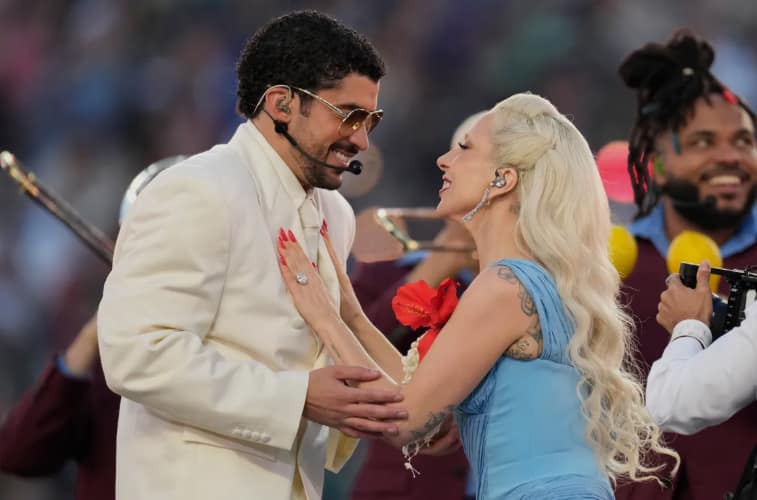
Dancers in earth tones and tropical colors moved across a stripped-down stage, while visuals evoked Caribbean streets, nightlife, and island pride. Puerto Rican symbolism appeared subtly throughout the performance, reinforcing Bad Bunny’s long-standing insistence on representing his roots on global platforms.
Identity on display.

Image Credit: Loren Elliott for The New York Times
The crowd reaction inside and out
Inside the stadium, the energy built steadily rather than exploding all at once, while online reaction praised the show’s warmth and authenticity. Viewers described the performance as joyful, confident, and refreshingly unconcerned with crossover approval.
Shared joy.
A different kind of halftime legacy
Unlike halftime shows built around shock or surprise guests, this one succeeded through consistency of tone. It felt less like a medley and more like a statement about presence, culture, and joy.
Statement made.

Image Credit: Loren Elliott for The New York Times
Final thoughts
Bad Bunny didn’t chase universality — he let it come naturally. By centering culture and rhythm, he delivered a halftime show that felt alive, proud, and unmistakably his own.
Joy sustained.
FAQs
Q1: Who performed the Super Bowl halftime show?
Bad Bunny headlined the performance.
Q2: What made the show different from past halftime acts?
It focused on live music, rhythm, and cultural identity rather than spectacle.
Q3: Was the performance in English or Spanish?
Primarily Spanish, with no effort to translate or dilute the experience.
Q4: Did the show feature heavy production effects?
No. It relied more on dancers, live instruments, and movement.
Q5: How was the show received?
It was widely praised for its joy, authenticity, and cultural confidence.