
A four-fold surge in residential battery uptake is being hailed as a transformative moment for the electricity grid, offering hopes of lower prices by absorbing more of the excess renewable energy from solar panels during the day to power homes after sunset.
Australian households bought 183,000 battery units in the second half of 2025, a figure four times higher than at the same time a year earlier and almost as many as the previous five years combined, new figures reveal.
The uplift, which industry leaders described as “phenomenal”, comes after the Albanese government made large rebates available last year to anyone buying a battery system to stash power from their rooftop solar panels. The rebates trim thousands of dollars off the upfront cost.
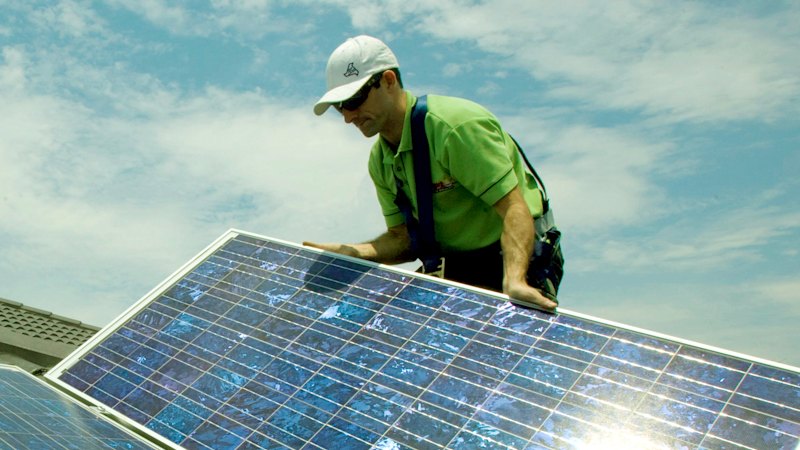
Australia has long ranked as a world leader in per-person solar uptake, with more than 4 million homes – or one in three – fitted with rooftop solar panels. The new figures from the Clean Energy Council, to be released on Wednesday, show rooftop solar has grown to 28 gigawatts of capacity in the energy grid, eclipsing that of the national fleet of coal-fired power stations (22.5 gigawatts).
“Our biggest power station now resides on the rooftops of more than 4.3 million households, which is helping to drive downward pressure on power bills for consumers and businesses,” the industry group’s chief executive, Jackie Trad, said.
However, until recently, just one in 40 homes also had a battery, which has led to a problem: all those solar panels have been making far too much electricity in the middle of the day when the sun is brightest, and hardly any when people return home, turn on their lights and operate appliances, which causes wholesale prices to spike.
The rising uptake of home batteries – most of which use lithium-ion technology like those in smartphones, cordless drills and electric cars – would enable more homes with solar panels to store their free power and use it at peak times for demand in the afternoons, Energy Minister Chris Bowen said. This, he said, would take pressure off the grid and curb volatile price swings for all energy users.
“More Australians are taking control of their power bills and using their own clean, cheap energy when they need it,” Bowen said.
“Home batteries deliver real, lasting cost-of-living relief for Aussie households, while working to make the energy grid fairer, more affordable and more reliable during peak demand times.”
Electricity bills have gone up hundreds of dollars a year across parts of Australia since 2022, largely due to the fallout from Russia’s invasion of Ukraine boosting coal and gas prices and adding to the cost of generating power.
The rollout of new renewable projects and transmission lines is also lagging the speed needed to compensate for the closures of coal-fired power stations.
But there are signs that installing more renewables and batteries is starting to help suppress prices, experts say. Wholesale electricity costs – what retailers pay for power before selling it to customers – fell sharply in eastern Australia in the final three months of last year as record contributions from renewables and batteries reduced the need to call on fossil fuel-powered generators and hydroelectric dams to plug critical supply gaps.
Tristan Edis, the head of analysis at energy consultancy Green Energy Markets, said the scale of home battery installations was so significant that it could force down electricity prices if it remained on trend. “If the scale of capacity being installed can be maintained for the next five years it should severely curtail the degree to which gas generators can spike up wholesale market prices,” he said.
Authorities warn that while adding batteries can reduce overall demand in the grid, all of that stored energy needs to be better “orchestrated” to cut the cost of the energy transition for as many people as possible.
The Australian Energy Market Operator is urging retailers to spur greater participation in “virtual power plants”, whereby power providers give customers bill credits in exchange for being able to aggregate the capacity of thousands of batteries at once to address imbalances in the grid and keep the network stable.
Alongside batteries, the deployment of more gas-powered generators and larger storage assets, such as hydropower, will also remain critical to backing up renewables, the operator says, especially for prolonged stretches of low wind and sunlight.
Even today’s most powerful grid-scale batteries still exhaust their stored energy in two to four hours of maximum output, minimising their ability to plug longer-lasting shortfalls.
The Business Briefing newsletter delivers major stories, exclusive coverage and expert opinion. Sign up to get it every weekday morning.
 Nick Toscano is a business reporter for The Age and Sydney Morning Herald.Connect via X or email.
 Mike Foley is the climate and energy correspondent for The Age and The Sydney Morning Herald.Connect via email.