The recent controversy surrounding Alan Ritchson, best known for his starring role in Reacher, has officially come to a close. After days of public speculation fueled by a widely circulated video, Tennessee authorities have confirmed that the actor will not face any criminal charges. The decision, grounded in evidence and witness accounts, determined that Ritchson acted in self-defense during a physical altercation with his neighbor.
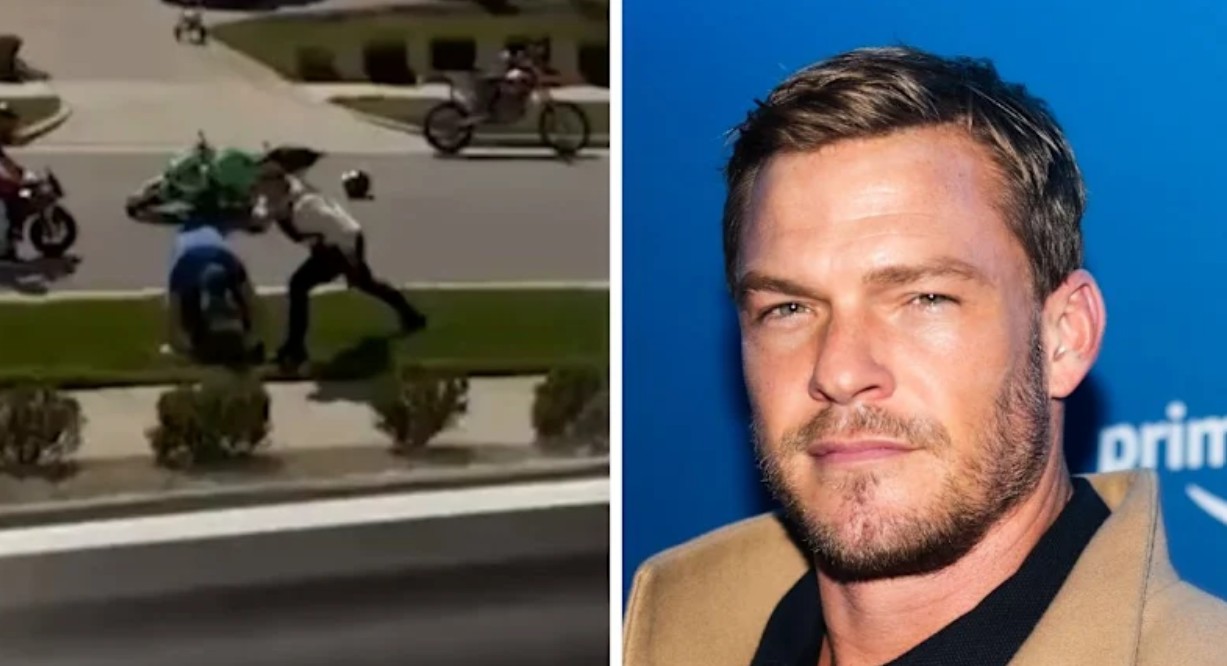
What initially appeared to be a troubling display of violence has since evolved into a more nuanced case—one that highlights the dangers of incomplete information, the speed of viral media, and the importance of context in legal judgments.
A Viral Video Sparks Controversy
The incident first gained widespread attention after footage by TMZ showed Ritchson striking a man identified as Ronnie Taylor. In the clip, Taylor is seen kneeling on the ground while Ritchson delivers multiple blows. Adding to the intensity of the scene, Ritchson’s two young children were visible nearby, seated on motorbikes and witnessing the confrontation.
Alan Ritchson Fight Full Video
The video quickly spread across social media platforms, igniting heated debates. Some viewers criticized Ritchson for what they perceived as excessive force, while others urged caution, noting that the footage appeared incomplete. Without context, the clip painted a one-sided picture one that would soon be challenged by further evidence.
Police Investigation and Official Findings
The Brentwood Police Department launched an investigation shortly after the video surfaced. Authorities carefully reviewed all available materials, including surveillance footage, body cam recordings, and statements from witnesses.
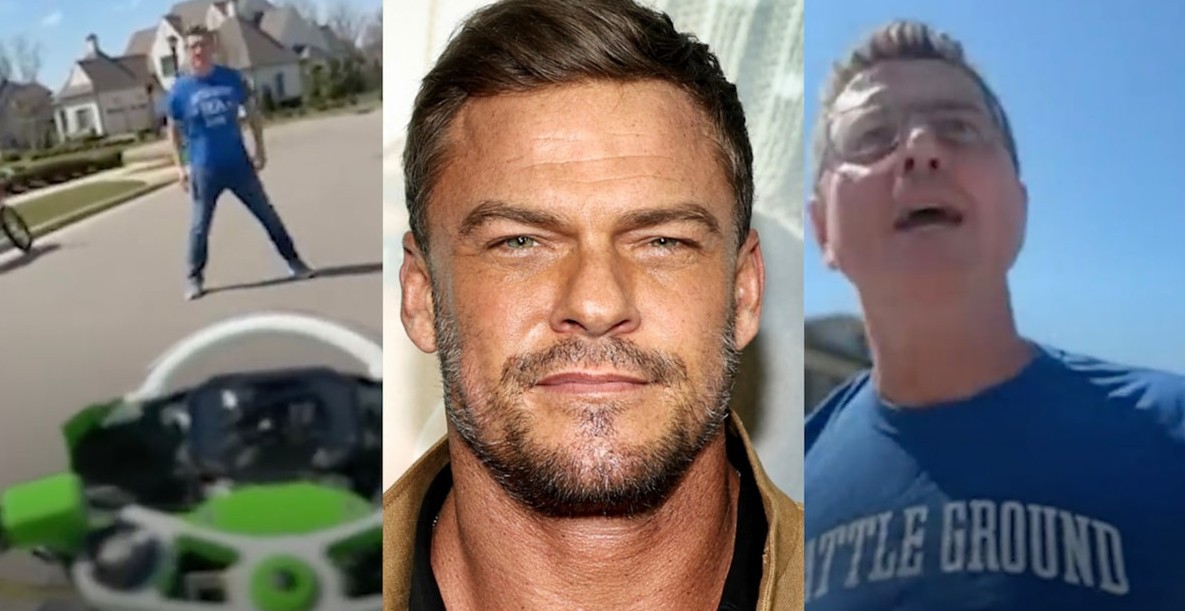
In an official statement released after the investigation concluded, police confirmed that no criminal charges would be filed. According to their findings, Ritchson’s actions were consistent with self-defense under Tennessee law. Officials also noted that while a potential reckless endangerment charge had been considered, Ritchson declined to pursue any legal action against Taylor.
With the agreement of the District Attorney’s Office, the case was formally closed, bringing an end to the legal proceedings.
What Really Happened: The Full Context
As more footage became available, the narrative surrounding the incident began to shift. The original video published by TMZ had been edited, omitting critical moments that preceded the physical altercation.
Newly released body cam footage revealed a more complete sequence of events. According to this evidence, Taylor had confronted Ritchson about noise from his motorbike in their suburban neighborhood. The situation escalated when Taylor stepped into the street, positioning himself directly in the path of Ritchson’s moving bike.
In an attempt to avoid hitting him, Ritchson lost control and went over the handlebars. What followed was a heated verbal exchange. At one point, Ritchson attempted to disengage by returning to his bike to leave the scene. However, Taylor followed him and initiated physical contact, pushing him not once, but twice.
It was after this second push that the altercation turned physical. From a legal standpoint, this sequence of events proved crucial in establishing who initiated the confrontation and whether Ritchson’s response was justified.
Ronnie Taylor’s Own Admission
In a statement to TMZ, Ronnie Taylor himself acknowledged his role in escalating the situation. He admitted to pushing Ritchson multiple times, confirming key elements of the police findings.
“I did push him,” Taylor said, explaining that he felt provoked by the repeated presence of the motorbike. He further admitted that after a second push, Ritchson reacted physically, describing the response as intense but directly linked to his own actions.
Taylor’s admission significantly strengthened the case for self-defense. In many legal systems, including Tennessee’s, initiating physical contact can shift responsibility and justify defensive force provided it is proportionate and necessary.
Ritchson’s Silence Following the Incident
Despite the media attention, Alan Ritchson has yet to publicly comment on the altercation. Neither the actor nor his representatives have issued an official statement addressing the incident or the investigation’s outcome.
This silence is not unusual in situations involving legal scrutiny. Public figures are often advised to refrain from commenting while investigations are ongoing. Now that the case has been closed, it remains to be seen whether Ritchson will choose to speak publicly or simply move forward without further acknowledgment.
Understanding Self-Defense in Legal Terms
The ruling in Ritchson’s favor underscores key principles of self-defense law. Generally, self-defense is justified when an individual reasonably believes they are in imminent danger of harm and uses force to protect themselves.
In this case, several factors supported the conclusion:
Taylor initiated physical contact
Ritchson attempted to disengage before retaliating
The response occurred in direct reaction to repeated aggression
These elements aligned with legal standards, making it difficult to justify criminal charges. The availability of video evidence further reinforced the decision, providing an objective record of the events as they unfolded.
The Role of Media and Partial Footage
One of the most significant aspects of this case is how public perception was shaped by incomplete information. The initial clip released by TMZ lacked crucial context, leading many viewers to form premature judgments.
Only after additional footage surfaced did a clearer picture emerge. This highlights a broader issue in the digital age: viral content often prioritizes immediacy over accuracy. Short, edited clips can spread rapidly, influencing public opinion before the full story is known.
The Ritchson incident serves as a reminder of the importance of verifying information and considering multiple perspectives before drawing conclusions.
Impact on Ritchson’s Career and Public Image
As the star of Reacher, Ritchson has built a reputation for portraying physically dominant, justice-driven characters. His role as Jack Reacher has been widely praised, particularly for aligning closely with the character’s original depiction in Jack Reacher novels.
Fans have often compared his performance favorably to that of Tom Cruise, noting Ritchson’s imposing physical presence as more consistent with the literary version of the character.
Given the outcome of the investigation, it is unlikely that the incident will have a lasting negative impact on his career. In fact, the self-defense ruling may reinforce his public image rather than damage it, especially among fans who view the situation as justified.
Lessons on Conflict and Escalation
Beyond the celebrity angle, the incident also illustrates how quickly everyday disputes can spiral out of control. What began as a complaint about motorbike noise escalated into a physical confrontation with legal consequences.
Such situations highlight the importance of de-escalation and communication. Avoiding physical confrontation, even in moments of frustration, can prevent outcomes that are dangerous for all parties involved.
At the same time, the case demonstrates the legal system’s role in carefully evaluating evidence and context, rather than relying on initial appearances.
The case involving Alan Ritchson ultimately serves as a powerful example of how truth can differ from first impressions. While early footage suggested a one-sided act of violence, a deeper investigation revealed a more complex reality one in which self-defense played a central role.
With no charges filed and the case officially closed, Ritchson is free to move forward both personally and professionally. The incident, however, leaves behind important lessons about media consumption, conflict resolution, and the value of context in understanding any situation.
In an era where viral moments can define reputations overnight, this story stands as a reminder: there is often more beneath the surface than what we first see.
News –