In a case that blended internet culture, music, and constitutional law, rapper Afroman emerged victorious in court after a jury ruled that his controversial music videos did not defame or invade the privacy of seven sheriff’s deputies. The decision, delivered in Adams County, Ohio, highlights a growing tension in the digital age: how far can artistic expression go when it targets real people?

At the heart of the case was a dramatic clash between law enforcement officers from the Adams County Sheriff’s Office and a musician who turned a personal grievance into viral entertainment. The jury ultimately sided with Afroman, affirming his First Amendment right to transform his experience into satire even when that satire was biting, explicit, and deeply offensive to its subjects.
A Raid That Sparked a Viral Response and Video
The conflict began in August 2022, when deputies executed a search warrant at Afroman’s home in Adams County, Ohio. Authorities were reportedly searching for evidence related to drug trafficking and kidnapping. However, Afroman was not present at the time.
Afroman Lemon Pound Cake Full Video
What followed was captured on video. A family member recorded the raid on a phone, while the home’s security cameras documented deputies moving through the property, searching rooms and inspecting belongings. According to Afroman, the officers caused significant disruption damaging property, cutting security camera wires, and leaving the house in disarray.
Despite the intensity of the search, no evidence was found to support the allegations, and no charges were filed. This outcome would later become central to Afroman’s public narrative.
Turning Anger into Art
Rather than pursuing a quiet legal response, Afroman chose a different path. He took to social media, uploading footage of the raid to Instagram and other platforms. But he didn’t stop there.
In the months that followed, he transformed the footage into a series of music videos, blending humor, satire, and sharp criticism. The centerpiece of this creative response was his 2022 album Lemon Pound Cake, named after a moment in the footage when an officer appeared to pause and notice a cake in the kitchen.
The title track, featuring lyrics that mocked the raid and emphasized the lack of evidence, quickly gained traction online. The accompanying video racked up millions of views, turning what might have been a local dispute into a national conversation.
For Afroman, the project was both cathartic and strategic. As he later explained in court, he believed he had every right to “turn bad times into a good time” through his music.
When Satire Crosses the Line
While many viewers found the videos humorous, the deputies involved saw them very differently. Beyond criticizing the raid, Afroman’s songs included exaggerated and explicit claims about the officers’ personal and professional lives. Some lyrics made sexual allegations or portrayed the deputies in humiliating scenarios.
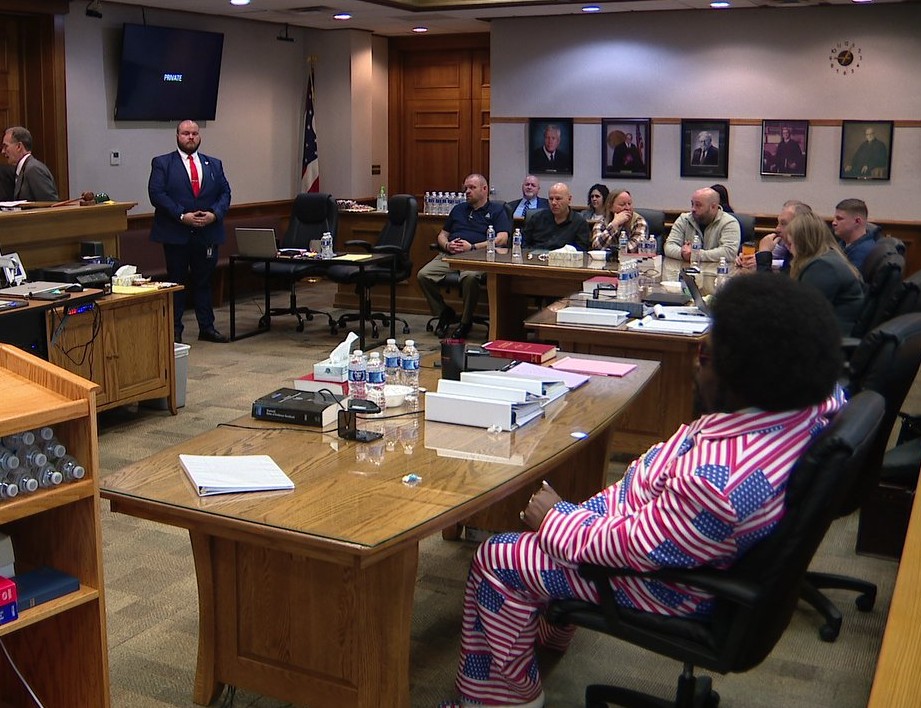
The officers argued that these statements were not just jokes they were falsehoods that damaged reputations, disrupted careers, and caused emotional distress. One deputy, Lisa Phillips, became a focal point during the trial after a video portrayed her in a sexually explicit and entirely fictional manner. During courtroom proceedings, she reportedly became emotional as the video was played.
From the deputies’ perspective, the case was about accountability. They argued that freedom of speech should not protect deliberate lies intended to harm others.
A Battle of Perspectives in Court
The trial quickly evolved into a broader debate about rights, power, and interpretation.
Afroman’s legal team, led by David Osborne Jr., argued that the videos were clearly satirical and should not be taken literally. They emphasized that the deputies, as public officials involved in a controversial raid, were subject to criticism even harsh or offensive criticism.
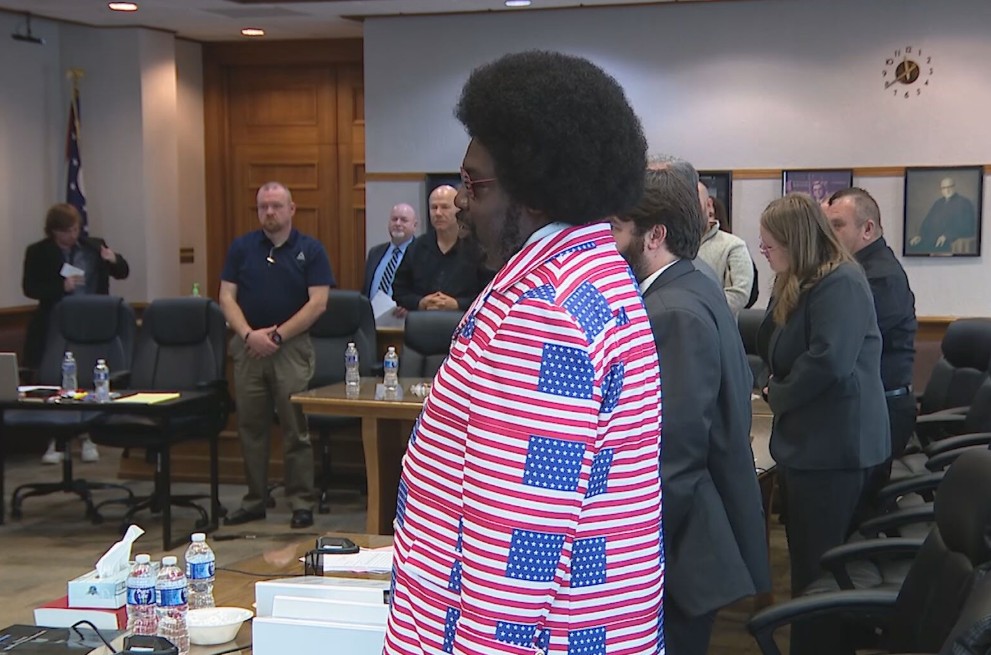
Afroman himself took the stand, describing the raid as a traumatic event. He painted a vivid picture of armed officers entering his home and frightening his family. In his view, his music was a response to that experience a way of reclaiming control and speaking out.
On the other side, attorney Robert Klingler argued that the issue was not about humor or creativity, but about truth and responsibility. He told the jury that even if the raid was flawed, it did not justify spreading false and damaging claims.
The courtroom became a stage for two competing worldviews: one emphasizing the right to free expression, the other focusing on the protection of personal dignity.
The Role of Music and Cultural Context
A key part of Afroman’s defense involved placing his work within a broader cultural context. His lawyer compared the songs to provocative works like Fuck tha Police, which once sparked outrage but is now widely recognized as a form of social commentary.
He also referenced modern hits like WAP, arguing that audiences understand exaggeration and performance in music. The point was clear: lyrics are not always meant to be taken as literal statements of fact.
This argument resonated with the idea that art often uses hyperbole, metaphor, and shock value to make a point. In that sense, Afroman’s videos were not unique they were part of a long tradition of artists challenging authority through creative expression.
Public Opinion and the Power of Virality
Outside the courtroom, the case played out on social media, where Afroman found significant support. Many viewers saw him as a symbol of resistance against government overreach. Comments on his videos praised his creativity and defended his right to speak out.
Some even suggested that the lawsuit had backfired, bringing more attention to the videos and helping revive Afroman’s career. What began as a legal dispute became a viral phenomenon, illustrating the power of online platforms to shape public perception.
The Jury’s Decision
After a three-day trial, the jury delivered its verdict: Afroman had not defamed the deputies, nor had he invaded their privacy.
The decision hinged on a key legal principle: whether a reasonable person would interpret the lyrics as factual statements. The jury concluded that the content was clearly exaggerated and satirical, and therefore protected under the First Amendment.
Additionally, the deputies were considered public figures in the context of the case, meaning they were subject to a higher threshold for proving defamation.
A Broader Debate: Privacy vs. Expression
The case ultimately raises a deeper question: which is more harmful having one’s home searched by armed officers, or being mocked online by millions of viewers?
For Afroman, the answer was clear. His music was a response to what he saw as an unjust and invasive act. For the deputies, the videos represented an attack on their integrity and personal lives.
This tension reflects a broader societal debate about power and accountability. When public officials take controversial actions, how much criticism should they be expected to تحمل? And when that criticism becomes personal or offensive, where should the line be drawn?
Implications for the Future
The verdict reinforces strong protections for artistic expression in the United States. It suggests that courts are willing to recognize satire and exaggeration, even when they involve real people and sensitive subjects.
For artists, the case is a reminder that creative freedom remains robust, particularly when addressing issues of public concern. For law enforcement and other public officials, it highlights the risks of operating in an era where actions can quickly become viral content.
Afroman’s courtroom victory is more than just a personal win it is a reflection of how law, culture, and technology intersect in the modern world. By turning a police raid into a viral music project, he challenged not only the deputies involved but also the boundaries of free speech itself.
In the end, the jury’s decision affirms a fundamental principle: in a free society, even the most outrageous forms of expression can be protected especially when they are part of a larger conversation about power, justice, and accountability.
News –