
This Lunar New Year began on February 17th, 2026, setting off a season across Asia defined by intention: rituals observed, stories retold, and dishes prepared to signal renewal and good fortune.
For many travellers, food is not just part of the journey, it is the journey. In fact, a Booking.com study found that 38%* of Canadians travel to new destinations to seek out local food traditions. More than a quarter (28%**) say edible souvenirs help them relive a destination each time they cook, while 19% value how these items showcase local craft, sustainability, and traditional methods. As the Year of the Horse gallops in, Booking.com highlights destinations where travellers can experience the luckiest meals in the world – those passed down through generations and shared with loved ones – inviting visitors to taste their way into the new year with longings of good fortune.
Yangshuo, China
Set against a backdrop of dramatic mountains and the winding rivers of China’s Guangxi region, Yangshuo is a place where nature and tradition intertwine. During Lunar New Year, family tables feature yu (fish), a dish that sounds the same as the word ‘surplus’ in Mandarin, symbolizing abundance and wealth in the year ahead. Often served whole to represent unity and completeness, fish, typically from the carp family, is traditionally left partially uneaten to ensure prosperity carries over into the future. Travellers visiting Yangshuo during this year’s celebrations can experience celebratory banquets in riverside restaurants, where they can enjoy steamed fish delicately flavoured with ginger, scallion, and soy sauce. They can even book a cooking class to make this traditional dish for themselves. Beyond feasting with loved ones, the streets come alive with red lanterns swaying alongside ancient buildings and lion dances filling village squares making Lunar New Year a deeply atmospheric time to visit. While travellers are encouraged to also explore Yangshuo’s limestone landscapes by bamboo raft or hiking quiet rural trails for a better taste of city life.


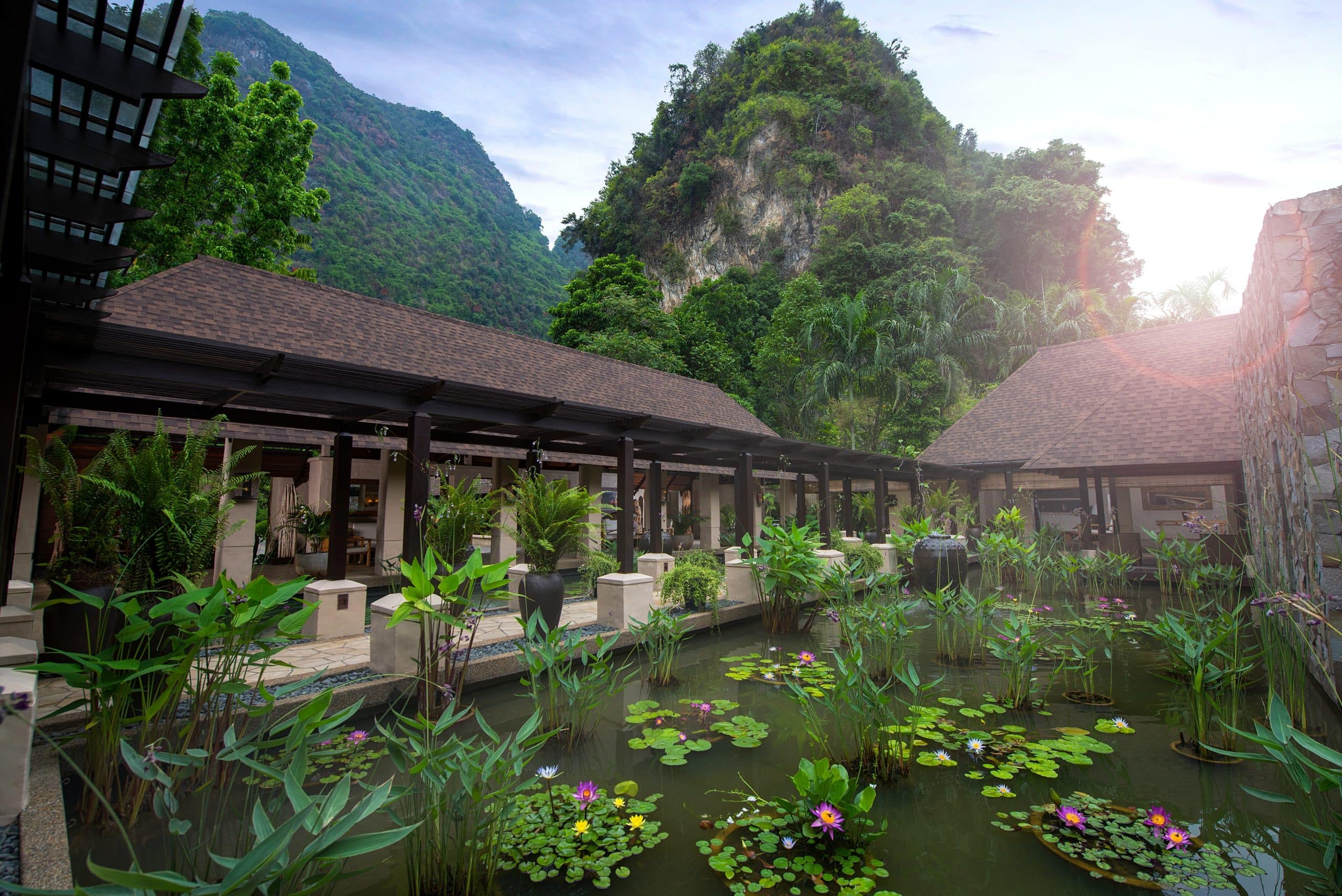
Where to stay: Surrounded by Yangshuo’s karst mountains and lush countryside, travellers will find a tranquil base designed for balance and reflection at Yangshuo Zen Garden Resort. The Zen-inspired retreat offers panoramic mountain views where travellers can reflect on the year ahead. Guests can cycle along the nearby Yulong River or rent a car and drive through the area’s villages and limestone landscapes. End a day of exploring with a ‘plant-forward’ meal in the resort’s restaurant.
Jeonju, South Korea
Known as Korea’s culinary capital, Jeonju, the capital and largest city of the state of Jeonbuk, South Korea, takes on special significance during Lunar New Year. At the heart of the festivities is tteokguk, a steamed rice cake soup, eaten to symbolize longevity, renewal and the gaining of another year of life. The dish’s oval shaped rice cakes resemble ancient coins, reinforcing wishes for wealth and good fortune. In Jeonju, tteokguk is made from clear beef broth garnished with egg ribbons, seaweed and sliced meat, which are often prepared using family recipes passed down from generations. Alongside sampling the local delicacies, travellers can explore Jeonju Hanok Village where hundreds of traditional wooden homes create a backdrop for cultural performances, ancestral rituals, and festive gatherings that honor both past and future. Visitors can also explore the city’s vibrant food alleys, craft shops, and historic shrines that showcase Jeonju’s rich artistic and culinary heritage year-round.
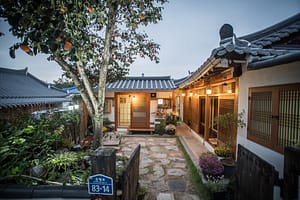

Where to stay: Travellers can immerse themselves in Jeonju’s history at Hanok Story Guesthouse, a warm traditional stay just steps from Jeonju Hanok Village and Booking.com Traveller Review Award 2026 winner. Featuring classic wooden architecture paired with modern comforts, the guesthouse includes a peaceful garden and easy access to cultural landmarks, food stalls, and historic alleys, making it an ideal base for discovering Korea’s culinary capital.
Ipoh, Malaysia
In Ipoh, Lunar New Year celebrations reflect the city’s rich Chinese heritage and food-obsessed identity. Yu sheng – a centerpiece for the season – is a vibrant raw fish salad tossed high into the air in a ritual known as loh hei. Believed to bring prosperity, success and good luck, each ingredient carries meaning, from shredded vegetables symbolizing growth to sauces representing wealth and sweetness in the year ahead. Local Ipoh eateries put their own spin on yu sheng, often incorporating fresh regional produce and homemade sauces. Taking part in a communal prosperity toss at a bustling restaurant is a must for any foodie visiting the city. Followed by a visit to one of Ipoh’s famous food markets that come alive at night including Ipoh Night Market and Gunung Rapat Night Market. Outside of the food scene, travellers can wander Ipoh’s old town – from admiring British colonial architecture along Jalan Sultan Iskandar to exploring nearby limestone cave temples like Perak Tong and Kek Lok Tong, or opting for a tour of the Cameron Highland, there’s plenty to enjoy & experience.
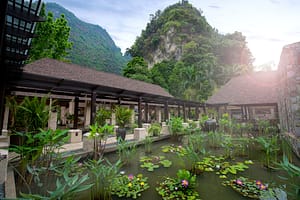

Where to stay: Tucked among limestone cliffs and tropical jungle, The Banjaran Hotsprings Retreat is a luxurious wellness escape where nature takes centre stage – and also a Booking.com Traveller Review Award 2026 winner. Naturally heated geo-thermal hot springs, steam caves, and private villas set the tone for deep relaxation, while holistic spa treatments draw on ancient Malay and Ayurvedic rituals.
Huế, Vietnam
Located in central Vietnam along the banks of the Perfume River, Huế is a city where Lunar New Year traditions are deeply rooted in royal heritage, family rituals, and symbolic food. During Tết, otherwise known as the Vietnamese Lunar New Year, families prepare bánh chưng, a square rice cake filled with mung beans and pork wrapped in banana leaves. The dish symbolizes prosperity, gratitude and reverence for ancestors. Its shape represents the earth, while the circular ball variation of the dish represents the sky. Making bánh chưng is a ritual in itself, often involving multiple generations gathering to prepare, wrap, and cook the cakes overnight. Travellers visiting Huế during Tết can witness this tradition firsthand, alongside temple visits, ancestral offerings, and flower markets bursting with colour. Beyond celebrations, those visiting the city are invited to explore the UNESCO-listed Imperial Citadel, wander tranquil pagodas and royal tombs scattered along the Perfume River.

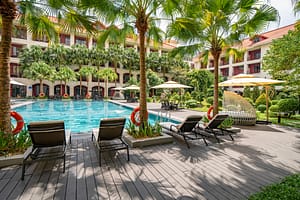
Where to stay: Blending contemporary comfort with a prime central location, Senna Hue Hotel, and Booking.com Traveller Review Award 2026 winner, is a stylish base for exploring the city’s cultural and culinary highlights. Guests can relax in modern rooms overlooking gardens or the outdoor pool, enjoy on-site dining, and step out easily to reach Dong Ba Market, the Imperial Citadel, and the Perfume River. The hotel’s calm atmosphere and amenities make it a welcome retreat after days spent discovering Huế’s layered history.
*Research was commissioned by Booking.com and independently conducted among a sample of adults who had taken a leisure trip in the last 12 months with an overnight stay and plan to travel in 2025 (Travel Trends). The sample comprised 32,106 respondents across 32 markets surveyed in January 2025. USA N=2,000, Canada N=800, Spain N=800, Italy N=800, France N=1800, UK N=1800, Germany N=1800, Netherlands N=800, Denmark N=500, Sweden N=500, Croatia N=501, Switzerland N=800, Belgium N=800, Ireland N=504, Austria N=500, Portugal N=800, Mexico N=1,800, Colombia N=800, Brazil N=1,800, Argentina N=800, India N=1,800, China N=800, Hong Kong N=500, Thailand N=800, Singapore N=800, Taiwan N=500, Vietnam N=800, South Korea N=800, Japan N=1,800, UAE N=500, Australia N=1,800, New Zealand N=500.
**Travel Predictions 2026 research commissioned by Booking.com and conducted among a sample of adults who plan to travel for business or leisure in the next 12-24 months. In total, 29,733 respondents across 33 countries and territories were polled (including 1,009 from Argentina, 1,005 from Australia, 500 from Austria, 1,013 from Belgium, 1,008 from Brazil, 1,018 from Canada, 1,009 from China, 1,005 from Colombia, 508 from Croatia, 501 from Denmark, 1,010 from France, 1,003 from Germany, 1,004 from Hong Kong, 1,007 from India, 509 from Ireland, 507 from Israel, 1,005 from Italy, 1,003 from Japan, 1,003 from Mexico, 1,019 from The Netherlands, 1,033 from New Zealand, 1,006 from Portugal, 500 from Singapore, 1,003 from South Korea, 1,009 from Spain, 511 from Sweden, 501 from Switzerland, 504 from Taiwan, 1,001 from Thailand, 501 from the UAE, 2,003 from the UK, 2,010 from the US and 505 from Vietnam). Respondents completed an online survey in July-August 2025.