Ubud Writers and Readers Festival 2025

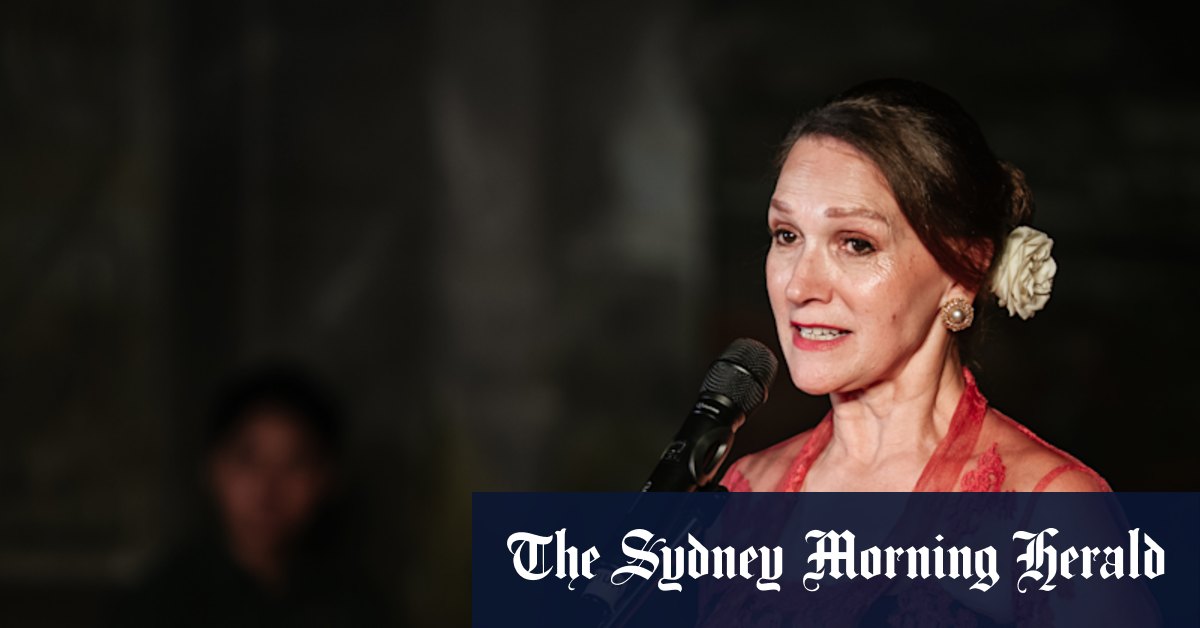
It seems a big boast. Bali is what is called a publishing grey zone, she says, adding that major publishers aren’t based here, so the festival can be more flexible with themes and securing authors who will have impact.
DeNeefe contrasts Ubud with Australian festivals, where she detects “a bit of fear”.
“From what I could see, there’s been a few situations where writers have pulled out,” she said. “I think it’s just harder for people to say what they think because … you can suddenly then be attacked on social media.
“So, it’s like warfare, isn’t it? The kind of thing that everybody is against but actually they’re creating their own wars with their words and that kind of anger.”
Indonesia is a Muslim country, while Bali is mainly Hindu. The island has its own unique culture and the festival covered everything from Gaza to writers behind bars to queerness in adolescent fiction.
Loading
The Indonesian government, which is a sponsor and issues a licence for the event, was unhappy in 2015 with the planned program and threatened not to award a licence after the festival intended to stage sessions on the 1965 mass killings across the country when the communist party was brutally suppressed. (The events prompted the Australian novel The Year of Living Dangerously by Christopher Koch.)
The festival pulled all its 1965 sessions – but as a solution, speakers at other sessions talked about the killings and their impact. “It was a bit ‘don’t mention the war’,” DeNeefe said.
Past speakers have included Nick Cave, Michael Ondaatje and Vikram Seth, while this year it highlighted Colombian writer Ingrid Rojas Contreras, who suffered amnesia after a cycling accident and later wrote The Man Who Could Move Clouds: A Memoir.
And the genial Brit I stood next to at the seafood buffet turned out to be Scottish historian William Dalrymple, a longstanding Ubud fixture before his Empire podcast propelled him to rock star status.
But really big-name US writers who have previously attended with US government support were absent, a victim of US President Donald Trump’s cutbacks.
Away from the sessions, the festival runs boot camps for new writers, workshops, poetry slams and special events such as bird watching and 5Rhythms dance meditation with Gina Chick. Next year author Geraldine Brooks is on board to accompany DeNeefe on a tour of off-the-beaten-path island Sumba.

The opening gala for the Ubud Writers & Readers Festival was held in a royal palace in Ubud, Bali. Credit: Ubud Writers & Readers Festival 2025 / Niskala
This year, attendees could catch more than 80 main sessions over four days on an international ticket that cost about $580 (Indonesians pay less), while enduring drenching heat, flooding rains and cracked pavements, before returning to their guesthouses to find snails the size of a small mouse on the front step.
First time Indonesian writer Sadie Noni launched her young adult eco-fantasy novel The Fires of Tanam Alkin last year, one of the 40-odd free book launches the festival stages each year.
The launch of her self-published novel in English led to a wave of interest from schools, and it was stocked by key bookshops around the country.
“The festival gives you a forum to talk about your writing,” said Noni (a pen name to protect her employment – look closely, and you will see Sadie Noni is an anagram for a highly relevant word).
“[It] is so important for Indonesian writers because there are a lot of important Indonesian perspectives and voices, but they don’t make it onto the regional or the global stage.”
This year, Noni had returned for sessions and perspectives she might not find so readily in Jakarta. “I would like to write forever. It’s cathartic,” she said. “I would love to retire from my corporate job.”
Late in the festival, Penguin South-East Asia, based in Singapore, staged a cocktail party at which an executive reminded attendees that a meeting at the festival last year led the publishing house to sign Malaysian-Australian author Omar Musa and the publication of his novel Fierceland in September.
I left with a head fizzing with ideas and while not exactly a suitcase full of books (I was flying Jetstar), a full list of books to read. And also regret that I couldn’t buy a copy of One Day Everyone Will Have Always Been Against This, an essay by Omar El Akkad that rages against Western moral complacency over Israel’s brutal campaign in Gaza.
El Akkad, the Egyptian-born journalist who now lives in Portland, Oregon, was mesmerising on several panels, raging against the empty empathy of Western moral activism and the luxury of our ignorance.
And here El Akkad was next to me at the security screening, startled when I called out his name and introduced myself.

Omar El Akkad at the festival.
We walked and talked, and as he peeled off to a bookshop, he gave me his email with an offer to keep in touch and look him up if I was ever in Portland, which I took to be polite authorial book festival circuit distancing. But the email didn’t bounce.
Stephen Brook travelled to Ubud as a guest of the Ubud Writers & Readers Festival.
The Booklist is a weekly newsletter for book lovers from Jason Steger. Get it delivered every Friday.