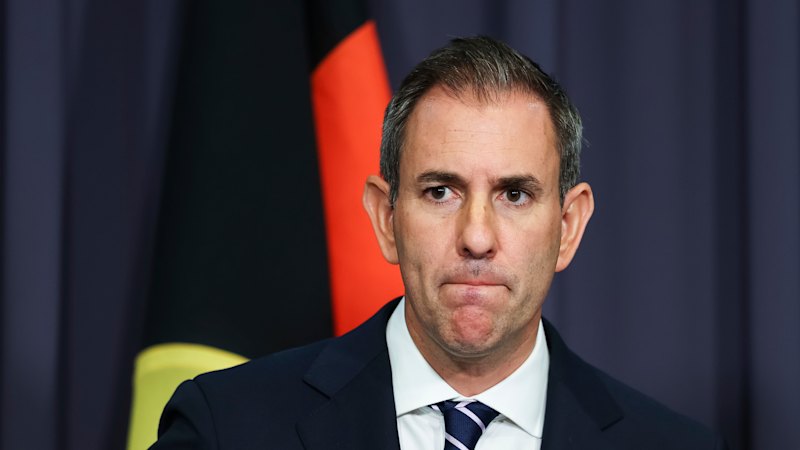
Treasurer Jim Chalmers urged to go bold after three-year battle for superannuation tax hikes


The Greens are urging Treasurer Jim Chalmers to go bold with tax reforms in the May budget after the minor party revealed it would greenlight the government’s three-year battle to lift taxes on wealthy Australians with large superannuation nest eggs.
Greens’ economic justice spokesman Nick McKim on Tuesday confirmed his party would support the changes, which have been watered down since Chalmers announced them in the 2023 budget and were due to start in the middle of last year.
After an outcry among investors, sectors of the superannuation sector and former prime minister Paul Keating at the taxation of unrealised gains, among other issues, Chalmers late last year revamped his proposal.
The tax rate on the earnings of super accounts with between $3 million and $10 million will double to 30 per cent from July 1, if the bill passes, while accounts with more than $10 million will be hit with a 40 per cent rate. Unrealised gains will not be taxed under the change that is expected to raise almost $2 billion yearly in additional revenue by 2028-29.
McKim made clear the Greens’ support for the change, which is opposed by the Coalition, was a starting point for even broader tax reform in the coming budget.
“We are going to support the bill as a down-payment on genuine, progressive tax reform in this budget,” he said.
“This budget is a once-in-a-generation opportunity for ambitious tax reform, and we’re opening the door for Labor to walk through.”
Chalmers has said the May 12 budget will focus on ways to lift productivity and reduce government spending as part of a broader effort to deliver “intergenerational fairness”.
Changes around the capital gains tax discount, negative gearing, taxation treatment of trusts, subsidies for electric vehicles and the government’s own personal income tax cuts due to start mid-year are all being considered.
The government is also looking at proposals from last year’s economic roundtable, the Productivity Commission, and a recent meeting of some of the nation’s pre-eminent economists aimed at boosting the economy’s performance.
McKim said even under the superannuation changes, a $5 million superannuation account would still face a 14 per cent tax on capital gains compared to a part-time worker on $20,000 who paid 16¢ in tax on every dollar above the tax-free threshold.
He said the budget would be a test for the government’s commitment to dealing with intergenerational equity.
“The current tax system has turbocharged the housing crisis, wealth inequality and a deepening intergenerational divide,” he said.
“We expect bold tax reform so young people and working Australians are not left carrying the load while the super-wealthy enjoy generous tax concessions on their income from assets.”
Any change to capital gains tax or negative gearing is likely to weigh only modestly on house prices, the nation’s biggest lender said Monday.
Senior Commonwealth Bank economists Belinda Allen and Trent Saunders said they expect house prices, after climbing 8.7 per cent through 2025, will grow another 5 per cent this year.
Sydney price growth is expected to slow from 6 per cent to 2 per cent, while Melbourne is expected to slow from 4.9 per cent to 1 per cent.
Allen and Saunders said a slowdown in population growth and higher interest rates would slow property prices.
But that slowdown would be amplified by any changes to the capital gains tax concession, which they estimated would subtract 0.9 percentage points from annual house price growth by the end of 2027.
“The anticipated reduction of the CGT discount from 50 per cent to around 25 per cent, expected to be implemented at the time of the May budget, will also weigh on prices,” they said.
Critics of changes to the CGT discount have argued it will lead to a spike in rents as investors leave the property market.
But Allen and Saunders said their modelling suggested rents would be about 0.2 per cent higher over the next decade because of the reform, an annual increase no higher than 0.025 percentage points.
Cut through the noise of federal politics with news, views and expert analysis. Subscribers can sign up to our weekly Inside Politics newsletter.
 Shane Wright is a senior economics correspondent for The Age and The Sydney Morning Herald.Connect via X or email.
From our partners