Albanese government considers capping tax breaks for property investors

Updated ,first published
Investors could be hit with a restriction on the number of homes they can negatively gear as Labor plots a political campaign on homeownership for younger Australians.
The government has been buoyed by the mostly positive reaction from economists and the business leaders to news earlier this month that it was thinking about reining the 50 per cent discount on taxing the value uplift of assets.
Two government sources, not authorised to speak publicly about the upcoming May budget, confirmed negative gearing was also being looked at, among other options. One said the capital gains move was viewed inside the government as more likely to be put forward than the negative gearing change, but both were being explored by the Treasury.
Before the last election, Prime Minister Anthony Albanese and his ministers consistently ruled out touching negative gearing and the CGT.
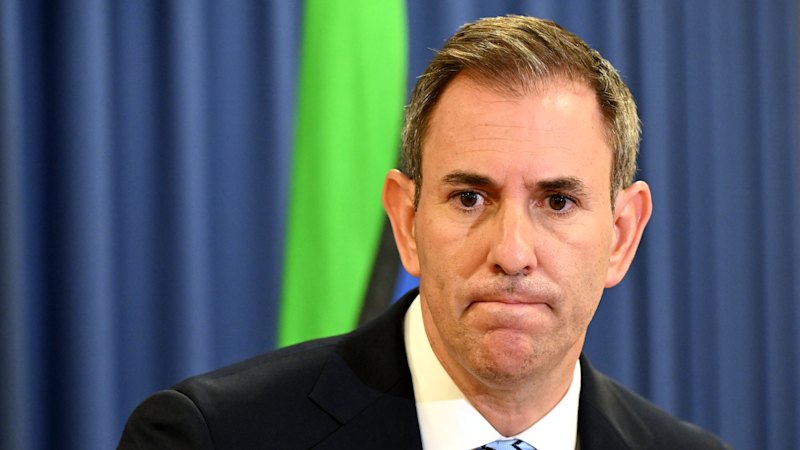
Asked about the proposal on Friday, first reported in The Australian, Chalmers did not deny it was being modelled, avoiding the rule-in, rule-out game that has stifled previous examinations of tricky tax changes.
“We know that there is a sense of intergenerational unfairness in the tax system and in the housing market as well,” he said.
“It’s not unusual for the Treasury to be canvassing a whole range of issues, a whole range of policies to inform discussions and deliberations of the cabinet as we get closer and closer to the government’s fifth budget in May. I’m not prepared to go into the detail of that, no decisions have been taken. We haven’t changed our tax policy.”
Allowing a public discussion on the policies to make property investing less attractive suggests a new-found appetite from Labor to tackle the politically fraught issue of tilting the property market in favour of first homebuyers.
Labor was scarred by its election loss in 2019 when Bill Shorten proposed abolishing tax breaks for investors, triggering an attack campaign from the Coalition, and Tim Wilson – now shadow treasurer – on a suite of tax tweaks that included negative gearing, capital gains tax, and dividend imputation reform, otherwise known as the franking credits scare.
Chalmers has also faced growing calls from economists and Labor branches to go harder on economic reform to make the housing market fairer while reining in public spending and lowering personal income taxes. This masthead previously reported that Chalmers was exploring the CGT change as part of a broader tax package that might include a bigger income tax cut.
Liberal leader Angus Taylor has come out quickly against any tax changes for property investing. Labor may be less worried about an opposition campaign given the fragile state of the newly reformed Coalition and its current supersized majority in the House. They are banking on an electorate younger and more sharply aware of the inequities of the property market since Shorten’s reform attempts began a decade ago.
Opposition frontbencher James Paterson said Albanese will lie to voters if the government proceeded with the tax changes. “They were particularly strong on ruling out negative gearing changes,” Paterson said on Sky News, arguing Labor was running out of money and resorting to tax hikes.
“This would be a major breach of faith with the Australian people.”
The combination of negative gearing and the capital gains discount, implemented by the Howard government, has been blamed for fuelling a two-decade spike in house prices that has outstripped wages.
The critical shortage of new homes and high rates of migration are also key factors, economists say, but Australia has a unique addiction to property investment by OECD standards.
A refresher on negative gearing and the capital gains tax discount
Negative gearing: When an investor purchases a property with a loan, and the rent they get from it is less than the costs (including interest, rates and maintenance) of owning it. When this happens, the investor can subtract the net loss from their other income, reducing their taxable income.
Capital gains tax discount: Capital gains on assets (this can include things like shares, as well as housing) are taxed like other forms of income when you sell them, but with a 50 per cent discount if they’ve been held for at least 12 months.
Former Liberal MP Keith Wolahan argued this week that the Liberal Party should support changes that make it easier for people to buy homes.
“Rather than abolishing negative gearing, its operation should be refocused toward new supply. The Liberal Party should lead with this: cap negative gearing for established dwellings at one property per investor, while allowing the deduction for up to five newly constructed homes,” Wolahan wrote in an article this week on website Inflection Point.
“The case for rebalancing is clear. In 2025, 82 per cent of loans to investors were for established dwellings.”
Negative gearing allows an investor to deduct any losses from running a property (such as interest, rates and maintenance) from their annual income, reducing how much tax they pay.
The capital gains tax discount, which allows investors to sell a property and only pay tax on 50 per cent of the profit if they have owned it for at least one year. The family home is currently exempt from capital gains tax.
Australian Tax Office figures show in the 2021-22 period, 1.3 million people were positively or neutrally geared (meaning they generated more or equal rental income, compared with their costs), while 950,000 were negatively geared.
Costings requested by the Greens from the Parliamentary Budget Office in 2024 showed that during the 2024-25 period the revenue foregone from negative gearing was estimated to be about $6.9 billion, while capital gains discounts on residential properties were estimated to cost $5.4 billion.
Cut through the noise of federal politics with news, views and expert analysis. Subscribers can sign up to our weekly Inside Politics newsletter.
 Paul Sakkal is chief political correspondent. He previously covered Victorian politics and has won Walkley and Quill awards. Reach him securely on Signal @paulsakkal.14Connect via X or email.
 Millie Muroi is the economics writer at The Sydney Morning Herald and The Age. She was formerly an economics correspondent based in Canberra’s Press Gallery and the banking writer based in Sydney.Connect via X or email.
From our partners