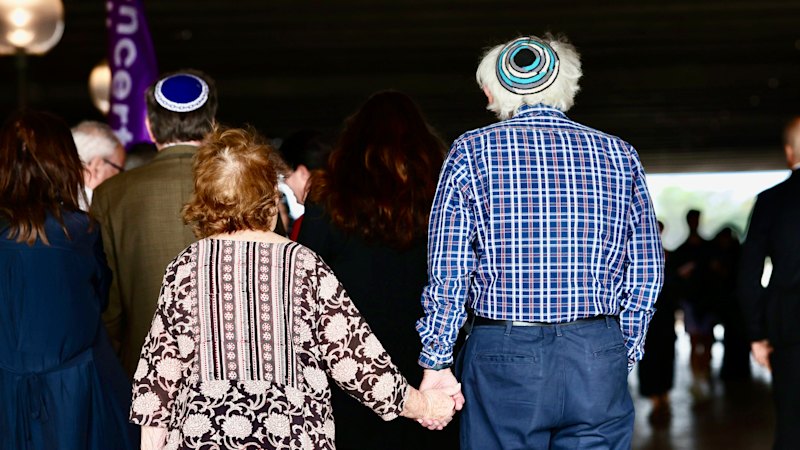
The Bondi Beach royal commission is a national reckoning

The Royal Commission on Antisemitism and Social Commission begins on Tuesday, and we must be prepared for many difficult moments as the legacy of the horrific Bondi Beach killings continues to permeate our national life.
The challenges facing the Royal Commissioner, Virginia Bell, are formidable.
No other country has ever attempted to find such a way forward through terrorism, mass slaughter, prejudice and social upheaval to a better place. The path is made difficult by the plethora of jurisdictions involved and inquiries already under way. A further complication is the court case flowing from the terrorist attack.
Naveed Akram, 24, was wounded, and his father, Sajid Akram, 50, was killed in a gunbattle with police after the attack on a Hanukkah celebration at the beach on December 14. Akram is next scheduled to appear in court on April 9.
The royal commission will proceed with great caution. Tuesday’s beginning will be confined to opening statements. On Thursday, Bell will go to Bondi Beach to meet with the families, should they wish, to explain the limitations on the approach the commission can take to leading evidence of the circumstances of the attack and answer questions about how it will operate.
But the royal commission’s considerations cannot be easily sheltered from the court case.
Intelligence and the Australian Federal Police and NSW Police faced widespread criticism in the days after the Bondi Beach attack. There is also a former director-general of the Australian Security Intelligence Organisation, Dennis Richardson. After some false starts by the Albanese government, his review into potential security failures will now also form part of the royal commission’s inquiry.
Richardson will consider whether Commonwealth, state and territory intelligence and law enforcement agencies performed to maximum effectiveness, including whether they had adequate powers and the right systems, processes and procedures and information-sharing protocols and whether they were prevented from taking prohibitive actions by the current legislative framework.
The Herald’s Matthew Knott also noted that another thorny issue for the royal commission’s consideration was whether the war in Gaza and broader Israeli-Palestinian dispute had influenced the rise of antisemitism in Australia. Israeli Prime Minister Benjamin Netanyahu has argued that the government’s criticism of Israel promoted antisemitism. Others contend that Australia should be able to criticise actions of the Israeli government without being branded antisemitic.
Fifteen people lost their lives, and another 40 were wounded, and after weeks of agitation, Prime Minister Anthony Albanese bowed to public pressure, including from the Herald, and agreed to hold the royal commission.
Such an undertaking was always going to be fraught, given that the tragedy touched so many and awakened an awareness in the wider society that the deadliest terrorist atrocity on Australian soil had changed our way of life forever.
There will be many harrowing moments until Commissioner Bell completes an interim report by April 30 and submits her final report and recommendations by December 14.
Transparency is what is most needed at this moment of national reckoning. The Herald will report the royal commission without fear or favour.
Get a weekly wrap of views that will challenge, champion and inform your own. Sign up for our Opinion newsletter.
 The Herald’s View – Since the Herald was first published in 1831, the editorial team has believed it important to express a considered view on the issues of the day for readers, always putting the public interest first.
From our partners