Locksley punches into first US antimony drill program

Brought to you by BULLS N’ BEARS
Craig Nolan
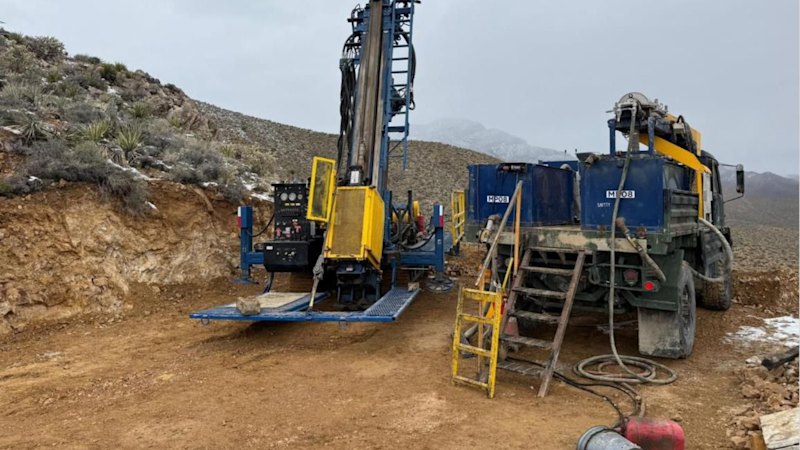
Aspiring antimony producer Locksley Resources has kicked off its first drilling program at the company’s flagship Desert Antimony Mine, part of its wider Mojave project in the US state of California.
The company’s maiden diamond drilling campaign will home in on extensions of the known high-grade antimony mineralisation sitting below historical workings at the site, with the drill rig now fired up and punching into the potentially-rich mineralised ground.
In what may be a series of game-changing moves, management conducted detailed surface-exposure mapping during site preparation activities, following a comprehensive high-resolution underground mapping program.
The two programs have come together like bread and butter to provide the company with crucial geological information, with surface mapping confirming the technical findings from the underground program.
The company believes the combination of the two programs has unlocked the potential for multiple antimony-bearing structures at its Desert Antimony Mine.
‘The commencement of drilling at the Desert Antimony Mine is a defining milestone for our company.’
Locksley Resources managing director and chief executive officer Kerrie Matthews
Management says the surface program confirmed the orientation and continuity of the primary stibnite veins at surface, along with the structural framework and offsets kicked up by the high-resolution underground surveys.
It believes the improved insights into the mineralised makeup of the project have significantly boosted its confidence in the designated priority targets and bolstered the expected drill sequencing to lock in on the most promising initial prospects.
Locksley Resources managing director and chief executive officer Kerrie Matthews said: “The commencement of drilling at the Desert Antimony Mine is a defining milestone for our company. With strong momentum behind us, we are moving decisively to unlock a potential strategic asset that will play an important role in reshaping the future of critical minerals supply.”
Matthews believes the project can underpin near-term US antimony supply via its proposed pilot plant, with the design and construction tender to be formalised shortly.
The company’s diamond drilling program will test the high-grade antimony mineralisation identified from sources including historical mining, surface sampling, 3D geological modelling and recent underground mapping.
The program’s key objectives are to target strike and depth extensions of the mineralised system, integrate data from the antimony veins exposed in the surface bedrock, ensure optimal drillhole orientation for maximum drilling effect and obtain a better understanding of the site geology.
Locksley believes the surface and underground programs have enabled the company to zero in with greater precision on its priority targets, providing an avenue for rapid resource growth.
The mighty US Government has designated antimony as a critical mineral, with minimal domestic production currently. Only MP Materials’ nearby groundbreaking Mountain Pass antimony and rare earths mine produces the mineral domestically.
Locksley plans to focus on the manufacture and qualification of antimony trioxide and antimony trisulphide.
Antimony trioxide is a critical component in electronics, plastics, fire retardants and energy applications. Antimony trisulphide is used as a strategic industrial material for pigments and pyrotechnics and used in defence systems, primers and specialty chemicals.
Notably, the recent underground mapping program also came with the bonus of unveiling a new shear zone, the Beefeater Shear, a major 10m – 15m wide north-south corridor between the Desert Antimony Mine and the company’s prospective Hendricks target.
Management says the Beefeater Shear mirrors the structural setting and alteration signature of the high-grade Desert Antimony system, opening the possibility for a significant new antimony discovery at the project.
Last week, the company delivered another boost, revealing metallurgical testwork had successfully produced metallic antimony at better than 99 per cent purity from material sourced at its Desert Antimony Mine.
The ongoing metallurgical optimisation program is targeting defence-grade antimony, looking to anchor a secure, fully domestic US supply chain for the strategic mineral. The testwork program is a vital step in locking in a commercially viable process flowsheet.
Locksley is now in the enviable position of kickstarting a drill program that, if successful, might allow it to place one foot in the door on becoming a supplier of antimony to the US Government and the other foot on the throat of potential competitive rivals.
Is your ASX-listed company doing something interesting? Contact: mattbirney@bullsnbears.com.au
From our partners