It is one of the most popular tourism spots in Victoria, but locals face a deadly risk


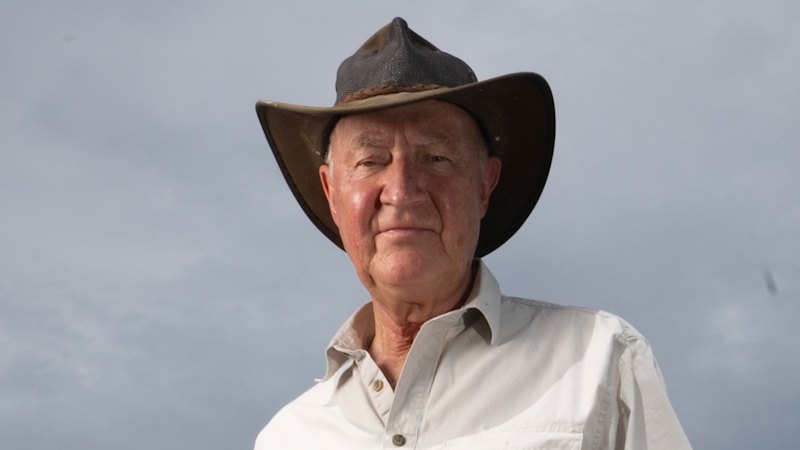
When the dense fog rolls over the Wild Dog Valley obscuring the panoramic view of the Apollo Bay coastline below, Lindsay Grayson knows the mobile phone reception will be terrible. Even reliable spots within metres of his home might go blank or barely register.
In these conditions, Grayson depended on the landline that was his key connection to the outside world. That simple piece of technology, connected to the phone network by underground copper wire, could mean the difference between life and death.
When Grayson, an infectious disease expert, and his wife bought the farming property in the Apollo Bay hinterland about 25 years ago, there was no phone line connected. They decided to install a landline for safety in their shearing shed – in case of snake bites, fires or farming accidents.
“I know a copper landline may be an old-fashioned idea, but it was developed because it’s safe, and it works,” Grayson said.
Until recently, Grayson also had a landline to the house he bought in 2019 – a steep and windy two-kilometre drive from his shearing shed. But this year Grayson was told that NBN Co, which maintains the landline to his home, wanted to cease operating that phone service due to the cost of maintaining it.
“I’m not asking for a new copper line,” he said. “This copper line’s been here all along. All we’re asking for is maintenance in a high-risk bushfire zone. Here in bushfire zones, the copper line is absolutely vital because it works even when the power supply is cut off.”
Grayson said the landline to his house had been disconnected for the past three months and there were sections of wire lying on the ground and clearly damaged.
Throughout the region, the companies that operate and maintain the telecommunications infrastructure want to phase out copper landlines.
But local advocates for retaining them are urging the corporations to keep the copper wires amid fears replacement services are vulnerable to power failures and interference from smoke and fog.
As climate change increases the likelihood of more catastrophic events, communities are facing new challenges in how they communicate and receive information during disasters.
Early this year, Grayson’s family received a phone call from a Telstra representative notifying them that NBN Co did not want to repair the existing copper service to his home and seven other nearby properties as this would require 500 metres of new cable at a cost of $36,000 to the company.
While Grayson’s landline to his home is maintained by NBN Co, the landline to his farm shed nearby is maintained by Telstra. Despite the complexity of this arrangement, Grayson deals with Telstra to report faults and damage to both landlines.
He said losing the landline to his home could leave him dangerously isolated in an emergency because landline alternatives proposed by Telstra, including satellite-based services, were expensive and reliant on power, which often failed during fires and storms.
“I just need to be able to call the ambulance or CFA,” he said.
NBN Co is responsible for maintaining and restoring its network infrastructure, but the company insists its responsibility for copper assets does not extend to preserving or replacing ageing infrastructure indefinitely.
A spokeswoman for NBN Co said some properties in Apollo Bay continued to rely on “legacy” copper lines originally built and operated by Telstra.
She said NBN maintained some sections of this infrastructure to support the continuity of existing landlines provided by Telstra under arrangements established during the rollout of the NBN.
“NBN recognises the importance of reliable communications, particularly in regional and high-risk areas,” she said.
The spokeswoman said NBN Co was working with Telstra and its customers to explore alternative options where infrastructure, like degrading copper lines, could no longer be feasibly maintained.
Apollo Bay resident Jane Gross said she was aware of 31 households out of 55 in two main Apollo Bay valleys who still relied on their landlines, particularly when disasters threatened.
Although her landline is managed by Telstra, she said the company also wanted to phase out the service.
She said having a landline was critical when the electricity failed because the copper wires were powered independently.
“It’s reliable when everything else goes out,” Gross said.
She has poor mobile reception at her home and uses an internet connection to make calls over Wi-Fi from her mobile. But Gross said she and her neighbours still regularly shared information about bushfires via their landlines.
A Telstra spokeswoman said the copper network was ageing and increasingly prone to faults, with repairs becoming harder as parts were no longer available.
“Where copper is damaged beyond repair, we will work with customers to move to newer technologies,” she said.
The spokeswoman said a satellite-based service provided more reliable voice and data services.
But RMIT senior research fellow Daniel Featherstone said heavy rain, fog or smoke could interfere with satellite or microwave signals to mobile towers, contributing to the challenges disaster-prone communities already faced.
He said extreme weather also resulted in power outages, which could sever phone reception when batteries ran flat in mobile towers.
“The challenge is ensuring reliability of services through these periods, so people can access emergency information and contact emergency services,” he said.
Featherstone, who lives in Castlemaine, said his community lost mobile reception during the recent Harcourt fires.
“These issues are real,” he said. “People couldn’t communicate with family or get messages from the police or service providers during that period.”
For Lindsay Grayson, the landline remains the best back-up system during an emergency in his hillside community. “We all rely on it,” he said.
He is frustrated that NBN Co appears unwilling to maintain the landline.
“I think it’s incredibly lame. Pathetic, actually,” he said.
Grayson believes $36,000 is a reasonable price for the multibillion-dollar company to pay for maintaining the existing system.
Scrimping for savings in a fire zone, he said, was just not worth it.
Start the day with a summary of the day’s most important and interesting stories, analysis and insights. Sign up for our Morning Edition newsletter.
 Benjamin Preiss is The Age’s regional editor. He was previously state rounds reporter and has also covered education for The Age.Connect via X or email.
From our partners