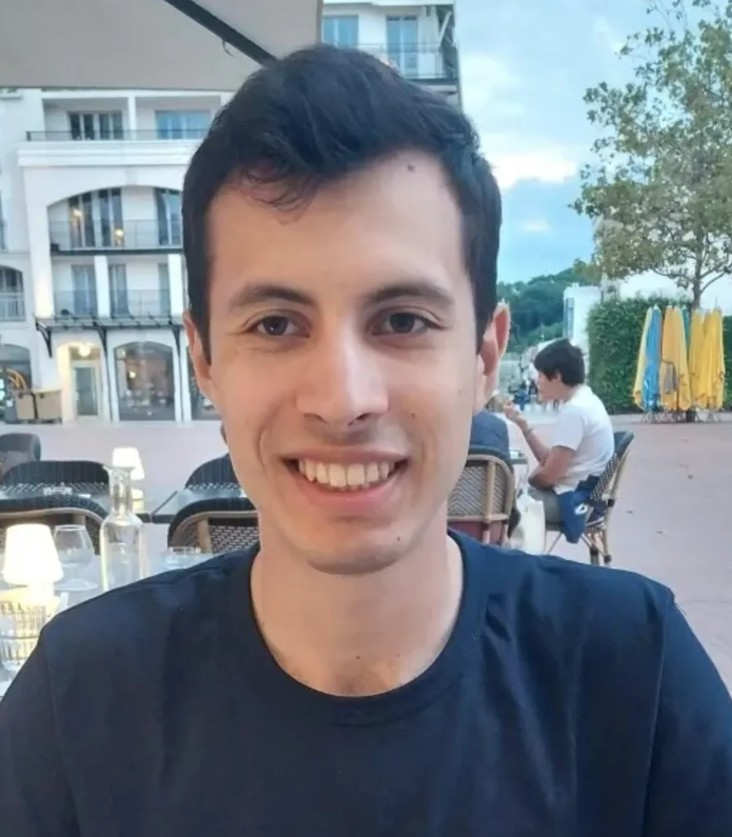
Quentin Deranque Video and A Death in Lyon

France’s third-largest city, Lyon, is bracing for a massive far-right march expected to draw thousands into its city centre under heavy police protection. The rally, organized in tribute to 23-year-old far-right activist Quentin Deranque, comes at a moment of intense political polarization in France. What began as a violent street clash has quickly transformed into a national and even international political flashpoint, exposing deep ideological fractures within French society.
The Fatal Clash and Video
Quentin Deranque died two days after sustaining severe head injuries during a street brawl on February 12. The confrontation erupted near Sciences Po Lyon’s Institute of Political Studies, where French-Palestinian lawmaker and European parliamentarian Rima Hassan was scheduled to speak.
Video capturing the moment of Quentin Deranque’s death
Members of the anti-immigration “nationalist feminist” group Némésis had gathered to protest Hassan’s appearance. Counter-protesters, identifying as anti-fascists, also assembled. Video footage shows an initial scuffle as activists attempted to snatch banners from Némésis members. However, the violence that ultimately led to Deranque’s death unfolded some distance away, in a darker, more isolated stretch of road beyond a railway tunnel.
Footage later circulated by anti-fascist media outlets and investigative publications revealed masked militants from both sides engaging in violent clashes. Far-right activists appeared armed with pepper spray, reinforced gloves, a metal crutch, and even a pyrotechnic flare. Anti-fascist protesters fought back in street clothes, and the melee escalated rapidly.
As the far-right group retreated under pressure, several individuals were left behind. Deranque was among them. Bystander videos show him being punched and kicked in the head while curled on the ground. Though he reportedly regained consciousness and initially refused hospital treatment, his condition deteriorated sharply later that evening. He was placed in a medically induced coma at Édouard-Herriot Hospital and died two days later.
Who Was Quentin Deranque?
Deranque was not a marginal observer in France’s far-right circles. Recently converted to Catholicism, he was active in the identitarian group Audace Lyon and a member of the neo-fascist Allobroges Bourgoin. He had previously campaigned for the anti-Semitic royalist organization Action Française and had participated in the neo-Nazi May 9 Committee parade in Paris, where militants marched beneath the Celtic cross flag associated with white supremacist ideology.
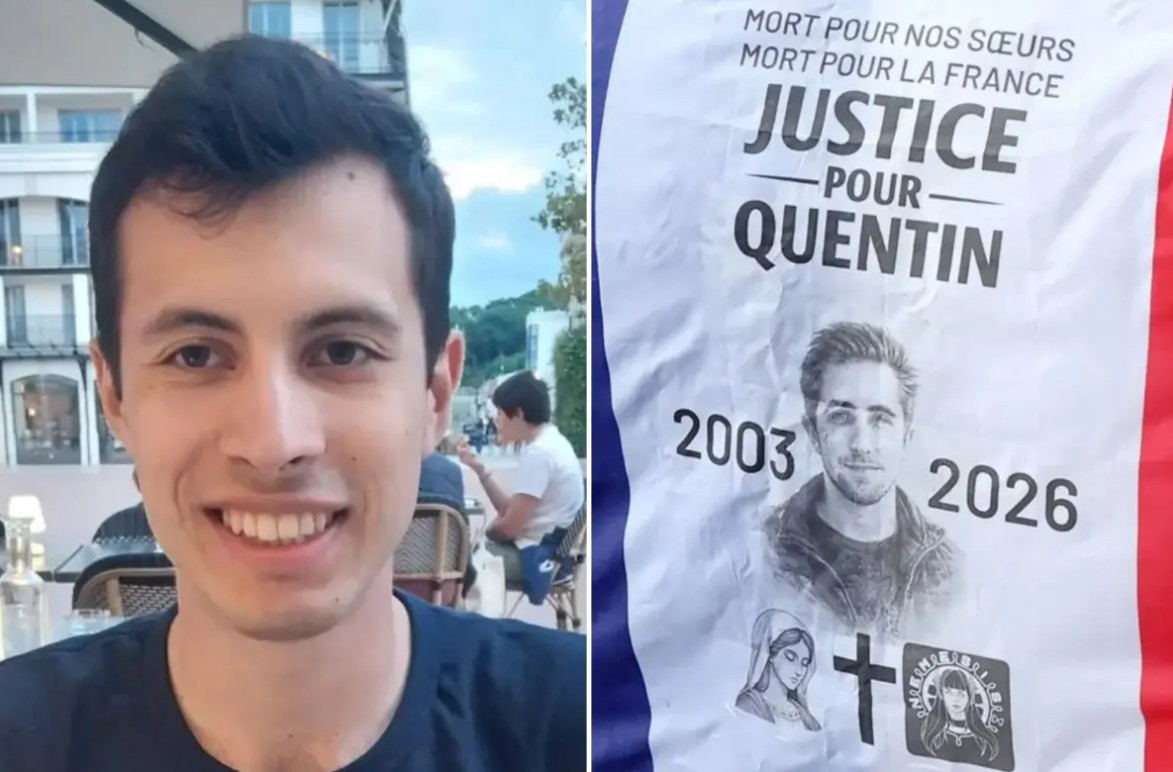
While his killing has been widely condemned across the political spectrum, far-right groups have seized on his death as a rallying cry.
Legal Proceedings and Political Fallout
French prosecutors have charged two young men with homicide in connection with the fatal beating. A third individual has been charged with complicity: Jacques-Elie Favrot, a parliamentary aide to a lawmaker from La France Insoumise (LFI). Favrot has admitted being present at the clash but denies delivering the fatal blows. Proceedings are underway to terminate his employment.
The involvement of an aide linked to LFI has intensified scrutiny of the hard-left party. Its leader, Jean-Luc Mélenchon, condemned the violence but refused to sever ties with anti-fascist networks. “Neither death nor violence have any place in political disputes,” Mélenchon said, while resisting calls from rivals to distance his movement from militant activism.
Former Socialist president François Hollande publicly urged the moderate left to reconsider its alliances, warning of reputational damage.
The Far Right’s Response
On the opposite end of the political spectrum, Jordan Bardella, president of the National Rally (RN), has carefully navigated the controversy. While he discouraged members from attending the Lyon march—describing its organizers as “unclear”—he nonetheless blamed what he called the political left’s “dehumanising rhetoric” for fostering a climate conducive to violence.
Bardella went further, accusing President Emmanuel Macron of bearing “heavy responsibility” for allegedly legitimizing radical left actors. He criticized universities as hubs of left-wing indoctrination and suggested that certain institutions might require direct state supervision.
For the RN, currently polling strongly ahead of the 2027 presidential election, Deranque’s death offers an opportunity to reinforce its long-standing narrative: that left-wing extremism represents a growing threat to public safety and democratic stability.
A City with a Violent History
Lyon has long been considered a stronghold for neo-fascist activism and a recurring battleground between far-right militants and self-proclaimed anti-fascist networks. Researchers note that since the 2010s, the city has witnessed cycles of confrontation driven by territorial strategies on both sides. Far-right groups have attempted to establish visible local presence through events and symbolic spaces, prompting sustained counter-mobilization.
Among the dissolved anti-fascist groups is La Jeune Garde, whose co-founder, Raphaël Arnault, is now an LFI lawmaker. The group was banned by the government last year for alleged involvement in violent confrontations. Critics argue that such networks blur the line between political activism and street militancy.
Media Framing and Narrative Battles
The political weaponization of Deranque’s death has been amplified by France’s evolving media landscape. Conservative outlets associated with billionaire Vincent Bolloré have prominently highlighted narratives of “left-wing violence,” according to political observers.
Sociologist Isabelle Sommier has pointed out that between 1986 and 2017, the vast majority of politically motivated killings in France were attributed to radical right actors. Yet critics argue that contemporary media framing increasingly spotlights alleged left-wing violence, potentially reshaping public perception.
This battle over narrative reflects a broader struggle: whether Deranque’s death will be understood as an isolated criminal act or as emblematic of systemic political radicalization.
International Reverberations
The shockwaves have not stopped at France’s borders. British far-right activist Tommy Robinson paid tribute to Deranque on social media, sharing footage of vandalized LFI offices. In Italy, Prime Minister Giorgia Meloni condemned what she described as a “climate of ideological hate,” calling the death “a wound for all of Europe.”
Across the Atlantic, U.S. officials also weighed in. The State Department’s bureau of counter-terrorism posted that “violent radical leftism is on the rise,” while drawing comparisons to the assassination of American conservative activist Charlie Kirk. The rhetoric underscored how rapidly local incidents can become global political talking points.
Political scientists describe the phenomenon as part of a growing transnational far-right ecosystem. Influenced in part by the political style popularized by Donald Trump, this network rapidly shares narratives portraying ideological opponents as existential threats. Social media accelerates the process, transforming local tragedies into international symbols within hours.
Implications for French Democracy
With municipal elections approaching in March, analysts warn that Deranque’s death may cast a long shadow over the campaign. For the right, the incident reinforces arguments about left-wing extremism. For the left, it risks progressive de-legitimization by association.
France’s political climate has grown increasingly polarized in recent years. Violent clashes between ideological rivals, once marginal, now resonate deeply within mainstream discourse. The danger, observers caution, lies in allowing such incidents to become tools for broad political condemnation rather than subjects of sober legal inquiry.
A Nation at a Crossroads
Quentin Deranque’s death is, first and foremost, a tragedy—a young life lost in a moment of escalating violence. Yet it has also become something more: a mirror reflecting France’s deepening divisions and a catalyst for intensified political struggle.
As Lyon prepares for a heavily policed march in his memory, France faces a difficult balancing act. Ensuring justice for a violent crime must not give way to opportunistic narrative battles. At stake is not only accountability for one fatal clash, but the resilience of democratic debate itself.
Whether Deranque’s death ultimately deepens polarization or prompts reflection may determine how France navigates its increasingly volatile political landscape in the years ahead.
News –

