Viral moment as AI leaders refuse to hold hands at India event

Saritha Rai
Once a rival, always a rival.
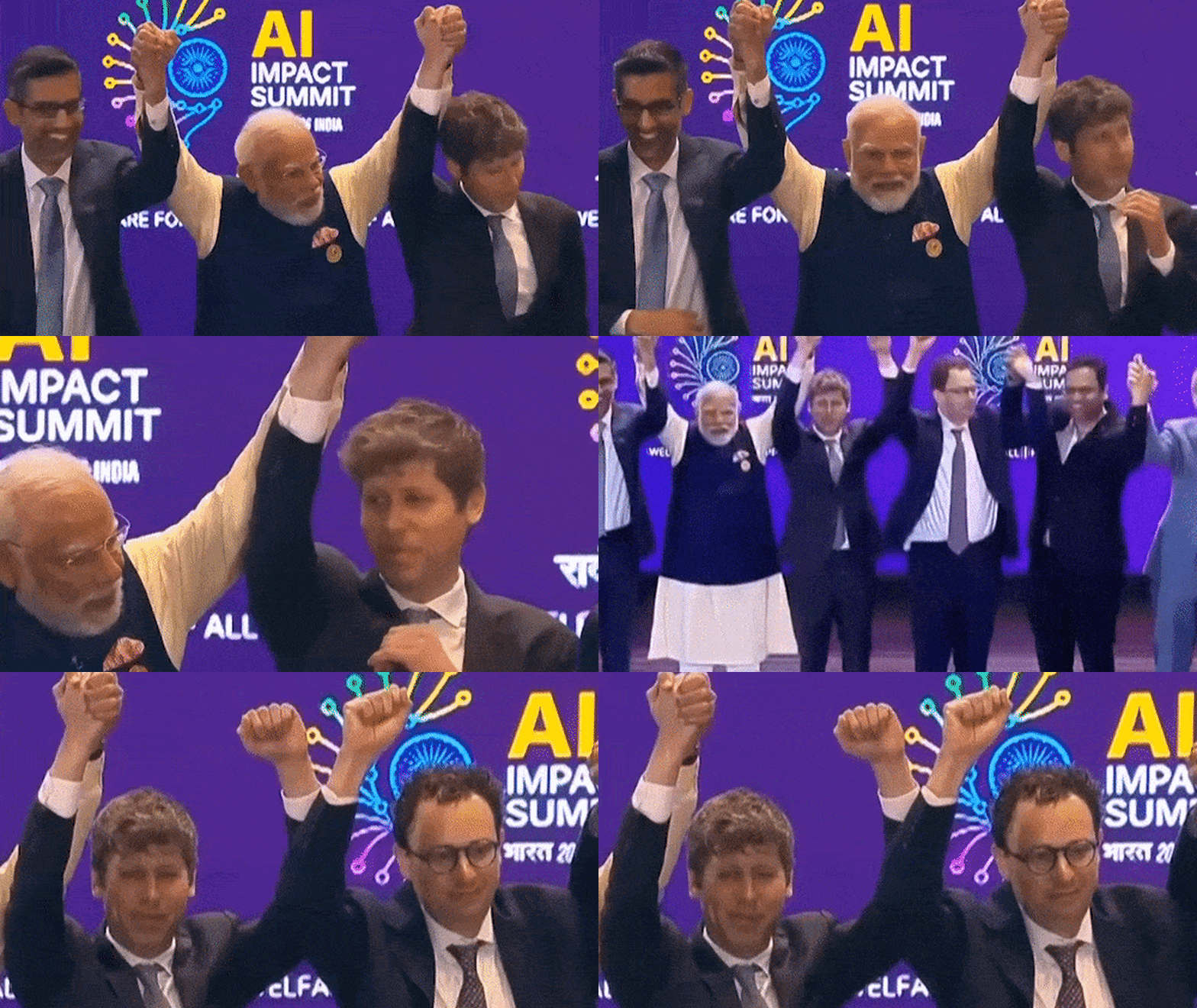
As Prime Minister Narendra Modi kicked off the busiest day of India’s AI Summit in New Delhi, he orchestrated a photo op with 13 other business and political leaders, all standing in a line and holding each other’s hands above their heads.
Well, all of them except two.
Sam Altman and Dario Amodei, chief executive officers of rivals OpenAI and Anthropic, were positioned next to each other and, awkwardly, refused to clasp each other’s hands. Instead, they stood with their arms crossed in the air, avoiding eye contact.
Amodei had worked at OpenAI, but left to cofound his company because he felt that OpenAI was becoming too commercially focused.
The snub went viral on social media platforms in India, including X. In a video after, Altman said he “didn’t know what was happening on stage” and wasn’t sure what he was supposed to do. An OpenAI spokesperson confirmed the authenticity of the video.
The two now lead the most valuable closely held AI companies in the world, with OpenAI worth about $500 billion ($708 billion) and Anthropic valued at $380 billion.
Their competition intensified this year with a series of advances by Anthropic — most notably the growing popularity of its Claude Code suite, which is ahead of OpenAI’s Codex in market adoption — followed by OpenAI hiring the developer of OpenClaw, a popular open source AI tool that got its start by using Anthropic technology.
Amodei’s company went directly at OpenAI with a high-profile Super Bowl ad, depicting how out of place advertisements would be in AI chatbot interactions and promising that Claude will never have ads.
Altman, whose company is testing ads, responded with a somewhat defensive, 420-word X post, in which he argued ad-supported services will make AI available to more people.
“I wonder why Anthropic would go for something so clearly dishonest,” he wrote. “I guess it’s on brand for Anthropic doublespeak to use a deceptive ad to critique theoretical deceptive ads that aren’t real, but a Super Bowl ad is not where I would expect it.”
With assistance from Vlad Savov and Shirin Ghaffary.
Bloomberg
From our partners