From “Chinese spies” gaffe to deputy leader, the senator’s resurgence in the Liberal Party


There’s a saying that Jane Hume cites often in interviews, particularly when she’s asked for advice: “Don’t get bitter, get better.”
After last year’s bruising election defeat, that’s what the Victorian Liberal senator sought to do.
She travelled to the United Kingdom and organised her own study tour with Conservatives who were involved in rebuilding the party in the 2000s, and others now grappling with the rise of Nigel Farage’s Reform.
Demoted to the backbench, Hume started working on policies that interested her, including a private bill that would allow couples to split their superannuation.
And she pushed through in public. “Rather than hide under the doona … I was much more inclined to finally go to the hairdresser and get rid of the greys, and buy myself a new suit and a new lipstick, and put on the armour and get back out there,” Hume told the Future Women Leadership podcast last year.
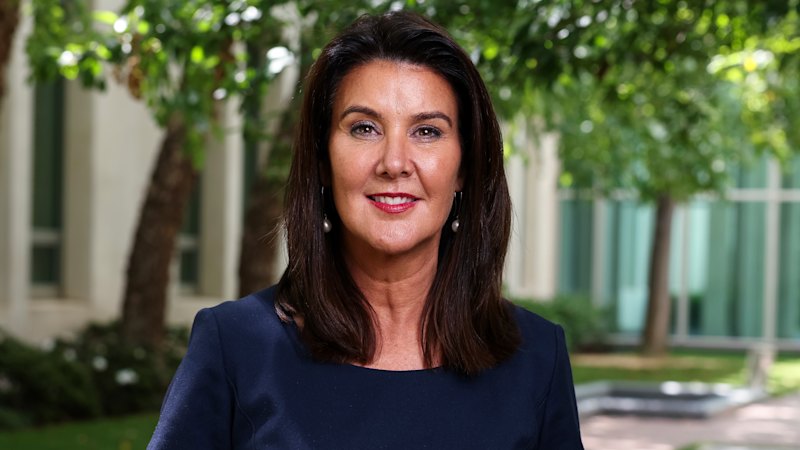
As happens in politics, fortunes turn: Hume, 54, is now back on the frontbench and her colleagues elected her deputy leader, 30 votes to 20, in last week’s spill.
She will take on the portfolios of workplace, industrial relations, productivity and deregulation in Angus Taylor’s new-look frontbench – an effort to spotlight the country’s productivity woes. After entering the Senate from the finance and banking sector 10 years ago, the mother of three from inner-city Melbourne is now the Liberal Party’s most senior woman.
This comes with the expectation she will appeal to urban professionals and women who have shunned the Liberals. Hume co-wrote the party’s 2022 election review, where she said those voters must be won back to form government. That didn’t happen, and with the party’s support at its lowest ebb in decades, her task is now far broader: she must help consolidate the Liberal base at large, and unite a fractured party room.
“The time for timidity is over,” Hume told this masthead this week. “I have no intention of being some sort of administrator or overseer of my party’s, and my country’s, orderly decline … We shouldn’t be pussy-footing around trying to please everybody. We should be consistent about who we are and what we say.”
She said the Liberals had been risk-averse on health and childcare policy, as examples. “If we shy away from those conversations and putting forward genuine alternatives, well, we don’t deserve to win the hearts and minds of the people whose votes we seek.”
Hume isn’t much of a pussy-footer herself. For such a prolific media performer, that’s been problematic at times. Her resurgence is complicated by the fact she was the face of some of last year’s campaign’s major mistakes.
Her “Chinese spies” gaffe on morning television offended Chinese Australians and is credited for losing diaspora voters in droves. The work-from-home edict for public servants was so unpopular it was revoked before the election.
Hume has apologised for the “ill-considered” remarks and acknowledged the work-from-home crackdown policy was a mistake. In general, though, she doesn’t overdo contrition. “Look, haters are going to hate,” she says. “If I’m not going to do this, who will? You’ve got to be made of tougher stuff.”
Australians should expect more of Hume’s straight talking. Already this week, several days have involved back-to-back media interviews. “I don’t intend to waste a day,” she says. “If you’re not going to step out in front of the media … and articulate your principles, there’s no point being here.”
Hume knows being disliked is part of the job. She’s described an interaction on a quiet street, early one Saturday morning in the middle of a state election campaign: She was walking with her coffee and dry cleaning, dressed in activewear, when another woman came along.
“Just as she comes past me, she leans over and she goes: ‘You’re an idiot’. And then she kept walking,” Hume told the Future Women Leadership podcast. “That was the moment I realised I was really a politician because the first thing that went through my mind was: ‘Oh, my profile is improving.’”
But her charm and cheer also boost her appeal. Hume told that same podcast about working on a board with an intelligent and intense woman who would often, in the middle of explaining something or making an argument, break into a smile. “It’s impossible not to smile back – all of a sudden you’re drawn to this person,” she said.
“It was such a skill. So I have to admit, occasionally I use that trick if I feel like I’m in a difficult situation or a difficult interview: I will just beam for a moment. And it’s incredible the response you get.”
That’s even detectable at Senate estimates hearings – her welcome to ASIC chairman Joe Longo, for example, drew attention in 2024. (“Every time I see Mr Longo now, it seems to be at the gym on Saturday mornings, so I apologise for the Lycra. Less worthy men have seen me in far less,” Hume quipped, before a long pause. “Sorry, I forgot myself for a moment. I’m going to ask some questions about something serious now.” He joked in return: “I can reassure the committee that I will never be seen in Lycra.”)
Asked about this persona, Hume says: “You can be taken very seriously without losing your kindness. You don’t have to pick one or another.”
Hume grew up in a Liberal-voting household in Melbourne, handing out how-to-vote cards at election booths as a kid. Her parents had joined the Liberals during the Whitlam dismissal: her father was a small business owner and her mother a barrister.
Her first corporate job was in financial advice, soon after the introduction of superannuation, at the National Australia Bank. She then moved onto more senior roles at Rothschild, Deutsche Bank and Australian Super.
Politics had always been a hobby, until it morphed into something more, when Hume went back to university to study politics in her 30s while pregnant with her second child. She got more involved as a Liberal volunteer before the Victorian state president asked her to run for the Senate in the 2016 election.
She served as minister for financial services in the Morrison government, and was the finance spokesperson in the last parliament, before being dumped from the frontbench under Sussan Ley. That was fuelled by both her election errors and the fact MPs suspected Hume, a moderate, had backed Taylor, a conservative, in the first leadership ballot last May – it left a bitter taste for some of her like-minded colleagues, who were promoted to Ley’s shadow ministry.
From the backbench, Hume was frank about some of Ley’s calls. She said Ley’s demands for Kevin Rudd to be sacked as US ambassador were “a little bit churlish”, for example, and that she wouldn’t tell people what to wear, after Ley attacked Anthony Albanese’s Joy Division T-shirt. Last week, Hume was one of the first MPs to make the case for change, warning that the leadership and worsening polling results would lead to the Liberals being wiped out.
It has given some Liberal women the impression Hume was involved in undermining the party’s first female leader. But it also keeps with the character of a senator who hates group-think and describes herself as the first to interject when something’s off. “I actually think that we should have an obligation to dissent,” she’s said.
Hume is now keen to emphasise the common ground. “I believe the conservative-moderate divide in the Liberals is overblown. The things that we agree on are quite simple – lower taxes, fiscal responsibility, good economic management, and that the private sector should be encouraged,” she says.
“I just want the Liberal Party to be the best party it can be. I am very much a creature of my party, and I know that we can do this when we work together.”
Cut through the noise of federal politics with news, views and expert analysis. Subscribers can sign up to our weekly Inside Politics newsletter.
 Natassia Chrysanthos is Federal Political Correspondent. She has previously reported on immigration, health, social issues and the NDIS from Parliament House in Canberra.Connect via X or email.
From our partners