A funding blind spot is making our beaches less safe

It’s been another terrible summer of coastal drowning in Australia with 47 lives tragically lost to date, according to Surf Life Saving Australia.
This statistic does not come close to conveying the magnitude of the emotional, societal and economic impacts associated with each drowning.
It should therefore be of considerable concern that the Australian Water Safety Strategy 2030 Midpoint Update, released last year by the Australian Water Safety Council, showed that beach drowning rates have increased significantly over the last five years.
Beaches were identified as a priority requiring urgent safety attention, including expanding lifeguard service times and locations. So what are we doing to urgently address this problem? I would argue, not enough.
Beach visitation has increased in recent years, with more people seeking less crowded and more regional beaches that are often unpatrolled. Many also enter the water outside of patrolled areas and times, particularly on hot summer evenings after the flags have come down.
Not surprisingly, all of the beach drowning fatalities in NSW this summer, and in most previous summers, have occurred away from lifesaving services or outside patrol times. So why don’t we just keep up with the increased beach visitation by increasing the presence of lifeguards and lifesavers on our beaches? The answer comes down to logistics and funding.
I recently witnessed the aftermath of a non-fatal drowning on a beach near Wollongong. The beach was patrolled with the flags set up near the surf lifesaving club at the northern end of the beach. But many people were swimming along the unpatrolled southern end of the beach where there is ample parking, easy access and several rip currents.
The council lifeguard and multiple paramedics were treating a teenage boy at the southern end who had been caught in a rip and rescued by surfers. Fortunately, he was OK, but it was a close call and afterwards the lifeguard told me that the council wanted to station an additional lifeguard along that section of beach, but couldn’t afford it. This is a problem along much of the NSW coast. Many councils simply do not have enough funding to extend their beach lifeguard services at times when, or at locations where, they are badly needed.
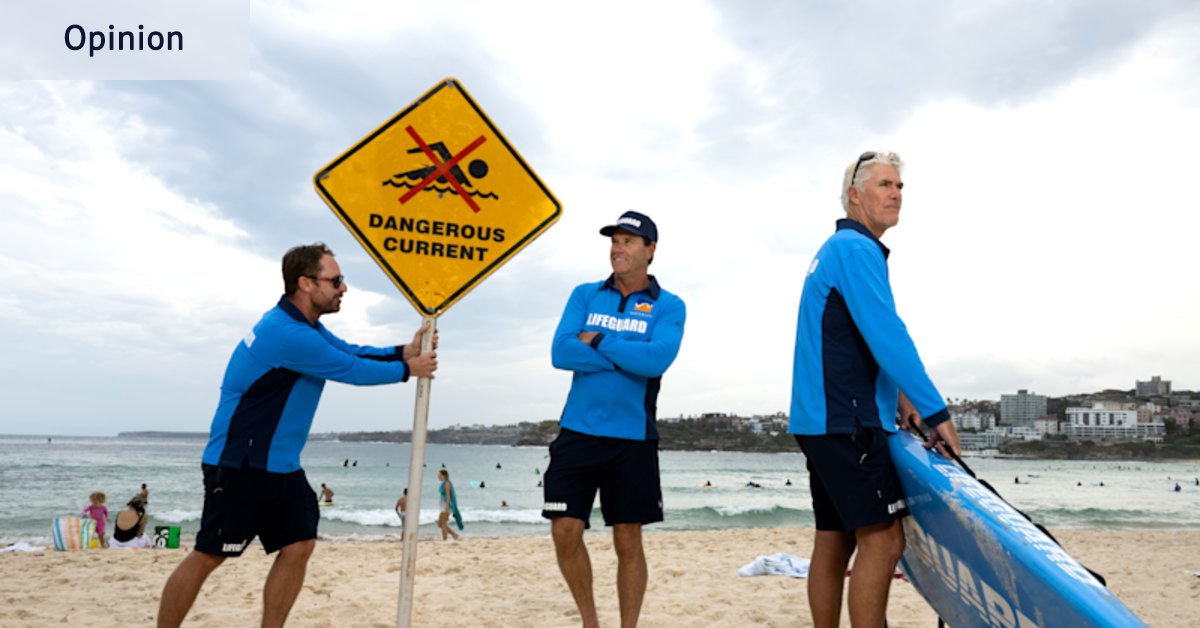
Despite their ubiquitous beach presence and 18 seasons of the reality show Bondi Rescue, many people still don’t understand the difference between lifeguards – who are paid by councils and often patrol seven days a week and year-round on the more popular beaches – and surf lifesavers, who are volunteers that patrol on weekends and public holidays between September and April.
A recent report by the UNSW Beach Safety Research Group showed that in a typical year, paid lifeguards are solely in charge of patrolling NSW beaches 77 per cent of the time, compared with 14 per cent for volunteer lifesavers. The rest of the time, both operate together.
In some urban councils in Sydney and Newcastle, the volunteer lifesavers are never on patrol without the presence of paid lifeguards. It is therefore hard not to argue that paid lifeguards are the backbone of beach safety in NSW.
Both paid and volunteer services are incredibly valuable for keeping our beaches safe. As a past patrol captain and life member of my surf lifesaving club, I have seen firsthand the fantastic benefits of the volunteer surf lifesaving movement. But it is not realistic or fair to expect volunteers to increase their patrol hours and locations, particularly when some clubs struggle to find enough active patrolling members.
However, while Surf Life Saving NSW traditionally receives significant funding from the NSW government, most recently a record four-year $72 million funding investment, there is no external funding provided to, or made available to, councils to help enable them to extend their paid lifeguard services.
Councils can only seek to reallocate funds from within their own budget to extend lifeguard patrol hours and add lifeguards on both popular patrolled and unpatrolled beaches.
Let’s continue to support our volunteers, but if we really want to get serious about reducing the number of beach drownings, the NSW government should also start make funding available to councils to expand their paid lifeguard services. Having more lifeguards on more of our beaches, more of the time, can only be a good thing.
Rob Brander is a professor at the University of NSW School of Biological, Earth and Environmental Sciences and a researcher at UNSW Beach Safety Research Group.
 Robert Brander – Rob Brander is a professor at the UNSW School of Biological, Earth and Environmental Sciences.
From our partners