Endorses Viktor Orbán in Hungarian election despite EU tensions


Updated ,first published
London: The people of Hungary seem ready to throw out their prime minister and elect a younger alternative who is promising to stop corruption, boost the economy and mend fences with the European Union.
That prime minister, however, has other ideas. Viktor Orbán, the caustic conservative who has dominated Hungarian politics for decades, believes he has a powerful ally in his bid to retain power at an election in April. He is counting on Donald Trump.
Orbán has become Trump’s best friend in Europe at a time when the continent’s leaders are frustrated with the US president over his designs on Greenland, his shifting positions on Ukraine and his lukewarm support for NATO.
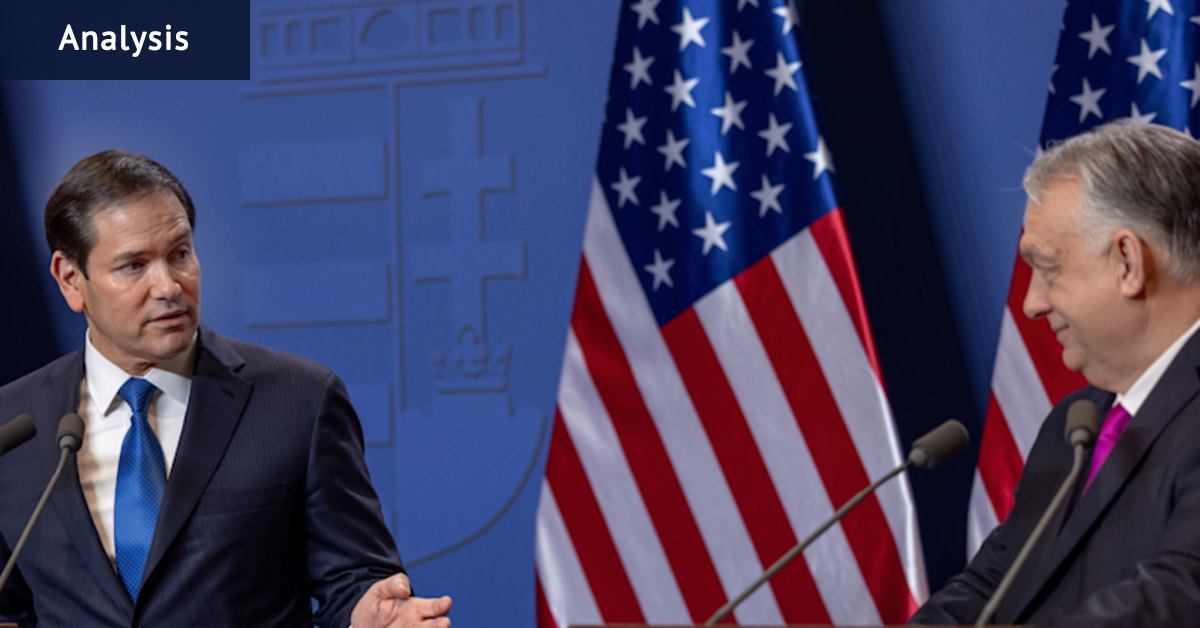
US Secretary of State Marco Rubio just made sure that Orbán feels the love. The two men stood side by side on a podium in Budapest on Monday and spoke of a “golden age” in their national ties.
There was no surprise in Rubio’s strong support for Orbán, given that Trump took to social media on February 5 to endorse his friend as the best candidate for the April 12 election. Trump also endorsed him at the election four years ago.
But Rubio gave Orbán a televised moment that the Hungarian leader can highlight on mainstream and social media in the hope of persuading voters that only he can deliver national security.
“President Trump is deeply committed to your success because your success is our success,” Rubio told Orbán at a joint press conference.
“Because this relationship we have, here in Central Europe, through you, is so essential and vital for our national interests in the years to come.
“If you face financial struggles, if you face things that are impediments to growth, if you face things that threaten the stability of your country, I know that President Trump will be very interested – because of your relationship with him.”
Rubio was explicit about the way Trump would provide assistance to Hungary if a problem arose, referring to “finances and the like” as examples of the help that might be needed.
That helps cement the message from Orbán to voters last November, when he emerged from meetings with Trump at the White House to claim he had a “financial shield” from America to safeguard the Hungarian economy.
While this was never explained in detail, Trump approved a currency swap for Argentina last October to help his friend Javier Milei, the country’s president. (US Treasury Secretary Scott Bessent claimed it made money for taxpayers.)
Trump also arranged urgent help for Orbán last year by exempting Hungary from US sanctions on Russian oil and gas, a key issue for households in a landlocked nation that relies on Russian pipelines for essential energy.
Orbán looks like he needs all the support he can get. An opinion poll released last Friday by the Idea Institute showed that only 38 per cent of decided voters backed Orbán and his party, Fidesz. It found that 48 per cent backed his challenger, Peter Magyar, a former government official who leads a centre-right party, Tisza.
But those numbers only reflected voters who had made up their minds. The pollster found that 24 per cent of all voters were undecided.
Orbán is a skilled politician. He entered the Hungarian parliament upon the collapse of Communism in 1990 and was prime minister eight years later. He only lasted four years in his first term, but returned in 2010 and was re-elected in 2014, 2018 and 2022.
He shows no signs of moderating his style to win this uphill election race. As the election nears, he has stepped up his complaints about European Union leaders and Ukrainian President Volodymyr Zelensky.
While others in Europe shun Russia, the Hungarian leader has visited Moscow several times, most recently in November last year and July the year before.
Russian President Vladimir Putin greeted him warmly last November. “We are aware of your balanced position on the situation in Ukraine,” he told Orbán as television cameras captured the moment.
Orbán may be an outlier in the European Union, but he could also be a sign of things to come. He is vehemently against immigration and blames Brussels for making it too hard to turn people away. When Trump issues policies that warn of “civilisational erasure” in Europe, it is safe to assume that Orbán agrees.
Others in Europe line up with him. There is Nigel Farage and Reform UK in Britain, as well as Marine Le Pen and Jordan Bardella at the National Rally in France, and Alice Weidel and the Alternative Fur Deutschland (or AfD) in Germany.
The election in Hungary cannot be used as a barometer for the public mood in other countries, but a victory for Orbán would keep a prominent Trump ally in power at a time when many other European leaders are trying to keep their distance from the US president.
And there is a lesson from the campaign long before the votes are cast. There is a common misapprehension that Trump and his MAGA movement favour American isolation and want to desert Europe. In fact, they want to change it.
Trump will engage in Europe when he sees an ally who needs his support. And he will endorse political leaders whenever he likes, as he did with Japanese Prime Minister Sanae Takaichi last week, regardless of the conventions about staying out of other nations’ elections.
The next two months will show how far Trump might go to keep a fellow populist in power. And how much his supporters would like to see Europe painted in MAGA gold.
Get a note directly from our foreign correspondents on what’s making headlines around the world. Sign up for our weekly What in the World newsletter.
 David Crowe is Europe correspondent for The Sydney Morning Herald and The Age.Connect via X or email.
From our partners